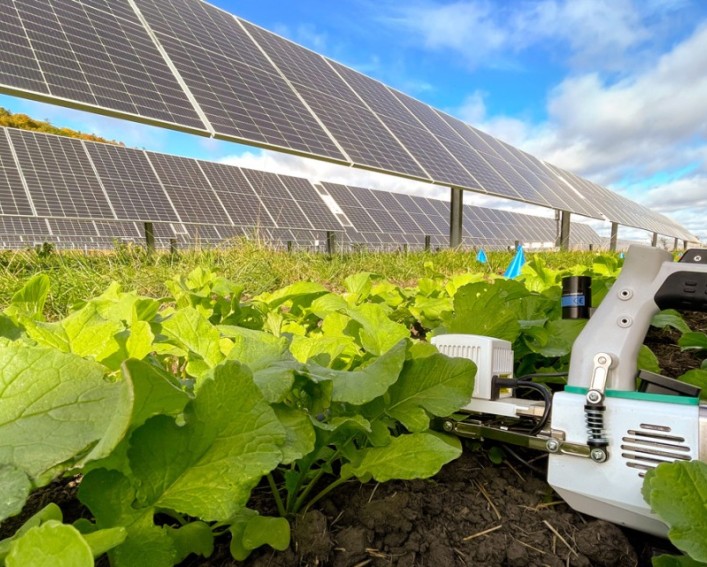
Grand Challenge: Sustainable crop production and food security

Safeguarding future food security for all with sustainably managed nutritious crops in diverse production systems, under a changing climate, with minimal loss to weeds and pathogens

  • Improve crop yields and nutrition
    • Leverage our knowledge of genetic diversity and plant physiology for crop plant improvement
    • Reduce crop losses through understanding of pathogen biology, plant resistance, and weed ecology
    • Enhance plant health with microbiome management and optimized growing conditions
  • Develop strategies for reduced-input crop production
    • Manage soil health for nutrient retention and beneficial water relations
    • Optimize cropping systems for diverse production scales and types (organic, conventional, perennial, annual)
  • Develop and apply digital technologies for climate responsive precision management of agricultural systems (Digital Agriculture)
    • Build systems for plant and soil health monitoring at multiple scales using sensing technologies
    • Create and deploy data analysis pipelines and decision support tools

Research highlights: Sustainable crop production and food security
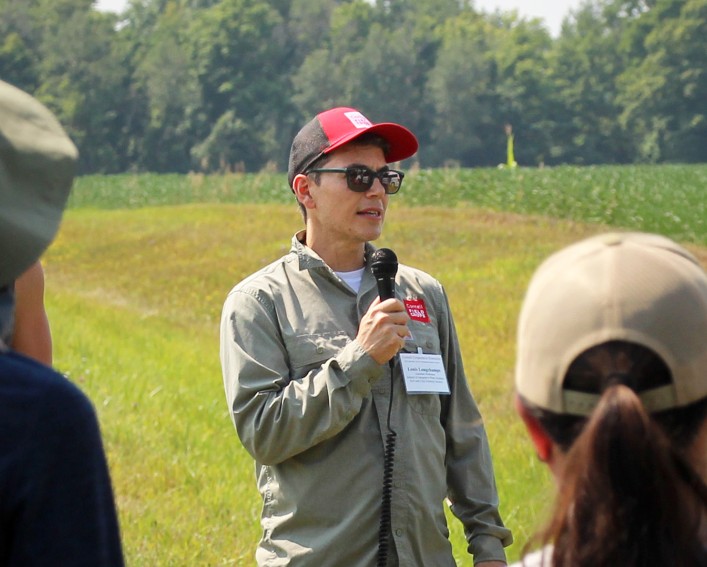
Research spotlight: Sustainable crop production and food security
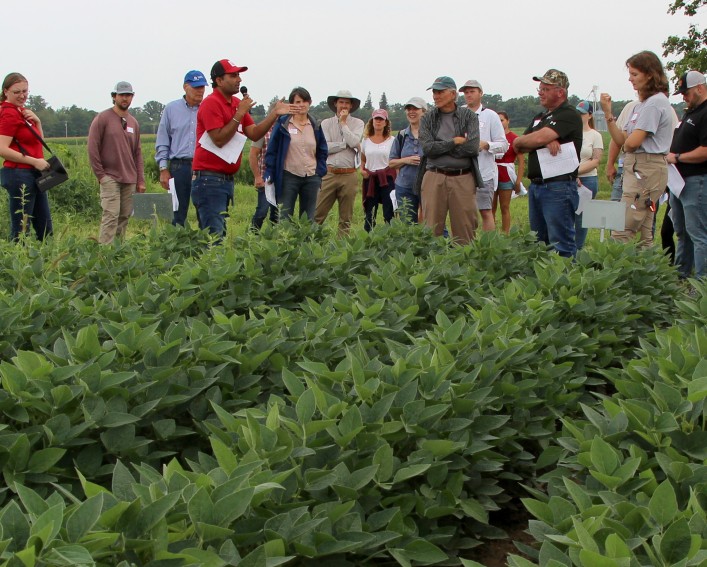
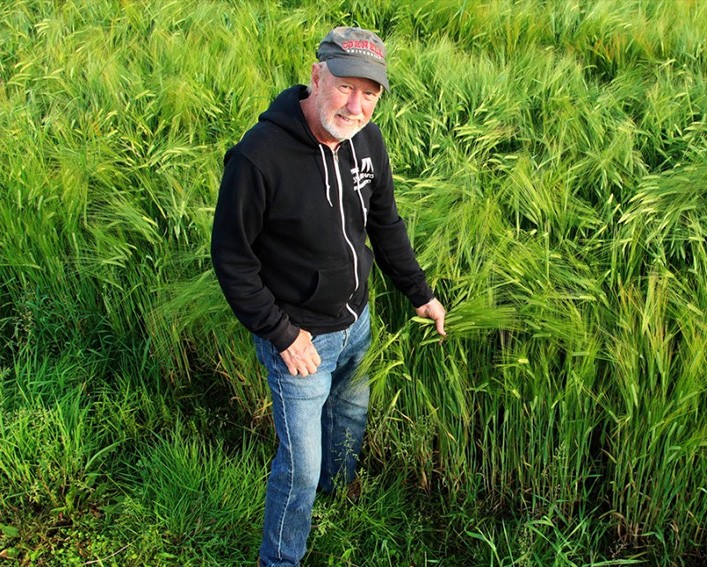
New winter barley provides flurry of benefits

LakeEffect, the first winter malting barley released by the Cornell Small Grains Breeding Program, is set to take the New York craft beverage industry by storm. The new variety produces high yields, is disease resistant and has a good malting profile. “What’s truly remarkable is that we took this from first cross to commercial release in just seven years, which is incredibly fast to move a new variety to market,” said Mark Sorrells, professor of plant breeding and genetics in Cornell’s School of Integrative Plant Science (SIPS) in the College of Agriculture and Life Sciences, who led the breeding effort. 

Research spotlight: Sustainable crop production and food security
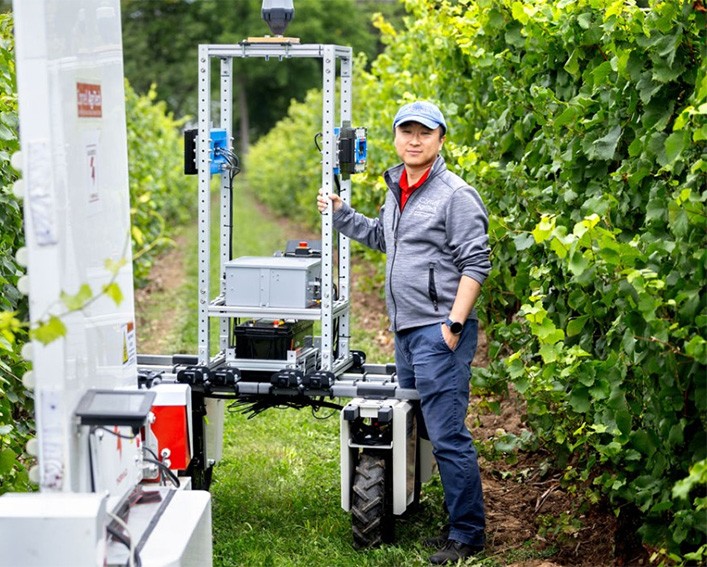
From space to farm: readying NASA satellites to help growers

The Cornell-developed “PhytoPatholoBot” detects spectral signatures of three kinds of devastating grape diseases – powdery mildew, downy mildew and grapevine leafroll virus – leading to early management of pathogens without needing farmworkers to spot them. Ultimately, data collected by such robots will help to ground-truth NASA satellite data that could one day detect plant diseases from space.

Applied roboticist Yu Jiang, assistant professor the Horticulture Section of the School of Integrative Science, developed the PhytoPatholoBot with doctoral student Ertai Liu and plant pathologist Katie Gold, with funding from NASA Acres and U.S. Department of Agriculture National Institute of Food and Agriculture  (NIFA) and VitisGen3.

Research spotlight: Sustainable crop production and food security
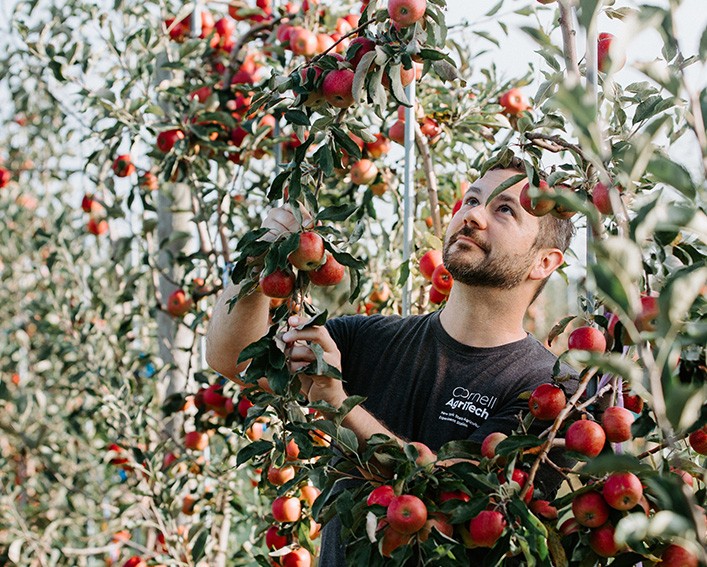
Project explores grape-environment interactions

The $2.3 million project, funded by the National Science Foundation, will aid grape growers and winemakers as they cope with increasingly erratic climate conditions by uncovering the most adaptable varieties.  Jason Londo, associate professor in the School of Integrative Plant Science’s Horticulture Section, leads a multi-institutional team exploring how genetically identical grapevines adapt to differences in temperature, humidity, soils and other environmental factors in New York, Missouri and South Dakota.

Research spotlight: Sustainable crop production and food security
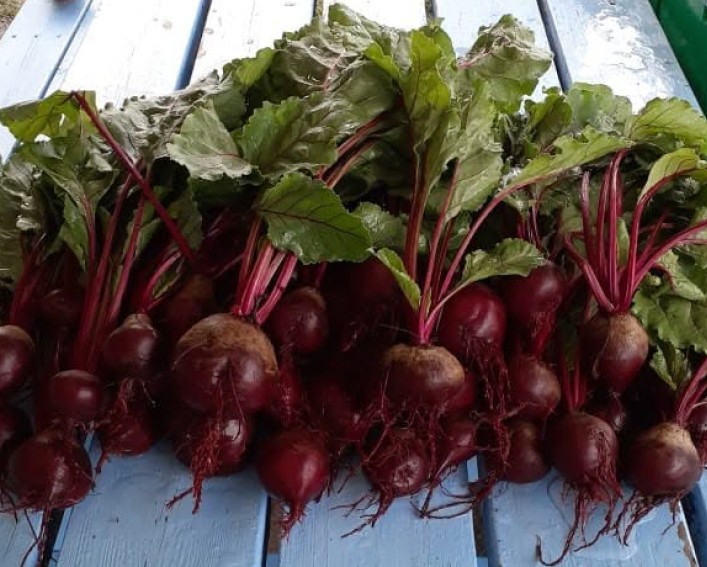
Rooted in a Cornell collaboration, New York state is tops for beets

NY is the top beet-producing state, thanks in part to grower support from Cornell researchers working with UV light to suppress the leaf spot fungus using drone images to spot-treat infected plants rather than spraying entire fields. These light treatments may be used in conventional beet production as well as in organic systems where synthetic fungicides are not permitted.

A fungus, Cercospora causes the ugly leaf spots on beets sold into the fresh market, said Sarah Pethybridge, associate professor in the School of Integrative Plant Science’s Plant Pathology and Plant-Microbe Biology Section at Cornell AgriTech. The disease can also defoliate the plants, making it more difficult for mechanical harvesters to pull the vegetables from the soil by their tops, she said.

Research spotlight: Sustainable crop production and food security
Superweed resistant to widely used herbicide found in NYS

It can grow an inch or two a day, produce nearly a million seeds and emerge at almost any point in the growing season. Waterhemp is among the most destructive weeds U.S. growers contend with, and new research has confirmed that populations in New York state are resistant to one of the most common herbicides. Waterhemp samples from Seneca County soybean fields were five to 12 times more resistant to glyphosate than controls. 

“Having the confirmation of this resistance in New York gives us the opportunity to spread the message that we should use these chemistries more judiciously and diversify our weed control practices,” said first author Vipan Kumar, associate professor in the Soil and Crop Sciences Section of the School of Integrative Plant Science.

Research spotlight: Sustainable crop production and food security
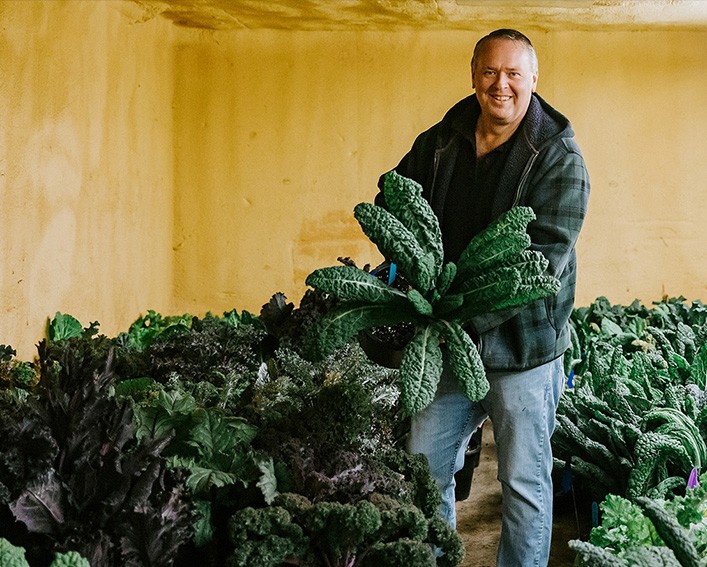
A cornucopia of plant research supports farms and food systems

From developing nutrient-dense corn varieties and tasty, disease-resistant tomatoes to refining growing practices to make farming more sustainable and profitable for growers, our researchers are on the cutting edge of crop production and food security. “Those of us who uncover scientific discoveries, develop better varieties and farming practices, and distribute that knowledge to our growers are honored to be part of the community that supports food systems and wellbeing, in New York and around the globe,” said Margaret Smith, professor in the Plant Breeding and Genetics Section of the School of Integrative Science and director of the Cornell University Agricultural Experiment Station (Cornell AES), which manages a statewide network of research farms and greenhouses supporting our research.

mark sorrells with lake effect in the field
yu jiang with in vineyard with robot
jason londo in apples
A group of people in front of the construction site of a small shed
waterhemp foliage
A variety of tomatoes for sampling