


Plant Sciences Major curriculum
Current majors: Find more information on Canvas. (Cornell netid required.)
If you still have questions, email: plantsci [at] cornell.edu (plantsci[at]cornell[dot]edu)
The Plant Sciences curriculum helps students understand how plants work from the molecular to ecosystem levels. It prepares graduates to:
- Make new discoveries in the lab and field to produce enough food for a growing world population.
- Breed plants to tolerate the heat- and drought-stress of climate change.
- Develop sustainable cropping practices to produce healthful and nutritious food.
- Investigate new methods to fight plant pests and disease.
- Transform sterile urban environments into vibrant microcosms of nature.
More than 150 courses that deal directly with some area of plant science are offered in the School of Integrative Plant Science. Plant Sciences majors are expected to take introductory coursework in biology, chemistry, and statistics and a primary core of four plant-focused courses. This is followed by a selection of foundational courses and a suite of courses concentrating on the student’s area(s) of interest in the Plant Sciences, rounded out with a broadening course, an experiential practicum and a senior symposium. There are also opportunities to engage in internships, undergraduate teaching, and research experiences. See Experiential learning for more information.
View details about the Plant Sciences major curriculum at the University Registrar website, including:
Example concentrations
Here are just a few of the many different concentrations students have pursued in consultation with their faculty advisor:
- Sustainable plant production
- Plant breeding
- Computational biology
- Plant diseases
- Evolution and diversity
- Plant molecular, cellular & developmental biology
- Medicinal plants
- Public garden management
- Soil science
Featured learning opportunities
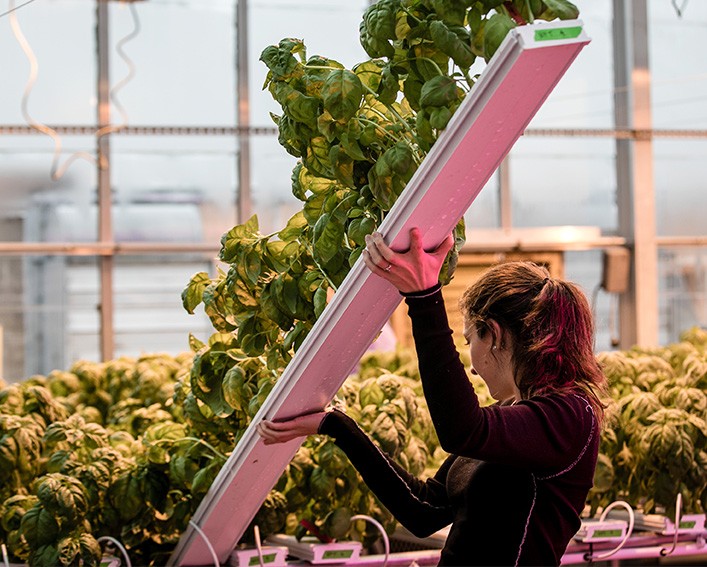
Hydroponic Food Crop Production and Management
Hydroponic Food Crop Production and Management covers principles and practices of commercial hydroponic vegetable and herb production in controlled environment agriculture (CEA). Topics include: growing environments (high tunnels, greenhouses, and warehouse/vertical farms), manipulation of and crop response to the aerial and root-zone environments including estimating energy use in diverse growing environments, nutrient solution preparation and management, aquaponics and organic hydroponics, crop maintenance, production scheduling, integrated pest management, business plan development, and markets.
Featured learning opportunities
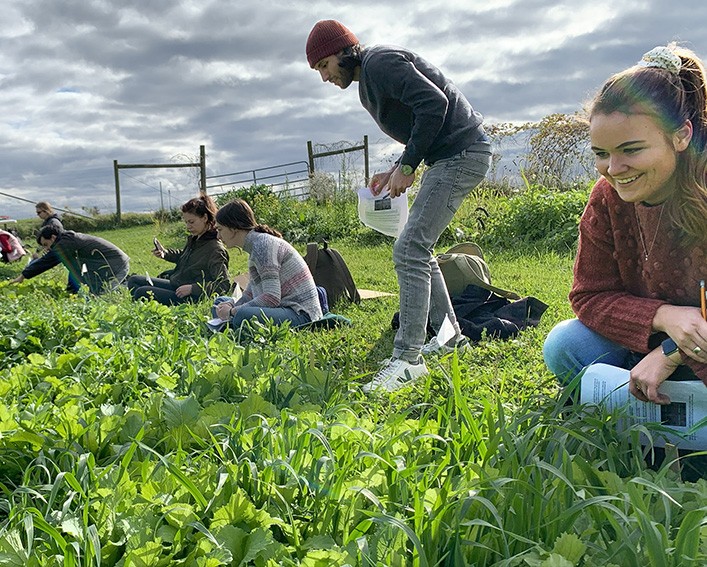
Cover Crop Challenge helps students learn and grow
Students in the Cover Crops in Agroecosystems (PLSCI 4125) course learn about the importance of soil nutrient cycling by, among other things, burying a new pair of cotton underwear at the beginning of the semester, then pulling it out at the end to see how much it’s decomposed. They also learn about the benefits and logistics of planting cover crops, like legumes and grasses, in between cash crop plantings. The practice sequesters carbon dioxide, improves long-term soil fertility and reduces soil erosion – especially important as the changing climate increases the frequency and intensity of extreme rainfall events. A key activity: Students create and plant their own cover crop mix and assess its effectiveness.
Questions? Contact us
Vacant
Plant Sciences Major Coordinator
Email: plantsci [at] cornell.edu (plantsci[at]cornell[dot]edu)
Greg Peck
Director of Undergraduate Studies
Phone: (607) 255-7122
Email: gmp32 [at] cornell.edu (gmp32[at]cornell[dot]edu)
Current majors:
Find more information on Canvas. (Cornell netid required.)
Courses for non-majors
If you are interested in plants but don't have a strong science background, here are some courses that will expose you to the wonders of plants. (Plant Sciences Majors can take most of these, too.)
- PLSCI 1102 - Hands-On Horticulture for Gardeners
- PLSCI 1115 - The Nature of Plants
- PLSCI 1130 - Light and Life: The Relationship between Light and Life in the Natural World
- PLSCI 1150 - CSI: Forensic Botany
- PLSCI 1300 - Just Food: Exploring the Modern Food System
- PLSCI 1900 - Sustainable Agriculture: Food, Farming, and the Future
- PLSCI 2000 - The Art of Horticulture
- PLSCI 2010 - Magical Mushrooms, Mischievous Molds
- PLSCI 2020 – Foods of the Future
- PLSCI 2260 - Practicum in Forest Farming as an Agroforestry System
- PLSCI 2400 - Green World/Blue Planet
- PLSCI 2470 - Plants and Cultures around the World
- PLSCI 2490 - Hollywood Biology: Science in Cinema
To learn more about these courses, visit the Courses of Study website.