The safety and well-being of our community is our highest priority. We know the recent news and allegations are deeply concerning, and we are committed to a safe environment for all. Learn how Cornell is addressing sexual violence.

Alert Close

Program overview

The Plant Breeding concentration within the Integrative Plant Science MPS emphasizes the genetic improvement of plants for the benefit of society by using scientific procedures such as genetics, statistics, genomic selection, and cultivar development. Tools such as applied breeding and genetics, molecular mapping, molecular mapping, genetic engineering, quantitative genetics, gene isolation, molecular genomics and biology, plant tissue culture, and other analytical systems are used to produce new or improved genetically modified plants.  These new crops possess desirable characteristics in flower color, growth rate, size of harvested products, flavor, and resistance to diseases and pests.


MPS Degree Requirements

The CALS MPS degree is a one-year, course-based program where students study the intricacies and in-depth questions of their field of study. Instead of a thesis or research project, MPS students complete a capstone project during their final semester. To understand this difference in greater detail, please visit our FAQ page. Students earning the MPS in Integrative Plant Science complete 30 credits of graduate level courses (5000+), with at least 20 of these credits earned through the College of Agriculture & Life Sciences, and at least 18 of these credits taken for letter grade. (Note that physical education courses and language courses do not count towards degree.)

The Integrative Plant Science Master of Professional Studies program is a STEM-designated degree with coursework requirements that differ slightly from other MPS programs at Cornell. 

Specific course requirements of the Integrative Plant Science MPS Degree are as follows:

  • Core Courses (13 credits minimum):
    • Professional Development (5 – 9 credits)
    • Quantitative Literacy (2 – 6 credits)
    • Capstone Project (2 – 6 credits)
  • Concentration Courses (12 credits minimum):
    • Courses specific to your concentration
  • Elective Courses (5 credits minimum)
    • Graduate level course you choose in consultation with your advisor.

Note: 2.5 GPA required for graduation.

Here are some of the courses you can take to fulfill the field core requirements. Courses are not necessarily offered every semester or every year. Refer to the Courses of Study website for details.

Required Courses: 2 credits
PLSCI 5101: Applied Data Skills in Integrative Plant Science (1 credits)
PLSCI 5102: Data Communication in Integrative Plant Science (1 credits)

Professional Development: 5-9 credits
AEM 5110 Design and Innovation (3 credits)
AEM 6145 Business and Management Fundamentals for STEM Graduate Students (1.5 credits)
ALS 5211 Career Readiness: Engaged Learning for CALS Professional Master’s Students (1 credits)
GDEV 6820 Community Organizing and Development (3 credits)
HADM 6130 Entrepreneurial Management (3 credits)
ILRHR 6640 HR Research for Executive Decision-Making (3 credits)
NBA 5070 Entrepreneurship for Scientists and Engineers (3 credits)
NBA 5150 Leadership Theory & Practice (3 credits)
NBA 5380 The Business Idea Factory (1.5 credits)
NBA 5640 The Business of Entrepreneurship (3 credits)
NBA 5670 Management Writing (1.5 credits)
NBA 5680 Management Presentations (1.5 credits)
NBA 5690 Management Consulting Essentials (1.5 credits)
NBA 6230 Actualizing Your Startup - Part I (1.5 credits)
NCC 5540 Managing and Leading Organizations (3 credits)
PUBPOL 5414 Project Management (3 credits)
PUBPOL 5431 Fundraising, Grantmaking, and Lobbying (1.5 credits)

Quantitative Literacy: 2-6 credits
AEM 5225 Systems and Analytics in Accounting (3 credits)
AEM 5510 Environmental Economics (3 credits)
AEM 5605 Predictive Analytics for Business Strategy (3 credits)
AEM 6125 Impact Evaluation in Developing Countries (3 credits)
AEM 6400 Analysis of Agricultural Markets (3 credits)
BTRY 5010 Biological Statistics I (4 credits)
BTRY 5090 Theory of Statistics (4 credits)
BTRY 6010 Statistical Methods I (4 credits)
CEE 5980 Decision Framing and Analytics (3 credits)
COMM 6820 Quantitative Research Methods (3 credits)
CRP 6201 Research Design and Qualitative Methods (3 credits)
DEA 6560 Research Methods in Social Sciences (4 credits)
ENTOM 6060 Applied Statistics: Biological Experiments in Practice (4 credits)
GDEV 5740 Applied Qualitative Methods (3 credits)
GDEV 6190 Quantitative Research Methods (4 credits)
GOVT 6019 Introduction to Probability and Applied Statistics (4 credits)
ILRST 6100 Statistical Methods I (4 credits)
PUBPOL 5310 Applied Econometrics for Public Policy (4 credits)
PUBPOL 5340 Regulation and Infrastructure Policy (4 credits)
PUBPOL 6040 Qualitative, Survey, and Mixed Method Approaches to Policy Research (3 credits)
SOC 6010 Statistics for Sociological Research (4 credits)
SOC 6310 Qualitative Research Methods for Studying Science, Technology, and Medicine (3 credits)
STSCI 5120 Intro to R Programming (2 credits)
STSCI 5150 Introductory Statistics for Biology (4 credits)
STSCI 5200 Biological Stats 1 (4 credits)

Capstone Project Courses: 2-6 credits
ALS 5900 Master of Professional Studies Project Development (1-5 credits)
ALS 5910 Master of Professional Studies Project Completion (1 credit)

12 credit minimum of Category A and/or Category B Concentration Courses with at least 5 credits from Category A. Refer to the Courses of Study website for details.

Category A: 5 credit minimum 

PLSCI 5010: Biology and Management of Plant Diseases (4 credits)
PLSCI 5110: Field Crop Systems (4 credits)
PLSCI 5350: Sustainable Orchard Management (3 credits)
PLSCI 5420: Plant Physiology (3 credits)
PLSCI 5430: Molecular Biology and Genetic Engineering of Plants (2 credits)
PLSCI 5431: Laboratory in Molecular Biology and Genetic Eng (2 credits)
PLSCI 5575: Principles of Vegetable Production (3 credits)
PLSCI 6000: Concepts and Techniques in Computational Biology (4 credits)
PLSCI 6010: Molecular Biology of Plant-Microbe Interactions (3 credits)
PLSCI 6020: Plant Propagation (3 credits)
PLSCI 6030: Genetic Improvement of Crop Plants (3 credits)
PLSCI 6070: Nutritional Quality Improvement of Food Crops (2 credits)
PLSCI 6080: Methods of Plant Breeding Lab (2 credits)
PLSCI 6090: Perennial Crop Breeding Seminar (1 credits)
PLSCI 6095: Practicum in Plant Breeding (1-3 credits, variable. credits)
PLSCI 6100: Plant Responses to Environmental Stresses (3 credits)
PLSCI 6170: Advanced Analytical Methods for Plant Systems (2 credits)
PLSCI 6220: Comparative Plant Development: Evo Devo (2 credits)
PLSCI 6230: Equitable Crop Improvement: From Theory to Practice (3 credits)
PLSCI 6250: Data-Model Fusion in Research (3 credits)
PLSCI 6380: Fungal Genetics and Genomics (4 credits)
PLSCI 6410: Laboratory in Plant Biology (2 credits)
PLSCI 6500: Fruit Crop Physiology (3 credits)
PLSCI 6520: Berry Crops: Culture and Management (2 credits)
PLSCI 6540: Plant Cell Biology (4 credits)
PLSCI 6550: Postharvest Biology of Horticultural Crops (3 credits)
PLSCI 6560: Topics in Plant Evolution (1 credits)
PLSCI 6620: Plant Biochemistry (3 credits)
PLSCI 6660: Applied Plant Microbe Interactions (3 credits)
PLSCI 6831: Concepts and Techniques in Plant Biology (3 credits)
PLSCI 6841: Plant Form and Function: Anatomy, Cell Biology, and Development (3 credits)
PLSCI 6880: Genetic Engineering of Food Crops: Myths, Truths and Detection (1 credits)
PLSCI 7170: Quantitative Genetics in Plant Breeding (4 credits)
PLSCI 7410: Problems in Plant Biology (1 credits)

Category B: 7 additional credits from A or B

BIOEE 6550 Data Analysis in Ecology (3 credits)
CRP 5072 Land Use, Environmental Planning, and Urban Design Workshop (4 credits)
CRP 5080 Introduction to GIS for Planners (4 credits)
CRP 5250 Methods for Spatial Economic and Demographic Analysis (4 credits)
CRP 5530 Land Use and Spatial Planning Methods (4 credits)
CRP 5680 Introduction to Urban Data Science: Data, Interpretation, and Presentation (4 credits)
EAS 6540 Ocean Satellite Remote Sensing (3 credits)
EDUC 5510 Engaged Learning Through Extension, Outreach, and Instruction (3 credits)
EDUC/GDEV 5350 Youth Organizations and Leadership Development (3 credits)
ENTOM/PLSCI 5440: Integrated Pest Management (3 credits)
FDSC/VIEN 6340: Cider Production Laboratory (1.5 credits)
GDEV 5140 Mapping Our Worlds with GIS: Cartography and Analysis in GIS (4 credits)
GDEV/PLSCI 5030: Food Cycles: Systems Thinking (3 credits)
LA 5910 Creating the Urban Eden: Woody Plant Selection, Design, and Landscape Establishment (5 credits)
NTRES 6260 Applied Conservation Ecology (3 credits)
PLSCI 5000: Annual and Perennial Plants in the Landscape (1.5 credits)
PLSCI 5020: Systems Epidemiology for Plant Pathology (3 credits)
PLSCI 5025: Hydroponic Food Crop Production and Management (4 credits)
PLSCI 5045: Chemistry and Pharmacology of Cannabis (1 credits)
PLSCI 5140: Global Cropping Systems and Sustainable Development (3 credits)
PLSCI 5150: Weed Biology and Management (4 credits)
PLSCI 5200: Geographic Information Systems (3 credits)
PLSCI 5210: Soil and Crop Management for Sustainability (3 credits)
PLSCI 5290: Remote Sensing and Modeling for Ecosystems (3 credits)
PLSCI 5500: Master Composter Training and Extension Internship (2 credits)
PLSCI 5600: Soil Science (4 credits)
PLSCI 5660: Soil Ecology (3-4 credits, variable. credits)
PLSCI 5800: Principles and Practices in Certified Organic Agriculture (3 credits)
PLSCI 5825: Museum and Park Interpretation (3 credits)
PLSCI 5850: Public Garden Management (3 credits)
PLSCI 6017: Cropping Systems Ecology (2 credits)
PLSCI 6140: Weed Ecology and Management (3 credits)
PLSCI 6180: People, Plants and Participation (3 credits)
PLSCI 6200: Analysis of Spatial Data: A Case-Based Approach (3 credits)
PLSCI 6300: Mycology (4 credits)
PLSCI 6420: Mineral Nutrition: From Plants to Humans (3 credits)
PLSCI 6450: Urban Plants and Human Health (3 credits)
PLSCI 6490: Current Topics in Fungal Biology (1 credits)
PLSCI 6551: Principles of Nutrition and Nutrient Management in Crops and Landscape Plants (3 credits)
PLSCI 6610: Diagnostic Lab Experience (1-2 credits, variable credits)
PLSCI 6630: Pedology (3 credits)
PLSCI 6710: Soil Chemistry (3 credits)
PLSCI 6720: Nutrient and Carbon Cycling and Management in Ecosystems (3 credits)
PLSCI 6730: Ecology of Agricultural Systems (4.5 credits)
PLSCI 7000: School of Integrative Plant Science Seminars (1 credits)
PLSCI 7450: Current Papers in Plant Biology (1 credits)
PUBPOL 5410 Non Profit Management and Finance (3 credits)
PUBPOL 6950 Spatial Demography (3 credits)
VIEN 5000 Viticulture and Enology Industry Seminar (1 credits)
VIEN 5204 Principles and Practices of Growing Grapes and Making Wine (Lecture) (3 credits)
VIEN 5205 Growing Grapes and Making Wines Graduate Laboratory (2 credits)
VIEN 5300 The Science of Grapevines (2 credits)
VIEN 5340: Cider Production: Apples and Fermented Juice (1 credits)
VIEN 5360 Distillation Principles and Practices (1 credits)
VIEN 5400 Wines and Grapes: Composition and Analysis (2 credits)
VIEN 5500 Advanced Winemaking Theory and Practice I (2 credits)
VIEN 5504: Principles and Practices of Growing Grapes and Making Wines (3 credits)
VIEN 5510 Advanced Winemaking Theory and Practice I Laboratory (2 credits)
VIEN 5610: Vineyard Management I (2 credits)
VIEN 5620 Vineyard Management II (2 credits)
VIEN 5650 Wine Microbiology (3 credits)
VIEN 6360 Distillation Principles and Practices Laboratory (2 credits)
VIEN 6700 Winemaking Theory and Practice II (2 credits)
VIEN 6710 Advanced Winemaking Theory and Practice II Laboratory (2 credits)
VTPEH 6175 Introduction to GIS for Public Health (3 credits)dits)

Next steps

Deadline to apply: January 15*

*For regular Fall Semester start. Late applications may be accepted under exceptional circumstances.  Contact Tara Reed for more information: tln2 [at] cornell.edu (tln2[at]cornell[dot]edu).

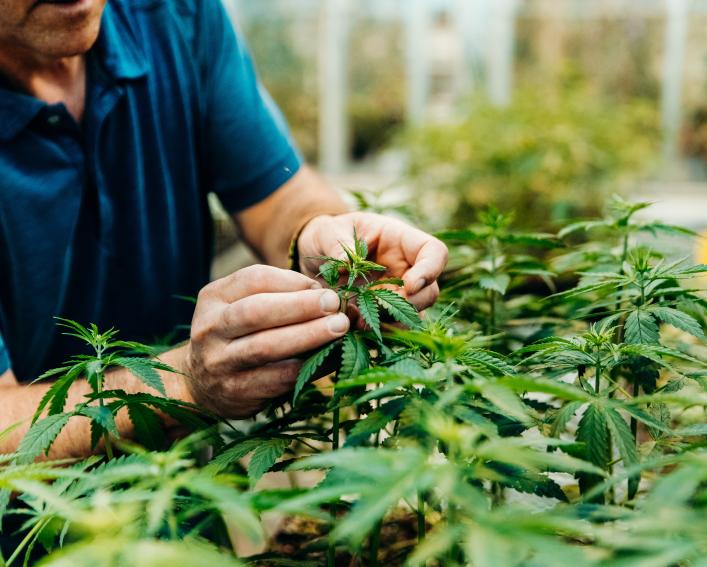
plant breeder examining hemp plants in greenhouse

Meet some of our Plant Breeding faculty

Faculty spotlight

Mark Bridgen

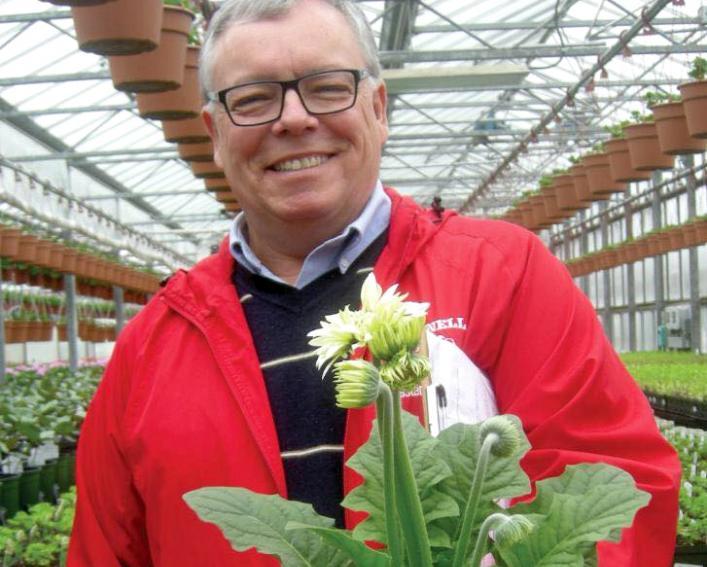
Bridgen is an ornamental plant breeder, leader in the floriculture industry and director of the Long Island Horticultural Research and Extension Center. His approach involves a balance of basic and applied research. He has expertise in new plant development and breeding, plant cell and tissue culture, and in vitro plant breeding, including somaclonal and gametoclonal variation, embryo culture, somatic embryogenesis, mutation breeding, meristem culture for the production of pathogen free plants, and micropropagation. 

mark bridgen with flowering plant in greenhouse
Mark Bridgen
Mark Bridgen

Professor

School of Integrative Plant Science

Horticulture Section

Plant Breeding and Genetics Section

Mark Bridgen
Ornamental plant breeding
Cell and tissue culture
Greenhouse floriculture
jia dong
Jia Dong

Senior Research Associate

School of Integrative Plant Science

Plant Breeding and Genetics Section

Jia Dong
  • jd2389 [at] cornell.edu
Dissecting molecular mechanisms of crop stress resistance and yield improvement.
Developing robotics- and AI-enabled synthetic biology pipelines for crop improvement.
Automating plant transformation and regeneration using robotics.
Susheng Gan
Susheng Gan

Professor

School of Integrative Plant Science

Plant Biology Section

Susheng Gan
Plant senescence
Dimensional control of gene expression
Maria Gandolfo
Maria Alejandra Gandolfo Nixon

Professor

School of Integrative Plant Science

Plant Biology Section

Maria Alejandra Gandolfo Nixon
Paleobotany
Diversification and evolution of angiosperms
Plant anatomy
Michel Gore stands in a corn field.
Michael Gore

Section Head and Professor

School of Integrative Plant Science

Plant Breeding and Genetics Section

Michael Gore
Quantitative genetics and genomics
High-throughput phenotyping tools
Nutritional genomics
jason londo headshot black t shirt
Jason Londo

Associate Professor

School of Integrative Plant Science

Horticulture Section

Cornell AgriTech

Jason Londo
Fruit crop stress physiology and adaptation
Graft physiology and phenotypic plasticity
Comparative genetics and genomics
virginia moore
Virginia Moore

Assistant Professor

School of Integrative Plant Science

Plant Breeding and Genetics Section

Virginia Moore
  • vm377 [at] cornell.edu
Breeding for sustainable cropping systems
Cover crops, intercropping, polycultures, organic farming systems
Legumes, forages, alfalfa, hemp
Rebecca Nelson
Rebecca Nelson

Professor

School of Integrative Plant Science

Plant Pathology and Plant-Microbe Biology Section

Professor

Global Development Section

Rebecca Nelson
Circular bionutrient economy and enhancing wellbeing in peri-urban areas through waste valorization
Agroecology and supporting student leadership toward sustainability
Participatory research and extension
maddy oravec headshot
Madeline (Maddy) Oravec
She/her/hers

Assistant Professor

School of Integrative Plant Science

Horticulture Section

Cornell AgriTech

Madeline (Maddy) Oravec
  • mwo23 [at] cornell.edu
Grapevine breeding, genetics, and genomics
Fruit quality and wine-making characteristics
Disease resistance and environmental resilience
Wojtek Pawlowski
Wojtek Pawlowski

Professor

School of Integrative Plant Science

Plant Biology Section

Plant Breeding and Genetics Section

Wojtek Pawlowski
Meiotic recombination
Advanced microscopy methods
Recombination and genome rearrangements in new polyploids
Lawrence Smart
Larry Smart

Professor

School of Integrative Plant Science

Horticulture Section

Plant Breeding and Genetics Section

Larry Smart
Breeding and genomics
Industrial hemp
Willow bioenergy crops
Justine Vanden Heuvel

Professor

Horticulture Section

School of Integrative Plant Science

Justine Vanden Heuvel
  • justine [at] cornell.edu
Sustainable viticulture production
Ecophysiological factors and their impact on fruit and wine composition
Computational tools for vineyard management
greg vogel headshot
Greg Vogel

Assistant Professor

School of Integrative Plant Science

Plant Breeding and Genetics Section

Greg Vogel
Applied vegetable breeding
Plant-microbe interactions and disease resistance
Flavor, quality, and acceptance of tomato, eggplant, and other vegetables

Questions about Integrative Plant Science MPS? Contact us:

Neil Mattson
Director of Graduate Studies
Graduate Field of Integrative Plant Science (IPS)
Phone: (607) 255-0621
Email: nsm47 [at] cornell.edu (nsm47[at]cornell[dot]edu) 

Tara Reed
Program Coordinator
Graduate Field of Integrative Plant Science (IPS)
Email: sips-mps [at] cornell.edu (sips-mps[at]cornell[dot]edu)