Continuing education

Our school is committed to lifelong learning, offering a wide range of programming and skill building for children and adults alike. See featured education programs to take advantage of these opportunities, including online courses and seminar, garden tours and more.

News from the School of Integrative Plant Science

Learn about the many ways we are addressing some of the world's most urgent challenges.

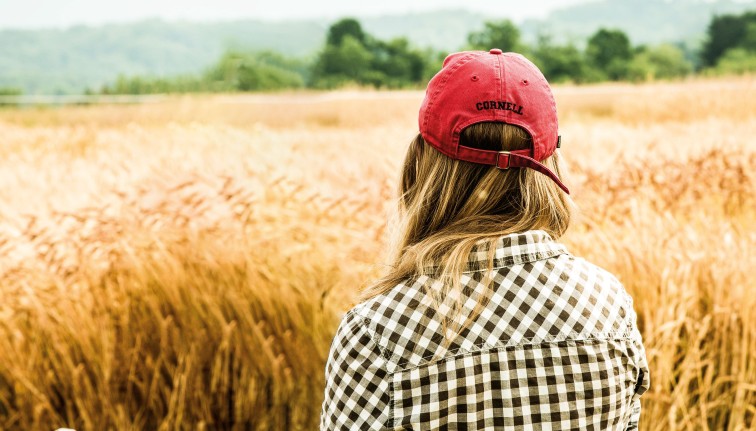
A wheat field.

News

Cornell researchers are partnering on the newly announced Feed the Future Climate Resilient Cereals Innovation Lab (CRCIL), providing plant breeding expertise and powerful computational tools to increase the accessibility of cereal crops for...

  • School of Integrative Plant Science
  • Plant Breeding and Genetics Section
  • Food
Green leaves with white powder on them

News

Researchers at Cornell have discovered a new grape downy mildew resistance gene – giving the wine and grape industry a powerful new tool to combat this devastating disease.

  • Cornell AgriTech
  • School of Integrative Plant Science
  • Horticulture Section

News

Ultraviolet light, which has been used successfully to suppress fungal powdery mildew in grapes, strawberries and cucumbers, can also destroy the bacteria that causes devastating fire blight in apples, according to new research from Cornell...
  • Cornell AgriTech
  • School of Integrative Plant Science
  • Agriculture
A bundle of one hundred U.S. dollar bills from the side.

News

Retired Cornell educators have until Nov. 6 to submit applications for the 2024 Podell Endowment Awards, which support projects that aim to make the world a better place.

  • Department of Entomology
  • Plant Breeding and Genetics Section

Land Acknowledgment

Cornell University is located on the traditional homelands of the Gayogo̱hó:nǫɁ (the Cayuga Nation). The Gayogo̱hó:nǫɁ are members of the Haudenosaunee Confederacy, an alliance of six sovereign Nations with a historic and contemporary presence on this land. The Confederacy precedes the establishment of Cornell University, New York state, and the United States of America. We acknowledge the painful history of Gayogo̱hó:nǫɁ dispossession, and honor the ongoing connection of Gayogo̱hó:nǫɁ people, past and present, to these lands and waters.

This land acknowledgment has been reviewed and approved by the traditional Gayogo̱hó:nǫɁ leadership. Learn more from the American Indian and Indigenous Studies Program website.