Continuing education

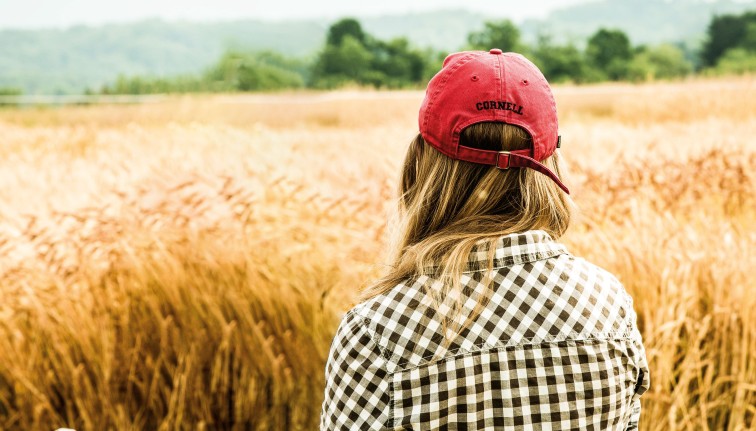
Our school is committed to lifelong learning, offering a wide range of programming and skill building for children and adults alike. See featured education programs to take advantage of these opportunities, including online courses and seminar, garden tours and more.

News from the School of Integrative Plant Science

Learn about the many ways we are addressing some of the world's most urgent challenges.

Group photo with NextGen team members

News

Canaan Boyer, project manager for NextGen Cassava, earned the 2022 CALS Core Value Staff Award for her commitment to inclusion for "one of the most successful crop breeding projects in the world."
  • Global Development Section
  • School of Integrative Plant Science
  • Plant Breeding and Genetics Section
Benjamin Houlton

News

On Sept. 1, members of the College of Agriculture and Life Sciences (CALS) came together to celebrate the 18th year of the Research & Extension Awards and the 13th year of the Core Value Staff Awards. The ceremony recognized the notable and wide...
  • Cornell AgriTech
  • Cornell Botanic Gardens
  • Animal Science

News

Stanton Shannon, who supported New York farmers through his research on sweet corn, onions and squash, died Jan. 6 in Riverside, California. He was 94.

  • School of Integrative Plant Science
composite image of an animated tom silva teaching

News

Tom Silva is a senior lecturer in the Plant Biology Section and chair of the SIPS Diversity and Inclusion Council. The Our Stories series profiles diverse members of the School of Integrative Plant Science (SIPS) community. Here is Tom’s story...
  • School of Integrative Plant Science
  • Plant Biology Section

Land Acknowledgment

Cornell University is located on the traditional homelands of the Gayogo̱hó:nǫɁ (the Cayuga Nation). The Gayogo̱hó:nǫɁ are members of the Haudenosaunee Confederacy, an alliance of six sovereign Nations with a historic and contemporary presence on this land. The Confederacy precedes the establishment of Cornell University, New York state, and the United States of America. We acknowledge the painful history of Gayogo̱hó:nǫɁ dispossession, and honor the ongoing connection of Gayogo̱hó:nǫɁ people, past and present, to these lands and waters.

This land acknowledgment has been reviewed and approved by the traditional Gayogo̱hó:nǫɁ leadership. Learn more from the American Indian and Indigenous Studies Program website.