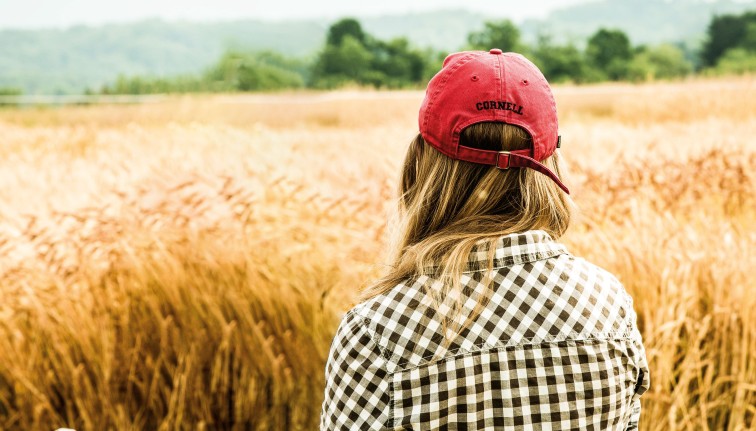
Continuing education

Our school is committed to lifelong learning, offering a wide range of programming and skill building for children and adults alike. See featured education programs to take advantage of these opportunities, including online courses and seminar, garden tours and more.

News from the School of Integrative Plant Science

Learn about the many ways we are addressing some of the world's most urgent challenges.

Close up of the U.S. Capitol Building in Washington, D.C

News

Three doctoral students supported by the Foundation for Food and Agriculture Research (FFAR) Fellowship Program visited Washington, D.C. to advocate for agricultural science and learn about policymaking.

  • Animal Science
  • Nutritional Sciences
  • Plant Breeding and Genetics Section
Close up of a patch of waterhemp

News

New research confirms glyphosate-resistant waterhemp for the first time in New York state, with significant consequences for soybean growers, many of whom use the herbicide as their primary method of weed control.

  • Cornell AgriTech
  • School of Integrative Plant Science
  • Soil and Crop Sciences Section
man and woman smiling

News

William Boyle ’55, MBA ’56, has given a significant gift to the College of Agriculture and Life Sciences (CALS) to support renovations to the Plant Science Building – the largest gift so far to the current college campaign. “Cornell has been a...
  • School of Integrative Plant Science
  • Plants
turf team in the field

News

  • School of Integrative Plant Science
  • Horticulture Section

Land Acknowledgment

Cornell University is located on the traditional homelands of the Gayogo̱hó:nǫɁ (the Cayuga Nation). The Gayogo̱hó:nǫɁ are members of the Haudenosaunee Confederacy, an alliance of six sovereign Nations with a historic and contemporary presence on this land. The Confederacy precedes the establishment of Cornell University, New York state, and the United States of America. We acknowledge the painful history of Gayogo̱hó:nǫɁ dispossession, and honor the ongoing connection of Gayogo̱hó:nǫɁ people, past and present, to these lands and waters.

This land acknowledgment has been reviewed and approved by the traditional Gayogo̱hó:nǫɁ leadership. Learn more from the American Indian and Indigenous Studies Program website.