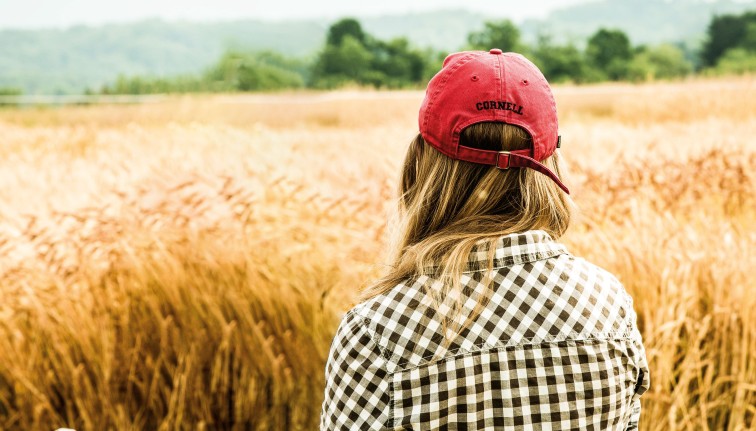
The School of Integrative Plant Science is the largest academic unit in Cornell's College of Agriculture and Life Sciences. It is composed of five sections with interrelated activities in the plant sciences: Horticulture, Plant Biology, Plant Breeding and Genetics, Plant Pathology and Plant-Microbe Biology, and Soil and Crop Sciences.

Degree programs

students at dilmun hill student farm
Undergraduate

The Cornell CALS plant sciences major prepares students for careers or further study in fundamental biology, plant breeding, pest and disease management and production of plants for food, fiber and ornamental uses.

students looking at rice plants
Graduate - M.S./Ph.D.

Graduate study in SIPS is organized into five graduate fields. Collectively these fields provide unparalleled opportunities to connect disciplines, creatively solve problems and integrate complex systems. Includes graduate fields of Horticulture, Plant Biology, Plant Breeding, Plant Pathology and Plant-Microbe Biology, and Soil and Crop Sciences.

people driving a hemp harvester in the field
Graduate - Integrative Plant Science MPS

The Master of Professional Studies (MPS) degree in Integrative Plant Science is a one-year, course-based master's degree, ideal for individuals who are interested in in-depth study of the issues and advancements in plant and soil sciences.

Continuing education

Our school is committed to lifelong learning, offering a wide range of programming and skill building for children and adults alike. See featured education programs to take advantage of these opportunities, including online courses and seminar, garden tours and more.

News from the School of Integrative Plant Science

Learn about the many ways we are addressing some of the world's most urgent challenges.
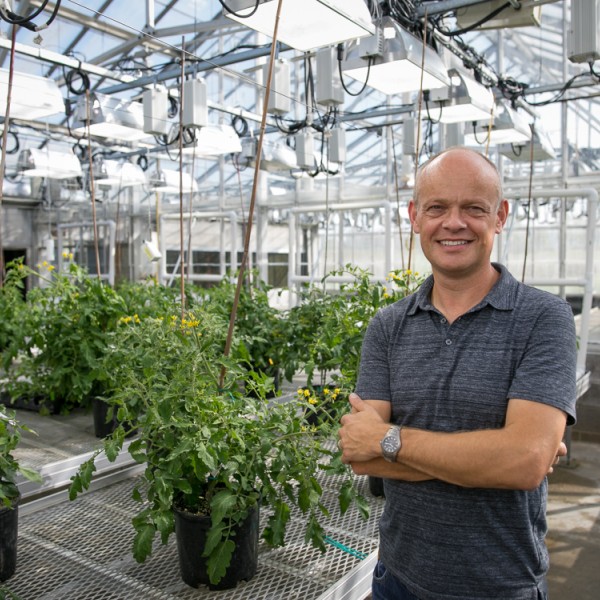
a mand standing with boxes

News

“Our mission has always been to help New Yorkers, and given current circumstances, we are finding new ways to do that,” said Larry Smart , associate director of Cornell AgriTech. “Because the health of Geneva community members is important, we...
  • Cornell AgriTech
  • School of Integrative Plant Science
  • Health + Nutrition
Two men stand in a field of Barley, speaking

News

A team of plant breeders has developed and released the first variety of malting barley that is uniquely adapted to New York state's growing conditions, further supporting brewers' ability to source in-state ingredients.
  • Cornell Cooperative Extension
  • Plant Breeding and Genetics Section
  • Plant Pathology and Plant-Microbe Biology Section
Men and women sitting at a table sampling wine

News

Younger consumers aren’t engaging with it like their older peers, and are drinking less in general, but sustainably produced wine could change that. According to a 2019 Wine Intelligence consumer survey, sustainable wine had the highest future...
  • Center of Excellence in Food and Agriculture
  • Cornell AgriTech
  • Cornell Cooperative Extension
A green plant with a black background behind it

News

Fay-Wei Li, adjunct assistant professor of plant biology and a faculty member of the Boyce Thompson Institute, and researchers from across the globe sequenced the genomes of three hornworts, illuminating the dawn of land plants. The group also...
  • Boyce Thompson Institute
  • School of Integrative Plant Science
  • Plant Biology Section

Land Acknowledgment

Cornell University is located on the traditional homelands of the Gayogo̱hó:nǫɁ (the Cayuga Nation). The Gayogo̱hó:nǫɁ are members of the Haudenosaunee Confederacy, an alliance of six sovereign Nations with a historic and contemporary presence on this land. The Confederacy precedes the establishment of Cornell University, New York state, and the United States of America. We acknowledge the painful history of Gayogo̱hó:nǫɁ dispossession, and honor the ongoing connection of Gayogo̱hó:nǫɁ people, past and present, to these lands and waters.

This land acknowledgment has been reviewed and approved by the traditional Gayogo̱hó:nǫɁ leadership. Learn more from the American Indian and Indigenous Studies Program website.