Serving the public good
The Department of Animal Science’s extension and outreach program benefits New York’s animal industries through public education on the biology and management of domestic animals.
Many of our faculty and academic staff work through Cornell Cooperative Extension to provide information and guidance to the many farms and agricultural entities in the state.
We have active adult and youth extension programs in the areas of dairy, beef, sheep, goats, horses, and poultry. In addition, we support an active 4-H program that engages and empowers youth who are interested in animal-related projects, biology and production systems.
Reaching out to the wider world
Coupled with our research programs, our extension and outreach efforts help Animal Science faculty and staff teach practical education beyond the classroom. The aim of extension and outreach is to discover and develop new techniques, skills and information to benefit animals, agriculture and human health in an ever-changing world.
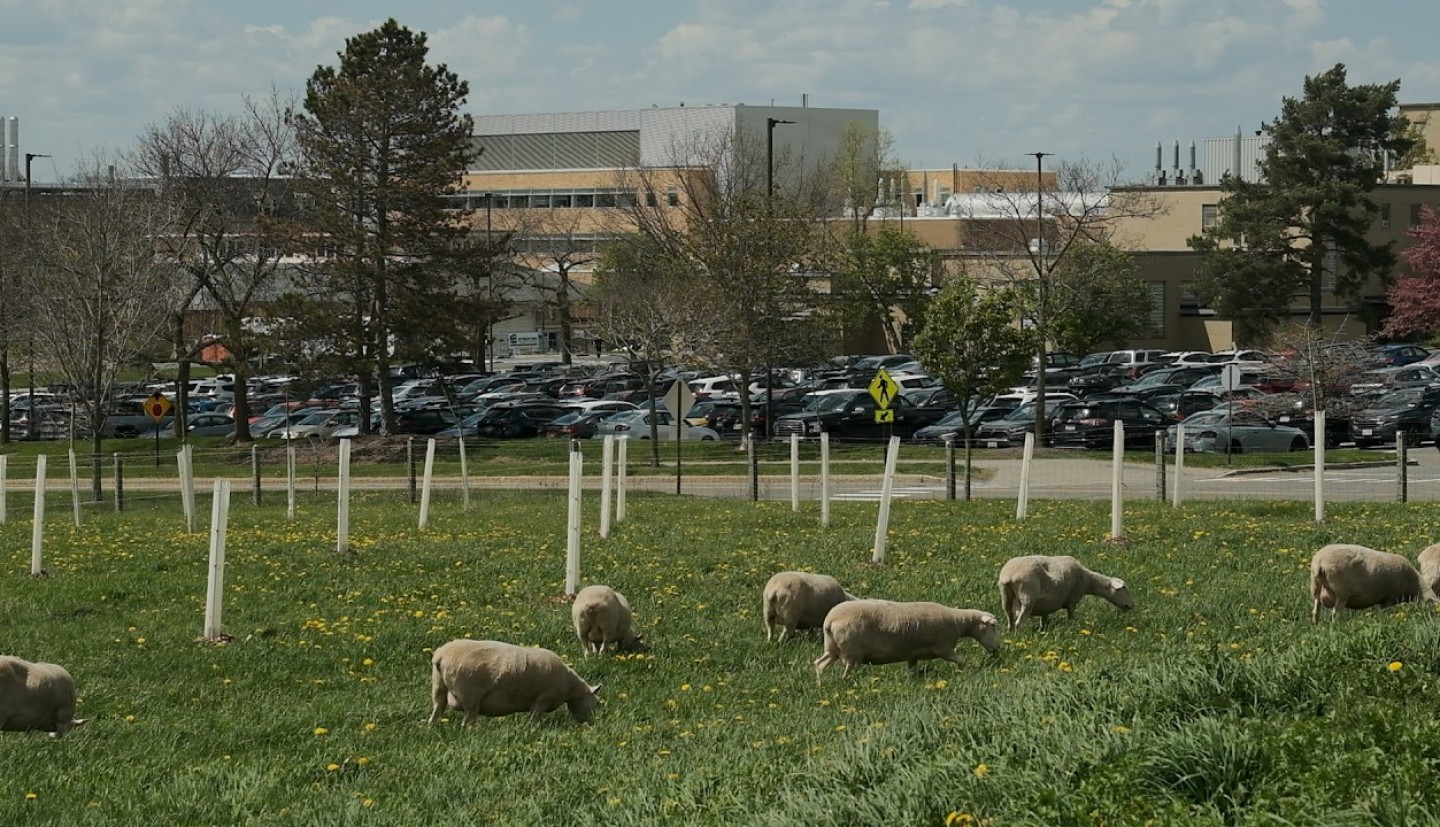
Cornell's First Silvopasture Planting
Silvopasture is the intentional incorporation of trees into pasture. It is an ancient practice that has been gaining in popularity due to its many benefits: reducing heat stress in animals, providing additional fodder, and carbon sequestration to name a few. The Cornell Small Farms program brought together members of the Department of Animal Science and agroforestry apprentices from Cornell Cooperative Extension (CCE) to plant trees into one of the pastures at Ezra's Farm. The primary goal was to provide shade for the sheep to reduce their heat stress. As summers get hotter, animals need shade to cool off, and when ruminants experience heat stress they stop eating and are less productive.
Planting trees in pasture also sequesters carbon above ground and in the soil, increasing climate resiliency. Part of the idea of this planting is to showcase and research the benefits. There is very little research in temperate climates on silvopasture: which trees to use, their nutritional value as fodder and the carbon sequestration potential of the whole system. Animal Science and CCE hope this site can be used to further that research and lead by example, to inspire tomorrow's leaders to give trees a chance.
Extension
The goal of extension is to provide New York’s animal industries with information and technology to help them to be biologically efficient, economically profitable, sustainable and competitive in an increasingly challenging and environmentally conscious world. Disciplinary and interdisciplinary expertise is provided in genetic selection, nutrition, reproduction, growth and development, animal and systems management, and nutrient management. Department programs include the Nutrient Management Spear Program, as well as PRO-LIVESTOCK (beef cattle, sheep, goats and camelids) and PRO-DAIRY (dairy cattle) — both joint ventures of the New York State Department of Agriculture and Markets and Cornell University’s College of Agriculture and Life Sciences.
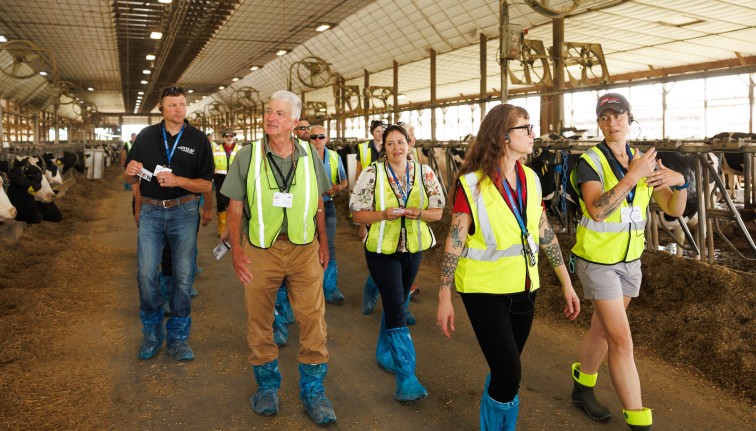
Cornell animal science youth extension and NYS 4-H provide programs for youth interested in pet animals, as well as the traditional dairy and livestock species. Animal Science staff are responsible for independent programs such as Junior DAIRY LEADERS and Dairy Discovery, as well as state-wide 4-H programs including Animal Crackers, species-specific Quiz Bowl and Skillathon competitions, and the Youth animal shows at the New York State Fair.
Faculty are actively engaged in research and development of applications that leverage big data integration to improve animal production efficiency, lower environmental footprint, and enhanced animal health monitoring.
Community outreach endeavors include digital resources and publications, a Plants Poisonous to Livestock database and a principles of genetics resource.