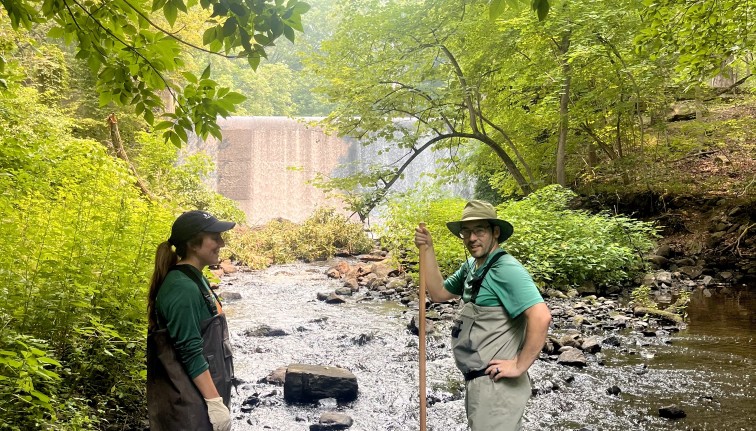
The Ecosystem Health team works toward advancing the health of aquatic ecosystems and water resources through monitoring, research, protection, and restoration.
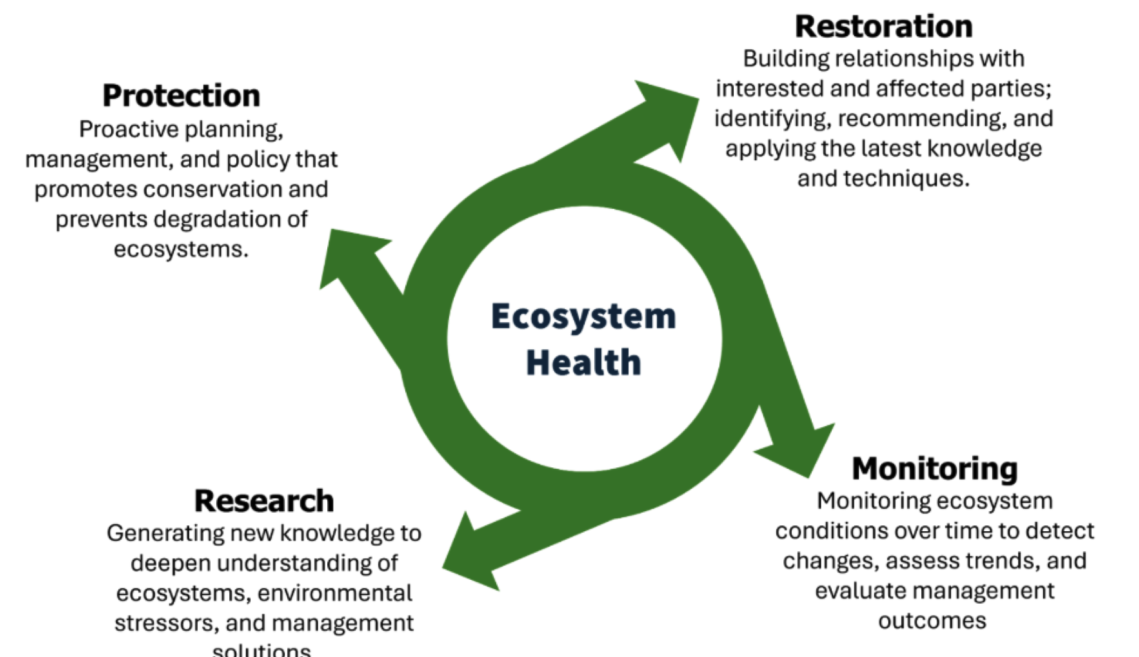
Healthy ecosystems are defined by their diverse native biota, resilience, and capacity to recover without intensive intervention. Ecosystem health considers and draws insight from all components of an ecosystem, including biological, physical, and chemical elements. Assessing the health of an ecosystem requires a multifaceted approach that varies by the type of risks present, such as dams, invasive species, or contamination. We build relationships and collaborate with state partners, academic institutions, interested and affected parties, and the public to inform decisions related to ecological contamination, restoration, and conservation that protect and improve ecosystem health.
Current Projects
Surveillance of Neonicotinoids and Their Impacts in the Finger Lakes and Lake Ontario Watersheds
Project Lead: Evie Brahmstedt
Maiden Lane Dam Removal Monitoring on Furnace Brook
Team: Kenji Doering, Evie Brahmstedt, Tim Koch, Mike deMoulpied, and Denise Piechnik
Statewide Guidance Documents for Dam Removal Projects
Project Lead: Tim Koch
Riparian Restoration Success Cases
Project Lead: Denise Piechnik
Freshwater Mussel Shells Track Recovery in Restored Benthic Habitats
Project Lead: Mike deMoulpied
Blue Crab Contaminant Monitoring in NYS Waters
Project Lead: Jen Bourque
Program Goals
- Advance aquatic research on emerging contaminant bioaccumulation and biomagnification and legacy contaminant burden management in fish and wildlife
- Collect and analyze contaminant data in aquatic biota to assess the status and trends of contaminant distribution in New York waters
- Research the impacts of disturbances, such as dam removal and invasive species on legacy and emerging contaminant cycling in aquatic ecosystems
- Research prevalence, transport, transformation, and toxicity of emerging contaminants, including 6PPD-quinone and PFAS
- Conduct and support research to assess the effects of habitat degradation on benthic habitats and freshwater mussel communities in New York waters
- Identify factors that drive successful stream, riparian, and ecosystem restoration to inform future implementation and long-term stewardship
- Research the impacts of dam removal projects including effects on riverine life and habitat, sediment transport and deposition, and water quality
- Monitor the prevalence, movement, and drivers of legacy and emerging contaminants in aquatic ecosystems
- Develop and refine methods for freshwater mussel monitoring, translocation planning, founder colony establishment, and post-restoration performance assessment
- Monitor dam removal projects before, during, and after deconstruction to assess water quality, sediment load, and other impacts
- Provide restoration technical support, including natural resource damage assessment, restoration planning, and research on best practices for efficient and effective restoration
- Foster relationships to expand knowledge types used in restoration including Traditional Ecological Knowledge
- Promote and work to increase aquatic connectivity and recovery of native species and restoring ecosystem function
- Assist in developing science-based guidance, criteria, and standards that protect fish, wildlife, and aquatic ecosystems from contaminants
- Provide research-based evidence to support regulatory actions (e.g. restrictions on uses, applications of chemicals)
- Support conservation status assessments, management prioritization, and science-based restoration planning for species and habitats of concern
- Develop updated guidance and procedures for dam removal projects to improve decision making during permitting and increase regulatory efficiency