


Education
The WRI offers tiered educational models that integrate technical training and real-world applications to effectively build essential skills for future water professionals. This multi-level approach equips students with practical knowledge and fosters professional networks, addressing critical skill gaps in the water sector workforce.
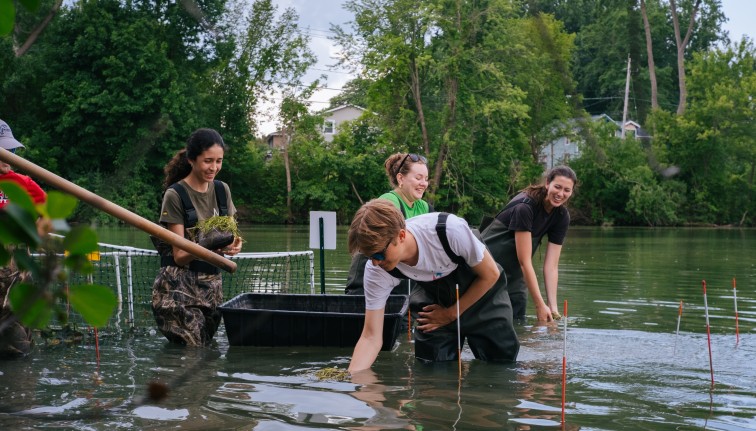
Summer Student Research Program
Each summer, the WRI staff administer a research program for 4-8 Cornell University students. This unique set of paid summer student research projects deal with issues from micropollutants and emerging contaminants, watershed resilience to climate change, water resource governance, sustainable water infrastructure, and environmental justice. The program is open to any Cornell University student and applications are typically due mid-March for the summer.
Applied Water Research in NYS Seminar Series (BEE 4670/6670)
This seminar series brings together researchers who work with WRI and state agency partners to support and improve water management in the state. The seminar focuses on ways in which robust science can support and influence on-ground management and policy outcomes, and center collaborative and interdisciplinary work between academics, water resource scientists, educators, managers, and policymakers in New York State.
Climate-adaptive Design (CaD) Studio
The Climate-adaptive Design (CaD) Studio is an academic course led by Associate Professor Josh Cerra that links Cornell University landscape architecture students with Hudson River Estuary municipalities to explore design strategies for more climate-resilient communities. CaD is grounded in the idea that by working with both people and place, we can build physical, ecological, and community capacity to adapt to change.
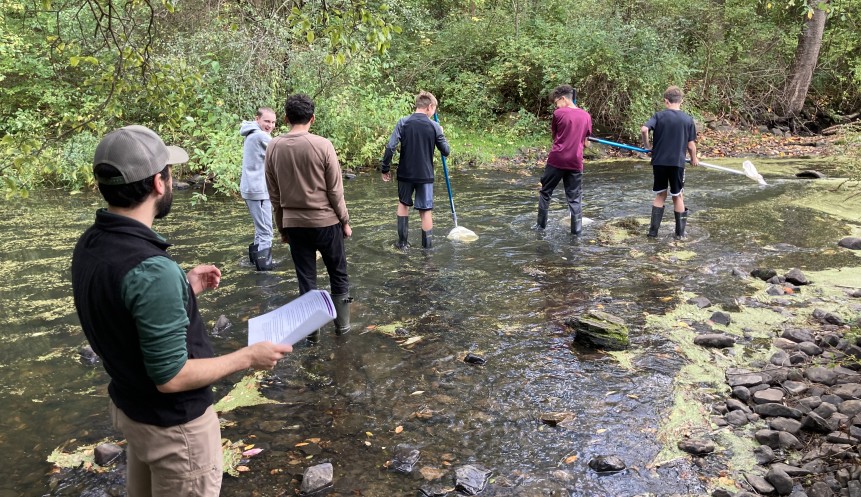
Day in the Life Programs
“Day in the Life” (DitL) programs started on the Hudson River and New York Harbor in 2003 with a dozen schools and 300 student participants. These students headed down to the river’s edge to do some sampling and sharing of their data.
The DitL of the Hudson and Harbor also spurred DitL events across New York State, from Peconic Bay and Carls River on Long Island to the Niagara River and Lake Erie.
Find a DitL event in your watershed
Outreach
Collaborative and community-based learning initiatives can enhance public awareness and support for water resource management. WRI staff are involved with public education initiatives, training, as well as continuing education and outreach for current water professionals.
Submerse NY
Submerse NY is a state-wide flood-risk awareness and outreach effort - led by New York Sea Grant, WRI and FEMA - that aims to supplement local community capacity to communicate flood-risk creatively through visual markers and public art. This outreach effort tailors to local community needs, and may include use of physical art installation, sculpture, murals, signage, digital outreach, and/or physical measurement prompts such as structure-based flood rulers - to help strengthen public interest and flood-risk awareness in NYS communities.
Year of Water
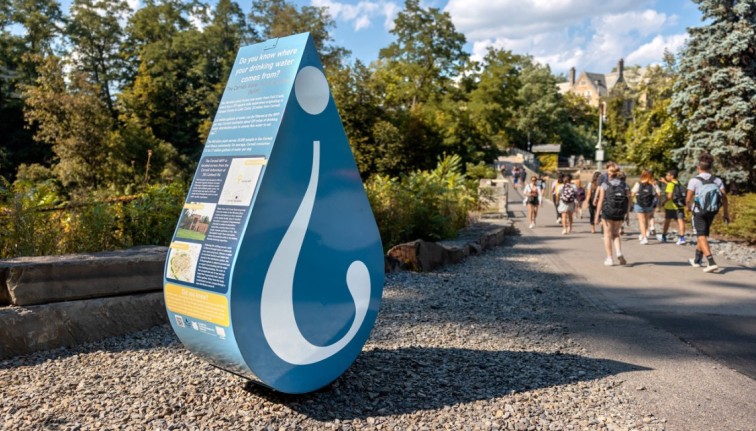
Year of Water was a campaign in 2020 aimed at increasing public awareness of the Ithaca-area water system that included a mural, several sculptures, and a podcast. Each of these highly collaborative projects sought to make the public question where their water comes from and to shed some light on the normally invisible water infrastructure we rely on everyday.
NYS Adaptation Practitioners Network
The NYS Adaptation Practitioners Network brings together more than 140 organizations representing every county in New York—and continues to grow. Membership includes nonprofits, community-based organizations, academic institutions, and state agencies working across disciplines. The Network brings together practitioners to inform policy, identify best practices, and cultivate collaborations to advance climate adaptation across the state.