Creating Community Conversations about Solutions to Plastics Pollution

Circular economies and technological advancements are gaining attention as ways to mitigate plastics pollution. Yet, to many stakeholders, solutions can feel far off and far away.

Our unique model puts everyday residents in the driver’s seat. Each episode is hosted by a different local interviewer, who chooses questions to ask a changemaker in the plastics waste reduction space. Our goals are to increase awareness, exchange perspectives, and cultivate resilience in the work to build a more sustainable plastics economy.

Episodes

How can we stop polluting our environment with so much single-use plastic... everything? Join students and residents of Tompkins County, New York in an extended community conversation about reducing plastics pollution in our county, our state, and beyond.

Check out the trailer on Spotify

Let’s start with the basics. How did our modern problems with plastics pollution get started?Susan Freinkel, a San Francisco based writer and the author of Plastic: A Toxic Love Story and American Chestnut: The Life, Death and rebirth of a Perfect Tree, shares her research into the history of our cultural love affair with plastics. She's interviewed by Matthew Eaglehouse, a student at Cornell University in the Charles H. Dyson School of Applied Economics and Management. He’s a member of Cornell Sustainability Consultants, a student group that provides local organizations, small companies, and industry experts with free consultations to meaningfully address modern environmental and social challenges.

Check out Episode 1 on Spotify

What’s the role of state agencies in waste mitigation and in addressing our plastics pollution woes? Kayla Montanye and Terry Laibach and of the NYS Department of Environmental Conservation dish on New York State’s Bag Waste Reduction Law and the 2022 Expanded Polystyrene Foam Container and Loose Fill Packaging ban.They're interviewed by Joey Gates, Earth Day Ithaca coordinator for Sustainable Tompkins, and founder of Dish Truck, a non-profit, pollution prevention effort to bring sustainability back to the party.

Check out Episode 2 on Spotify 

In Episode 3, we’re talking about a core recommendation from the New Plastics Economy Report that All plastic packaging be reused, recycled, or composted in practice.

Chatting about new plastic packaging solutions are Geoffrey Coates and Thomas Shelley.

Geoff is the scientific co-founder of Novomer, a sustainable materials company that features high-performance polymers and other chemicals from renewable feedstocks. He is also scientific co-founder of

Intermix Performance Materials. Tom is a long-time environmental activist in Tompkins County, NY, where he managed the Signs of Sustainability series for Sustainable Tompkins for 12 years. He worked for many years in the Cornell University Environmental Health and Safety Unit. And before that, Tom was one of several co-founders of the Haight Ashbury Food Co-op, the humble beginnings of an organization that grew into today’s large food co-ops like GreenStar.

Check out Episode 3 on Spotify

When it comes to addressing plastic pollution, some people say, "Every choice matters." Other people say, "Your one metal straw isn't going to save the planet."

How should we regard our daily little choices? 

Christian Shaw, a waterman and adventure who co-founded the organization Plastic Tides to create a global community of motivated changemakers, reflects on recycling, plant-based plastics, and his recent expedition in the Mississippi River Delta. 

He's interviewed by Erin Fox, a rising junior at Cornell University who's majoring in communications, and who believes that education is key to addressing the climate crisis in our midst.

Check out Episode 4 on Spotify

Joanna Sadler wants us to think about plastics differently. Can we shift our mindsets to regard plastics not as a waste product and a problem, but as a resource and an opportunity?Joanna and her colleagues at the University of Edinburgh have used E. coli to transform a molecule derived from PET plastic into the highly valuable industrial chemical vanillin. Vanillin is a high-value molecule used across the agrichemical and pharmaceutical industries—not to mention its culinary uses.

Demand for vanillin cannot be obtained from natural sources such as vanilla beans. Much of today’s vanillin is produced directly from petroleum. Joanna is interviewed by Joanne James. Joanne served for many years as the finance administrator for Newfield Central Schools in Newfield, New York.

She is presently an elected official on the Newfield Town Board. Joanna and Joanne discuss how we can make vanillin production sustainable and tackle the plastics waste process at the same time. If we can use plastics to make vanillin, what else can we make? 

Check out Episode 5 on Spotify

Our Team

Vanessa Greenlee
Vanessa Greenlee

Institute of Biotechnology, Research Division, with support from the Department of Global Development
College of Agriculture and Life Sciences

Geoffrey Coates
Geoffrey W. Coates

Tisch University Professor, Department of Chemistry and Chemical Biology
College of Arts and Sciences
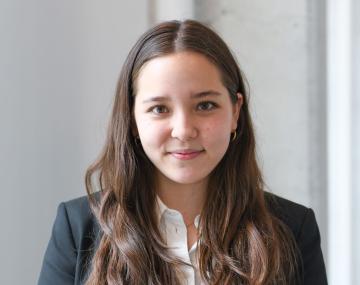
Elina Batt
Elina Batt

Social Media Manager

Ryun Shim
Ryun Shim

Graphic Designer

Stephanie Chow
Stephanie Chow

Sound Editor

Cornell Environmental Collaborative (ECO)

ECO is the collaborative for sustainability groups at Cornell University. We represent and work with over 40+ organizations on campus to promote sustainable thinking, foster new ideas, and invoke environmental awareness in students across campus.

Tompkins County Environmental Management Council

The Tompkins County Environmental Management Council (EMC) has been the Legislature's official citizen advisory board on local environmental issues since 1971.The purpose of the EMC is to identify problems, propose priorities, and promote coordination of activities in the development and management of our natural resources and to provide a public forum for the discussion and resolution of these problems and completion of proposed projects.