Land Technologies: Interrogating Tools of Governance in the Colonial Present Workshop
August 8-12, 2022
The "Land Technologies: Interrogating Tools of Governance in the Colonial Present" workshop will bring together pre-tenure scholars in social science fields including but not limited to geography, anthropology, sociology, history, political science, science and technology studies.
Logistics
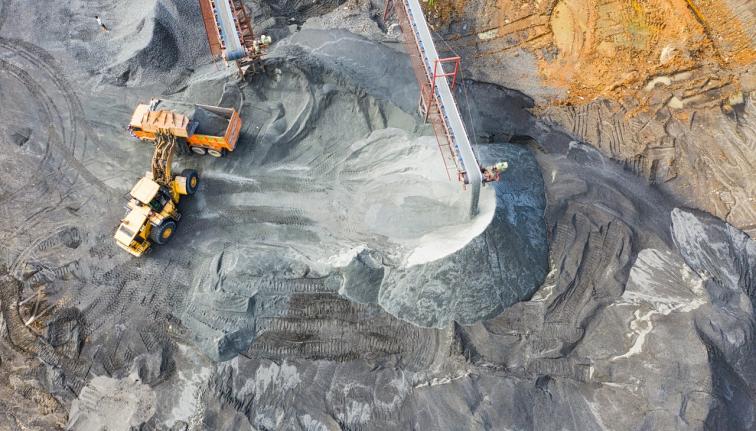
The workshop will take place in-person, Monday, August 8 to Friday, August 12 in Ithaca, NY. Cost of full or partial travel to Ithaca, accommodations, and some meals will be covered for workshop participants. This workshop will not have a hybrid/zoom option: if pandemic conditions in August preclude us from gathering in person, the workshop will be rescheduled.
Sponsors
- Mario Einaudi Center for International Studies
- Polson Institute for Global Development
- Cornell Center for Social Sciences
- Southeast Asia Program
Organizers
- Dr. Jenny Goldstein, Assistant Professor, Dept. of Global Development, Cornell University
- Dr. Levi Van Sant, Assistant Professor, Dept. of Integrative Studies, George Mason University
Workshop details
A growing number of critical social scientists argue that climate change, growing inequality, and right-wing populism are related crises produced by capitalism's inherent contradictions (Borras et al. 2021, McCarthy 2019, McKay et al. 2020, Neimark et al. 2019). Yet development institutions and state agencies continue to promote technical and bureaucratic solutions that feed capital accumulation and environmental injustice. This is especially apparent in the case of land-based resource extraction and ongoing environmental degradation, as new biological and digital technologies promise to address global crises but generally serve to delay, shift, or otherwise reproduce them (Nost and Goldstein 2021, Liboiron 2021). This workshop revisits one of critical geography and proximate qualitative disciplines’ (including but not limited to anthropology, sociology, history, and political science) central concerns – the politics of land – in this context. We will link foundational work on capital accumulation and social difference (eg. Smith 1984, Gilmore 2007, Gidwani 2008) with studies of contemporary technological apparatuses that reshape land politics (Li 2014, Ghertner and Lake 2021, Goldstein and Nost 2022). Recent work in political economy has focused on the "global land grabs" of the early 21st century (Borras et al. 2011), with particular attention to the ways that land is rendered investable (Goldstein and Yates 2017) and becomes financialized (Fairbairn 2020). In this workshop we draw on this scholarship to advance new research by junior scholars on the technologies of land governance. We conceptualize "technologies" broadly, drawing on a range of case studies into new biological, cartographic, financial, legal, and digital tools that are being used to access and control, exploit and repair, land in the contemporary period, with attention to the US and the Global South. How do we investigate—methodologically and conceptually—the specific relationships between land governance and phenomena such as democratic backsliding, ecological crisis, socio-economic inequality, and racial difference, recognizing that these relations are increasingly mediated through new digital and other tools and infrastructures? How do new technical interventions re-articulate colonial, post-colonial, or other power-laden relations, and how do they touch down in particular places? How do evolving techniques of land governance reshape the conditions of environmental (in)justice? And finally, are new political alliances and strategies of resistance emerging to counter new technologies of land governance, and which show the most promise to challenge the environmental injustices of colonial and capitalist land governance?
The primary objective of this workshop is to seed new research by junior faculty (post-PhD and pre-tenure) in light of the pandemic-related research slowdown and help them advance nascent research ideas and products. One of the biggest strengths of research in the qualitative, critical social sciences on land politics has been the grounded, long-term fieldwork that such scholars undertake to produce this knowledge. This is not research that can be done, or at least done well, using remote methods or existing data sets. As such, we and many of our peers have been unable to do fieldwork for the past two years due to the pandemic. This workshop is an opportunity to advance early-stage work in collaboration with like-minded scholars as well as plan for forthcoming empirical research with this conceptual support. Applicants may propose to share any type of early-stage draft related to these these workshop themes for circulation in July: a research prospectus, a book prospectus, an article manuscript, or a grant proposal.
- July 15, 2022: Circulation of drafts among participants
- August 8-12, 2022: 5 day workshop held in-person at Cornell. Sessions will include: discussions based on pre-circulated readings; one hour for each participant to receive feedback on their drafts; working lunches and dinners.
- Summer 2023: workshop participants re-convene online over 2-3 days to share findings from the field, discuss plans for future research and grant applications
Questions about the workshop can be directed to Jenny Goldstein at jeg347 [at] cornell.edu (jeg347[at]cornell[dot]edu).
- Borras S.M., R. Hall, I. Scoones, B. White, W. Wolford (2011) Towards a better understanding of global land grabbing: an editorial introduction. Journal of Peasant Studies, 38:2, 209-216.
- Borras, S.M., Scoones, I., Baviskar, A., Edelman, M., Peluso, N.L., Wolford, W. (2021) Climate change and agrarian struggles: An invitation to contribute to a JPS Forum. Journal of Peasant Studies.
- Estes, N. (2019) Our History Is the Future: Standing Rock Versus the Dakota Access Pipeline, and the Long Tradition of Indigenous Resistance. Verso: New York.
- Fairbairn, M. (2020) Fields of Gold: Financing the Global Land Rush. Cornell University Press, Ithaca.
- Ghertner, D.A. and Lake, R.W. (2021) Land Fictions: The Commodification of Land in City and Country. Cornell University Press.
- Gidwani, V. (2008) Capital Interrupted: Agrarian Development and the Politics of Work in India. University of Minnesota Press: Minneapolis.
- Gilmore, R.W. (2007) Golden Gulag: Prisons, Surplus, Crisis, and Opposition in Globalizing California. University of California Press: Berkeley.
- Goldstein, J. and Yates, J. (2017) Introduction: Rendering land investable, Geoforum 82, 209-211.
- Goldstein, J., Nost, E. (2022) The Nature of Data: Environments, Infrastructures, Politics. Lincoln: University of Nebraska Press.
- Harris, C. (1993) Whiteness as Property. Harvard Law Review 106(8), 1707-1791.
- Li, T. M. (2014) What is land? Assembling a resource for global investment, Transactions of the Institute of British Geographers, 39, 589-602.
- Liboiron, M. (2021) Pollution is Colonialism. Durham: Duke University Press.
- McCarthy, J. (2019) Authoritarianism, Populism, and the Environment: Comparative Experiences, Insights, and Perspectives. Annals of the American Association of Geographers 109(2): 301-313
- McKay, B. M., G. D. L. Oliveira, J. Liu. (2020) Authoritarianism, Populism, Nationalism and Resistance in the Agrarian South. Canadian Journal of Development Studies 41 (3): 347–362
- Neimark, B., J. Childs, A. J. Nightingale, C. J. Cavanagh, S. Sullivan, T. A. Benjaminsen, S. Batterbury, S. Koot, and W. Harcourt. (2019) Speaking Power to ‘Post-Truth’: Critical Political Ecology and the new Authoritarianism. Annals of the American Association of Geographers 109(2): 613–623
- Nost, E., and Goldstein, J. (2021) A Political Ecology of Data. Environment and Planning E.
- Smith, N. (1984) Uneven Development: Nature, Capital and the Production of Space. Verso: New York.
Workshop hosts
Land of No Return: Development After Degradation in Indonesia

Land Claims: Conservation and Consolidation in the Shenandoah Valley of Virginia
Workshop participants

Empires of Vertical Disintegration: Contracting Asia's Banana Republic

From Acres to Plots: Measurement as a Social Technology
Extractive Technologies: Land, Labor, and Money on the Renewable Energy Frontier
Land Reform in the Navajo Nation

Geographic Indigenous Futures
Decolonizing Land Use Planning: Making Space for Black Geographies in Brazil and Colombia
House on Fire: Climate and Housing Crisis, Climate and Housing Resistance
Landing Carbon? Land-Based CO2 Removals and Agrarian Change

Ecological Civilization Goes Global: China's South-South Conservation Initiatives

Land, Property, and Urban Racial Capitalism

Engineering Enclosures: On Land Governance, Compensation, and Valuation
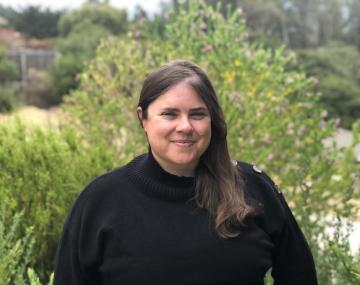
Land, Reconfigured: Defying the Laws of Physics, Upholding the Rules of the Market
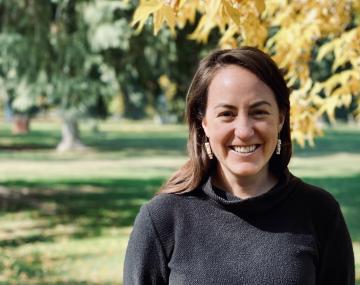
Rangelands and Elite Investment in the Western US

Landscapes of Finance: Time, Timber, and the Fate of US Forest-Dependent Communities

Adaptation Time: Engineering the Future Past

Conservation Goes Remote: Privacy, Trust and Justice in the Era of Satellite Data Products

Let Nature Be Your Teacher

This Land is My Land: Property, Paramilitarism, and the American Dream

Regulating the Resilient City

Gulf Arab Capital Accumulation and the Crafting of Post-oil Futures in Central Sudan

Emerald Extractivism: Borders, Energy, and Data Infrastructures in Ireland

Automating Property: Digital Enclosures on India’s Urban Frontier