Back

Discover CALS

See how our current work and research is bringing new thinking and new solutions to some of today's biggest challenges.

Share
  • Cornell AgriTech
  • Biological and Environmental Engineering
  • Microbiology
  • School of Integrative Plant Science
  • Horticulture
  • Agriculture

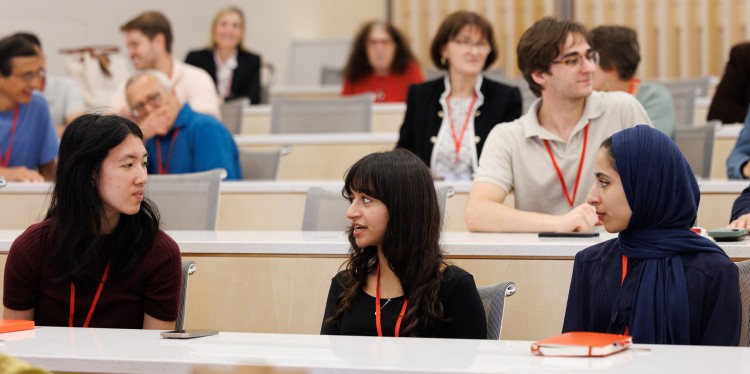
The third annual CALS Innovation Day, hosted by the college’s Research and Innovation Office (RIO), brought together more than 100 faculty, students, staff and industry partners Sept. 16 in Stocking Hall to celebrate the extraordinary science, creativity and groundbreaking ideas shaping the future of agriculture and life sciences.

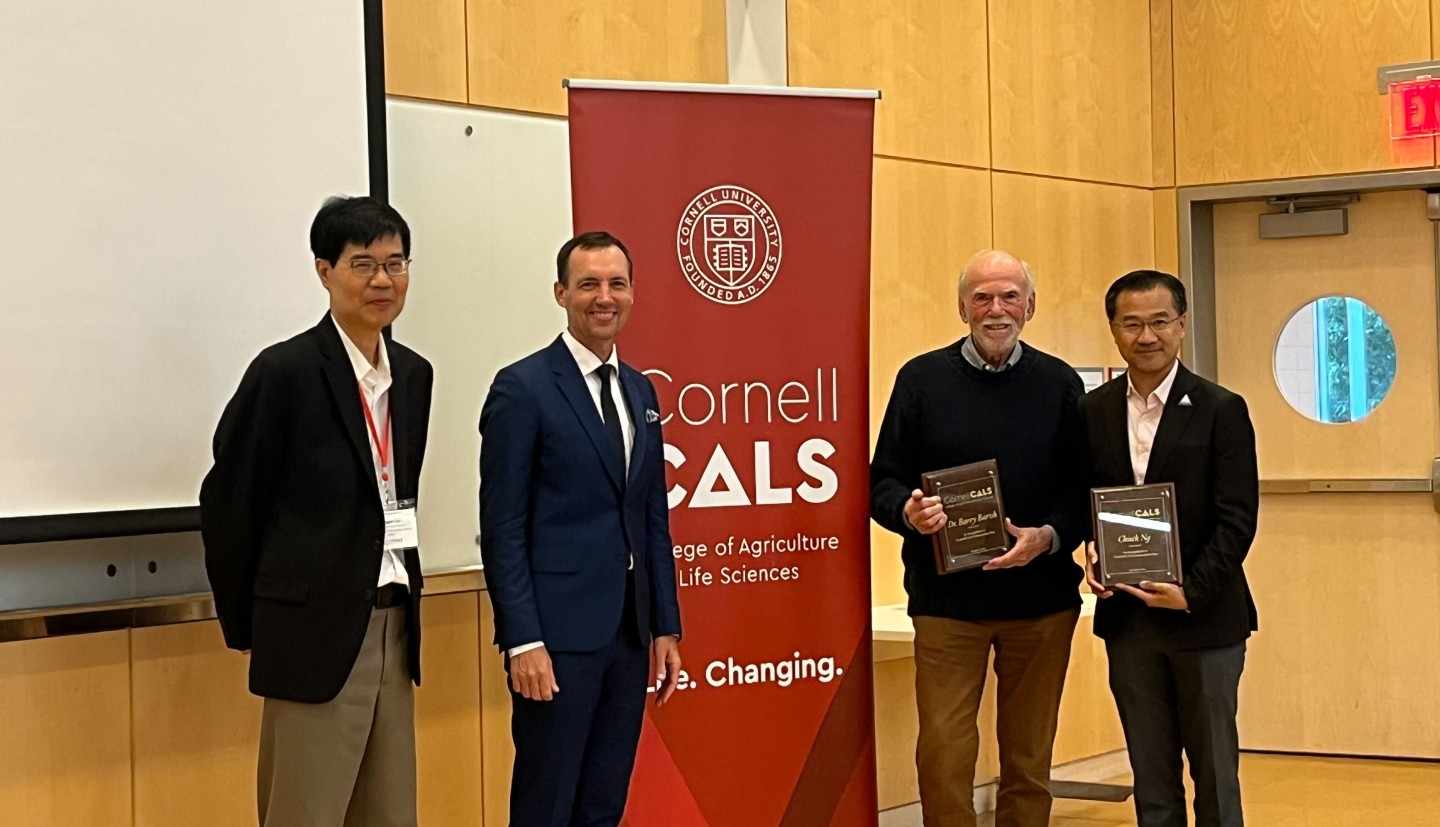
This year’s theme focused on world-transforming innovation and featured a keynote address by Nobel laureate Barry Barish and Chuck Ng, co-founders of the Foundation for Science and AI Research; panel discussions with faculty and industry partners; an interactive poster session with Moonshot Seed Grant awardees; and an Innovation Awards ceremony.

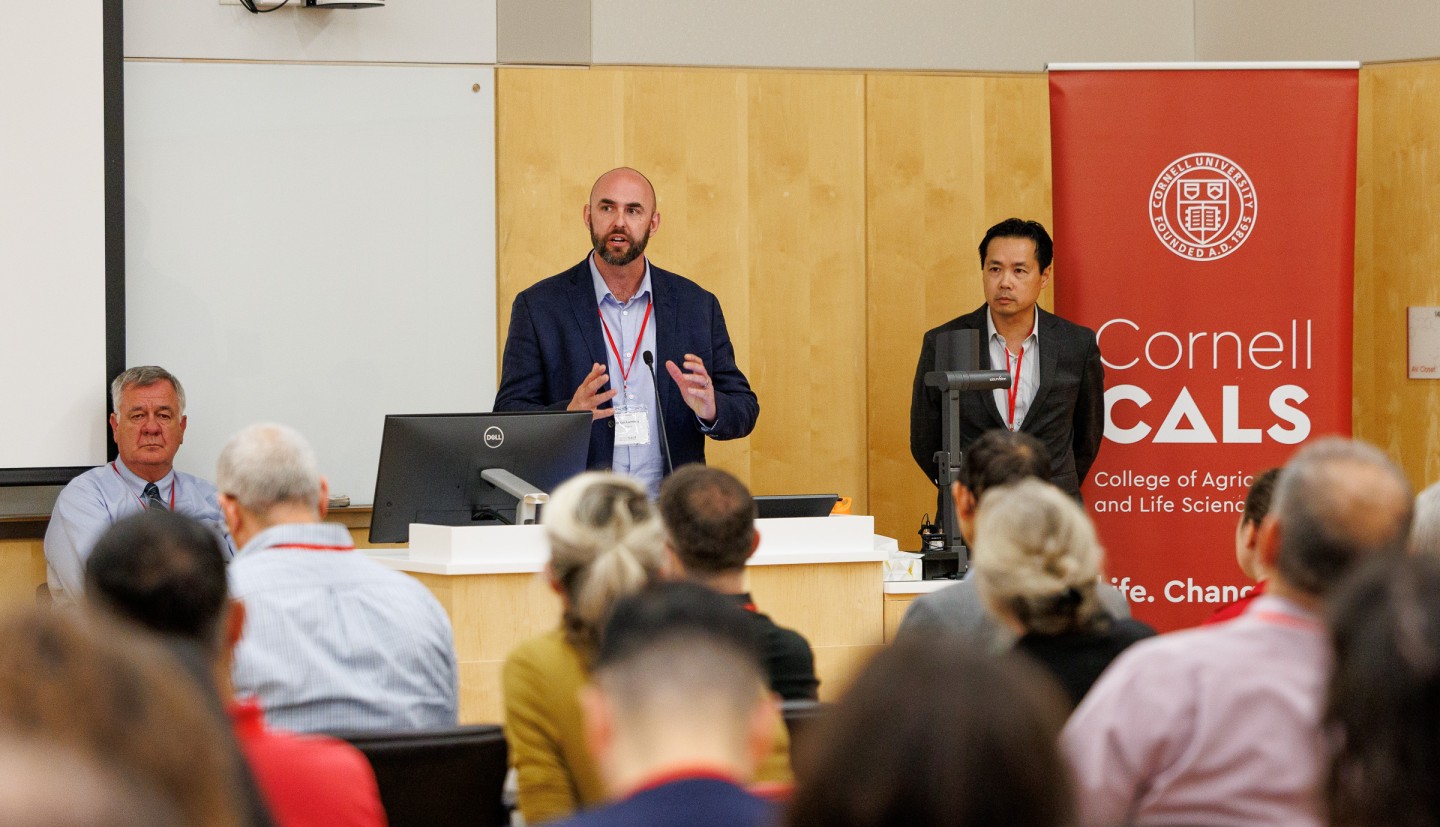
"Ezra wrote 'I would found an institution where any person could find instruction in any study.' It was an aspirational statement in 1865. Through the efforts of everyone in this room, we likewise aspire to greatness in entrepreneurship and innovation, and the world is going to hear about it," said Matt Marx, Cornell vice provost for Entrepreneurship, Innovation and External Engagement.
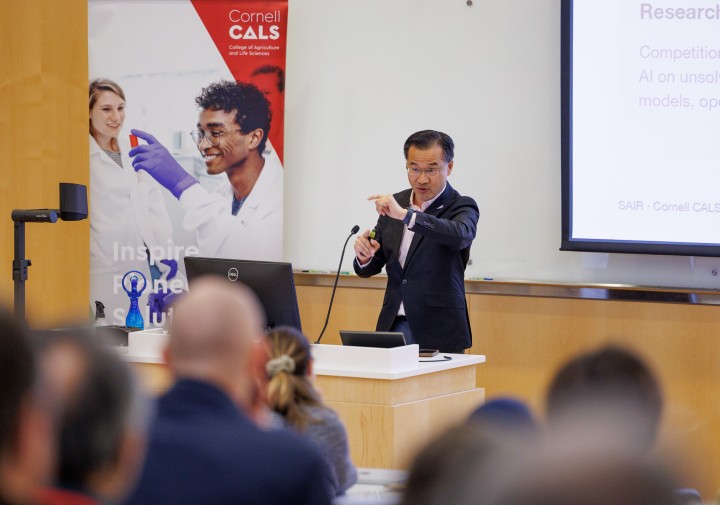
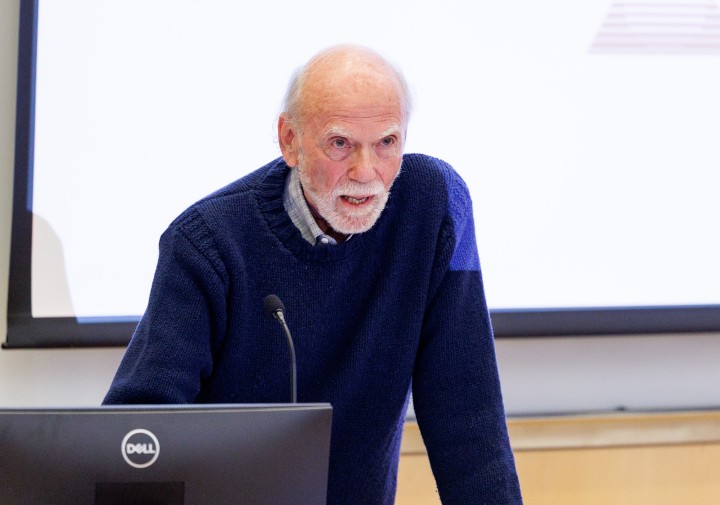
Benjamin Z. Houlton, the Ronald P. Lynch Dean, introduced Barish and Ng as leaders at the forefront of science, entrepreneurship and artificial intelligence. Their remarks shed light on the emerging roles and challenges of AI in global science, research and innovation. Houlton said that CALS Innovation Day supports the college’s Roadmap to 2050 strategic objective to transcend conventional boundaries with transdisciplinary research.

“One of the defining features of CALS has been our ability to think about innovation and translational research since our early founding as a land-grant institution,” he said. “And now, through our transdisciplinary moonshot strategy, we are thinking even bolder and even bigger about how we bring the best minds and technology together to tackle society’s most complex problems at a scale and ambition that matches the moment.”

For CALS researchers, pathways to impact look different for each breakthrough and discovery. Three faculty members, joined by industry partners and experts from Cornell’s Center for Technology Licensing (CTL), shared how they successfully translated their research into licensed technologies, industry partnerships and entrepreneurial ventures in a moderated discussion.

Joseph Peters, professor in the Department of Microbiology and CEO of TNACIOUS Bio Inc., and the company’s chief scientific officer, Robert Wingo, discussed the path from conducting basic science to launching a startup.

Cornell AgriTech’s Terence Robinson, professor in the Horticulture Section of the School of Integrative Plant Science; Albert Tsui, plant portfolio officer at CTL; and Nathan Lamkey, North America regional director of Agromillora USA, focused on the global impact of Robinson’s work on apple rootstocks.

Manoj Karkee, the Norman R. and Sharon R. Scott Professor in the Department of Biological and Environmental Engineering; and Stephen Nowak, business development and licensing associate in CTL, talked about ventures in AI robotics and student innovation.

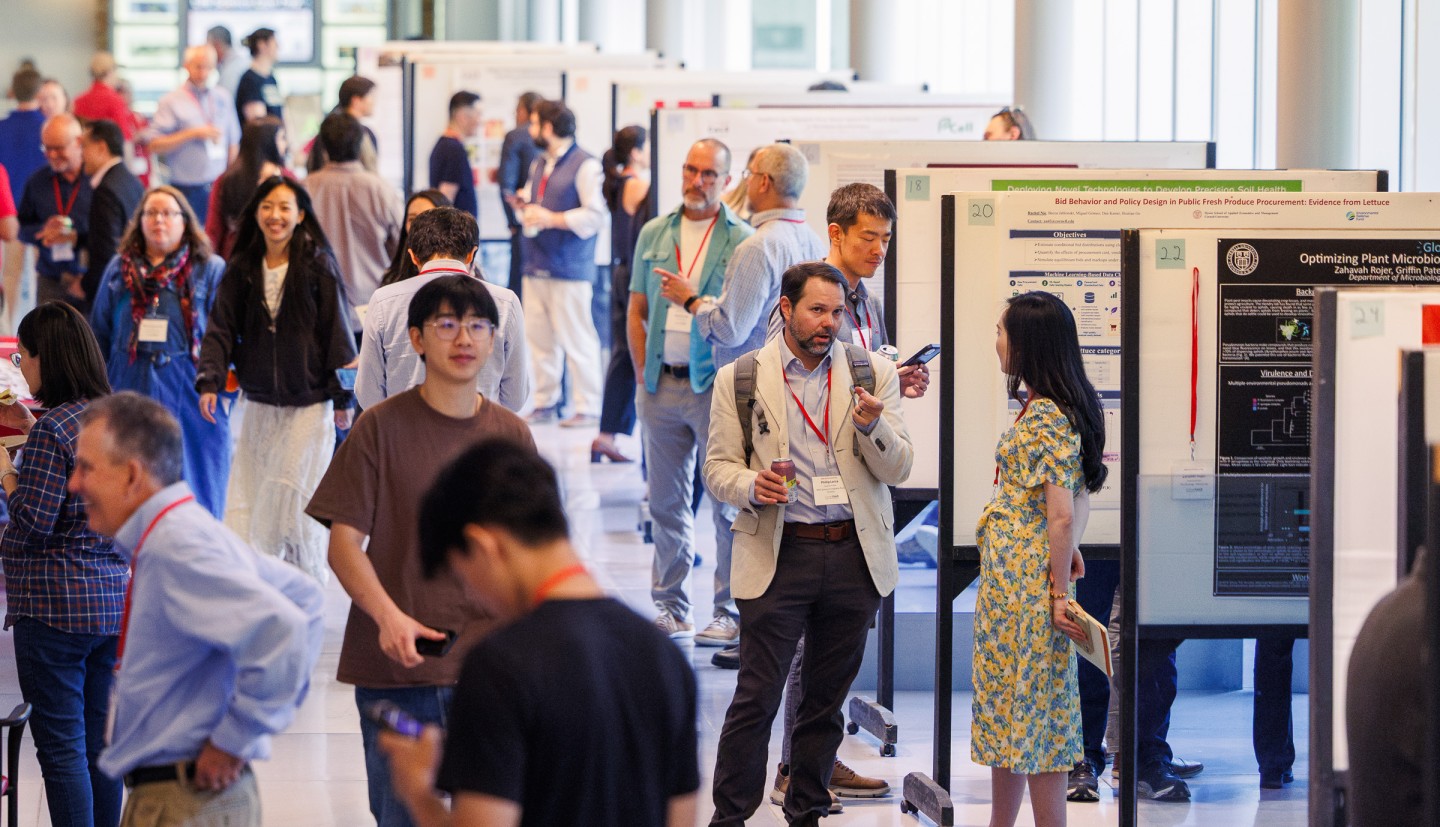
In a highlight of the day, recipients of Moonshot Seed Grants held an interactive poster session to showcase how they are partnering with industry leaders across the globe to bring breakthrough solutions to market.

RIO also recognized the outstanding contributions in innovation by faculty, students and industry partners with Innovation Awards. In its second year, the Innovation Awards program encourages creative problem-solving, technology transfer, entrepreneurship and meaningful engagement between CALS and external stakeholders.

Congratulations to the award winners:

  • Best Inventor Award: Alireza Abbaspourrad, associate professor of food chemistry and ingredient technology, for his team’s development of clean-label materials that protect lactoferrin during heat processing while preserving its nutritional benefits.
  • Best Entrepreneurship and Engagement Award: Walter De Jong, professor of plant breeding and genetics, for his longstanding partnership with the potato industry and his understanding of growers’ needs. His varieties, Lamoka and Waneta, represent an estimated 35 to 40 percent of chipping-potato acreage in the United States and Canada.
  • Student Entrepreneur of the Year Award: Phillip Lanza, a graduate student in Louis Longchamps’ Digital Agronomy Lab, for turning his doctoral research into a practical tool for farmers. He developed STADS, a satellite-based system that identifies emerging crop problems across entire fields.
  • Student Entrepreneur of the Year Award: Joseph Lee and Alia Almansoori, graduate researchers in Buz Barstow’s lab, for bringing their different scientific strengths into a shared vision. Joseph identified microorganisms and genetic targets that can break down mining waste. Alia used those discoveries to engineer strains with improved performance. Together, they founded Gigatonne Bio to recover critical metals and permanently store carbon dioxide.

“Innovation is not our endpoint. Innovation is the bridge, and impact is the destination.” Xingen Lei, associate dean of RIO and organizer of CALS Innovation Day remarked on the "purpose and charge of Innovation Day this year and in the future.”

Katie Thomas is the creative content specialist for the College of Agriculture and Life Sciences.

Keep Exploring

panel of grape leaf samples

News

The cutting-edge imaging platform observes microscopic traits in plants and can detect grape diseases that cost vineyard owners billions in annual losses globally.

  • Cornell AgriTech
  • School of Integrative Plant Science
  • Horticulture Section
Technician Ben Aliperti loads a string of hop vines into the hop harvester to pick off the cones at Cornell AgriTech.

News

The Cornell Hop Breeding Program aims to give New York growers and brewers cultivars suited to the state's climate and disease pressure.

  • Horticulture Section
  • School of Integrative Plant Science
  • Cornell AgriTech