The safety and well-being of our community is our highest priority. We know the recent news and allegations are deeply concerning, and we are committed to a safe environment for all. Learn how Cornell is addressing sexual violence.

Alert Close
Back

Discover CALS

See how our current work and research is bringing new thinking and new solutions to some of today's biggest challenges.

Share
  • Food
  • Animal Science
  • Environment
  • Agriculture

by Jackie Swift

Jasmine Dillon, assistant professor of global livestock sustainability, will be the first to tell you that animals are an important part of a sustainable food system. But, they will hasten to add, animals are not the only component.

“From an ecological standpoint, the animal is a recycler of energy and matter that’s in the ecosystem,” said Dillon. “It’s just one part of something much bigger.”

Trained in animal science initially, Dillon takes a holistic approach to scientific research, looking at food systems from an agroecological perspective. Their research focuses on systems and examines how management, policy and the metrics used to assess a project affect sustainability outcomes. 

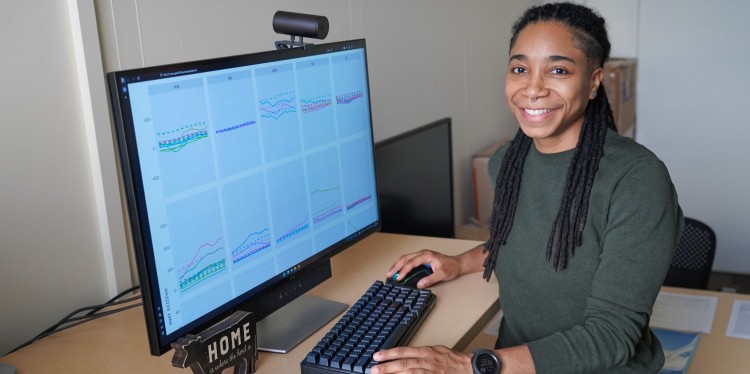
To capture the environmental impact of food systems, Dillon uses a range of modeling tools. These include life cycle assessment (which calculates the environmental impact of a product such as milk, meat or corn throughout its entire lifecycle), and process modeling (whichuses quantitative approaches to represent how inputs are transformed into outputs in a system, such as the processes within a cow that convert carbohydrates and protein into milk or meat).

“A mathematical skillset allows me to translate what’s happening in the field or innovations in the lab into bigger questions,” they said. “I can ask, ‘What does this innovation mean for the sustainability of our food system?’ But I can also look at it another way and ask, ‘If we implement a new policy, what will that mean for the environmental outcomes on the farm or across the landscape?’”
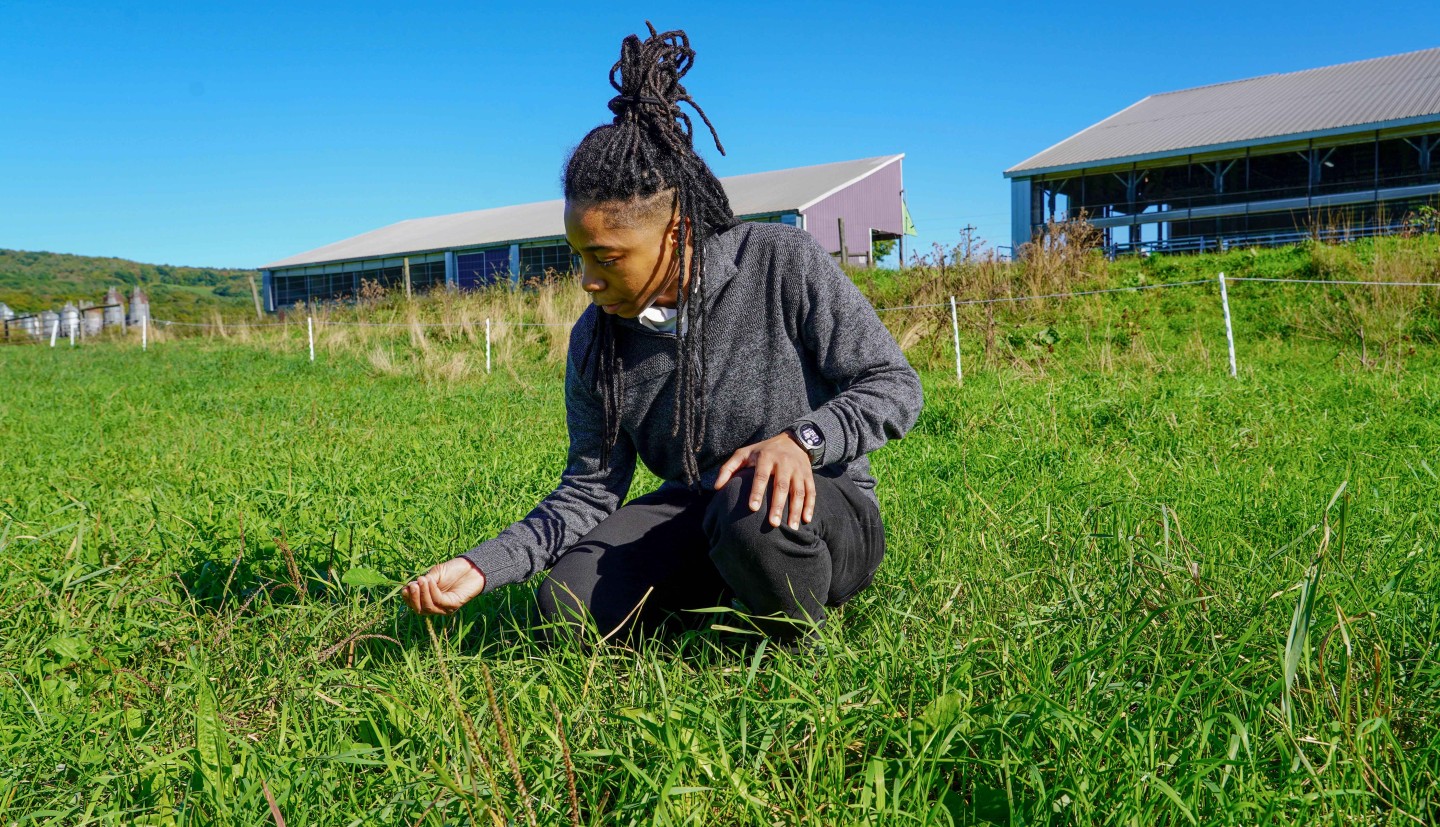
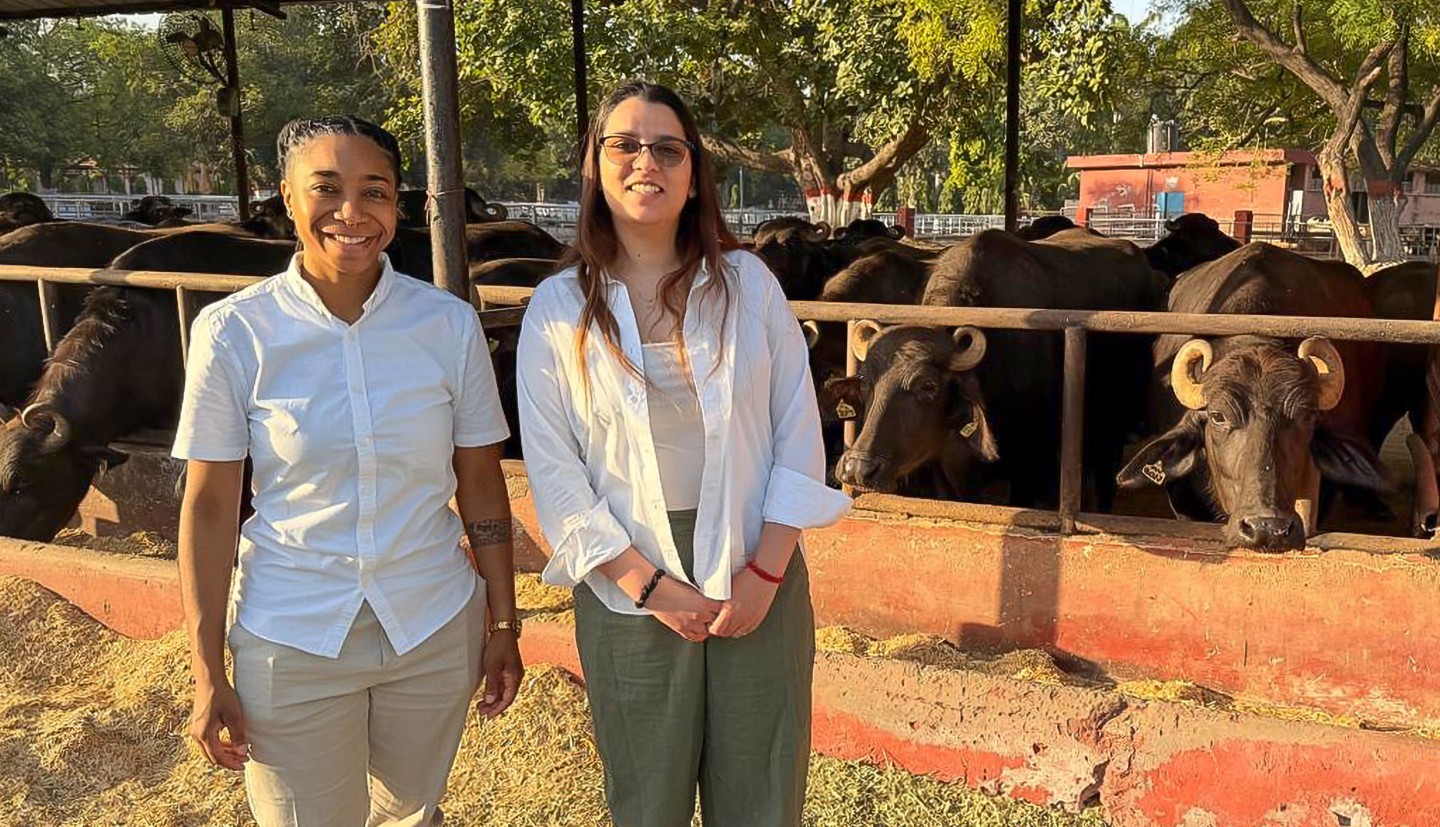
Considering the big picture means Dillon focuses on soil and crops as well as animals. Their research is highly collaborative; they often work with economists, social scientists and soil scientists, among others. 

“There’s so much more than the animal in a food system,” they said. “There’s the natural resource base the animal requires and also the people that exist within it, those who manage the animals.”

“There’s so much more than the animal in a food system. There’s the natural resource base the animal requires and also the people that exist within it.

Dillon is involved in a number of research projects. For the City Food Policy Project, they are a co-principal investigator, together with Becca Jablonski, visiting associate professor with the SC Johnson College of Business. Working with a team of experts, Dillon has created an agent-based food system model built on stakeholder engagement. 

“Using interviews and focus groups, we identified how decisions are made by people in the supply chain: farmers, processors, wholesalers and others,” Dillon explained. “For instance, we want to know what factors influence a wholesaler to respond to a bid from the city that asks for local beef.”

Once the researchers understood how people in the supply chain made their business decisions, they built the model that then simulates groups of agents. The groups represent diversity in decision-making among people in each segment of the supply chain.

“The model helps us see the benefits — or whether there are any,” they continued. “For instance, we assume that buying within a certain radius of the city is better. But that’s not always true. A lot of policy decisions get made based on assumptions, so our model asks, ‘If you implement that policy, do you get what you expect?’”

The Dillon lab is also collaborating with the Environmental Defense Fund to look at the impact of incentivizing smallholder dairy efficiency in India. Climate change is causing many investors to support climate impact mitigation in low- and middle-income countries like India, Dillon explained. For the dairy industry, this means addressing the enteric methane produced by cows through their digestion process and released into the atmosphere when they belch.

“The idea is that dairy production in India is increasing anyway, but if you assist smallholder efficiency, then the climate impact will be reduced,” they explained. “But the decision to help a smallholder become more efficient has many potential tradeoffs.”

In the India project, Dillon and their collaborators are asking whether investing in efficiency actually reduces total methane emissions rather than simply reducing per unit emissions. They are also looking at whether there are co-benefits for the smallholder, such as improved food security or children having more access to education. 

In addition, Dillon is interested in the environmental rebound effect, where unintended negative effects arise as a result of implementing a new course of action aimed at increasing environmental gains. In the case of Indian smallholder dairies, as they become more efficient, will they increase herd size, thereby increasing methane output rather than reducing it?

 “The real question is whether a rebound effect exists when you invest in increasing efficiency without a strategic design,” Dillon said. “Do you need to structure the investment in a way that avoids the rebound effect but maintains the human and environmental benefit of the investment itself?”

Dillon’s interest in the environment and sustainability goes back to their undergraduate years and is the catalyst for their research. “I’m concerned about the natural resource base that we rely on and our connection to it,” they said. “I care about people and food and whether people are being nourished. All that connects us to the land. People can’t survive without the land.”

Jackie Swift is the communications specialist for the Cornell CALS Department of Animal Science.

Keep Exploring

News

This summer, the College of Agriculture and Life Sciences celebrated the completion of one-half of a long-planned renovation and the news that New York state will support renovations of the other half starting next year. “The renovation has...
  • Plants
  • School of Integrative Plant Science
  • Horticulture Section
a man spreads handful of fishfeed in fish tank

Field Note

Tucked away across the street from Frank Morrison Hall, in an unassuming greenhouse on the Cornell University Ithaca campus, live a school of tilapia: a freshwater fish eaten around the world. Their home consists of a row of giant aquarium tanks...
  • Animal Science
  • Fish
  • Animals