Back

Discover CALS

See how our current work and research is bringing new thinking and new solutions to some of today's biggest challenges.

  • Cornell AgriTech
  • Cornell Cooperative Extension
  • School of Integrative Plant Science
  • Horticulture Section
Share
An estimated 10,000 acres of industrial hemp will be harvested this fall in New York state – triple the number of acres planted in 2018. In addition to farmers, the emerging crop has found a following among consumers, as products such as cannabidiol (CBD) oil gain more space on retail shelves.

But with hemp markets, products and output rapidly expanding, growers and producers are facing new challenges. Helping navigate these issues is the Cornell Hemp Team, an interdisciplinary team of Cornell researchers and Cornell Cooperative Extension field crops and vegetable specialists.

The team is led by Larry Smart, professor in the Horticulture Section of the School of Integrative Plant Science, who recently joined Cornell Cooperative Extension’s “Extension Out Loud” podcast for a three-part series on the state of industrial hemp production in New York.

In a wide-ranging conversation with hosts Katie Baildon and Paul Treadwell, Smart talks about the latest crop management tools, cultivar evaluation, breeding research, challenges he sees in the marketplace and what he’s learned working with new growers. He also shares his insight on how trends and innovation could affect the hemp industry’s future.

Full episodes of “Extension Out Loud,” can be streamed on: 
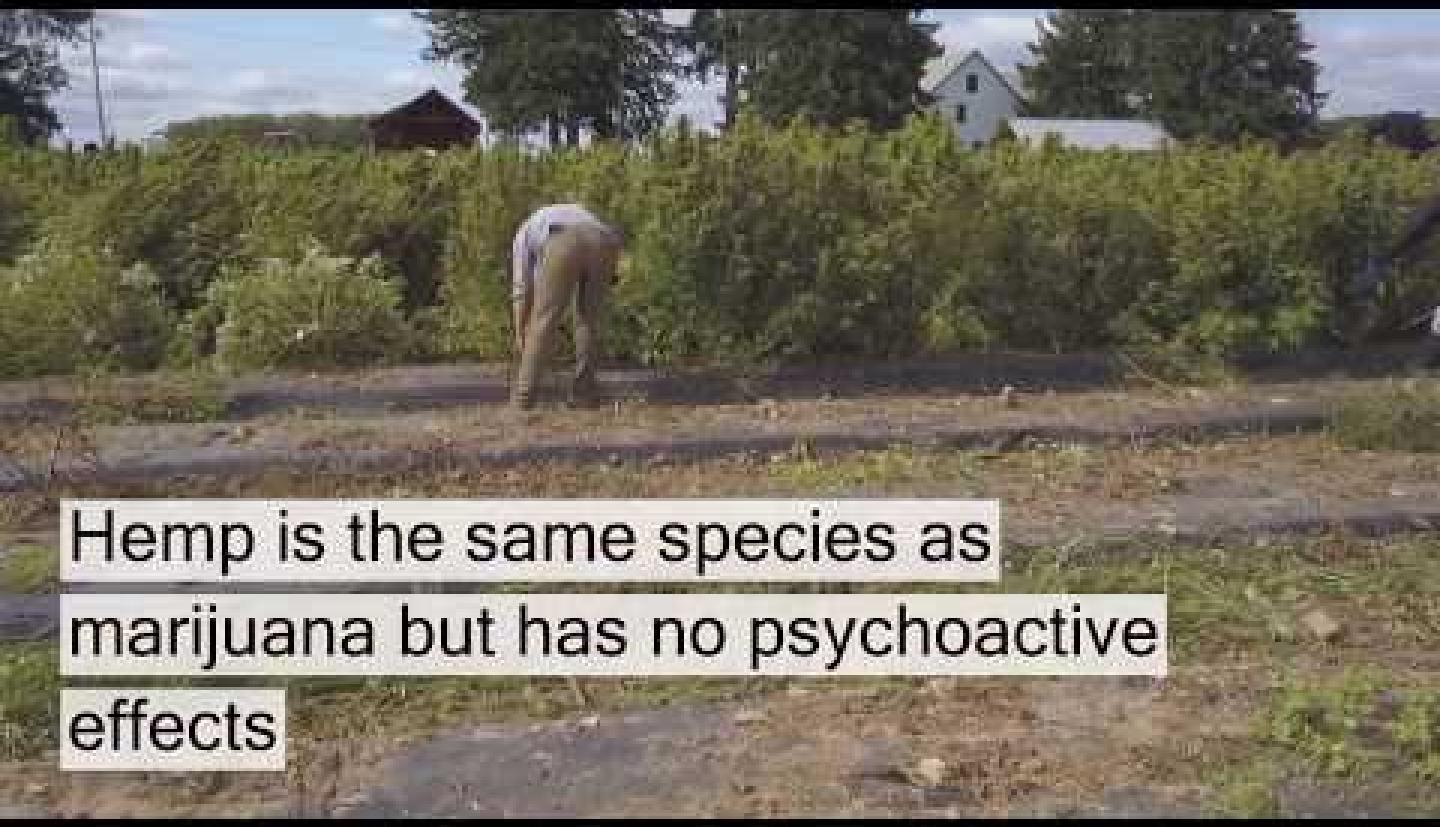
For new growers, Smart said hemp can present a number of horticultural challenges, from managing fertilization to harvest timing and best practices. Perhaps the biggest obstacle they face, he said, is finding a reliable seed source.

“With the rapid expansion of the industry, a lot of unscrupulous players have come in to the industry who are selling seeds that are not true, stable and uniform cultivars,” Smart said. “And the biggest risk for growers is that their crop will become noncompliant for [the hallucinogen] THC; [industrial] hemp has to have less than 0.3 percent.”

Visit the Cornell Hemp Team website for more information on including licensing requirements, recent research, seed sources and testing labs.

Smart’s “Extension Out Loud” conversation is in two parts; the third part of the industrial hemp series features a conversation with state Assemblywoman Donna Lupardo, D-123rd, whose district includes the city of Binghamton. This year, Lupardo was appointed chair of the Assembly Agriculture Committee.

Full episodes of “Extension Out Loud,” including descriptions and transcripts of each episode, can be found online. Episodes can also be streamed on iTunes and SoundCloud.

This article also appeared in the Cornell Chronicle.

Keep Exploring

Several red 'Crimson Beauty" raspberries hang from green leaves and stems.

Report

Relevance Raspberry and strawberry production in the United States is concentrated in California and Florida, where climate variability and rising costs challenge long-term sustainability. Demand for locally grown fruit is increasing, creating...
  • Cornell Cooperative Extension
Charles Midega (left) and Roy Odawa display the Kontiki kiln they modified to make biochar from human feces. Credit: Rebecca Nelson

News

Cornell researchers and Kenyan partners have developed a fertilizer made from human excreta. The product improves soil health and food production, while preventing pollution in informal settlements and the aquatic environment.

  • Ashley School of Global Development and the Environment
  • Global Development Section
  • Agriculture