Back

Discover CALS

See how our current work and research is bringing new thinking and new solutions to some of today's biggest challenges.

Share
  • PRO-DAIRY
  • Animal Science
  • Microbial biology
  • Climate Change
  • Dairy

Cows depend on microbes to live. Thousands of different species inhabit the rumen, the largest section of a cow’s four-section stomach. They ferment the grass that cow eats and extract nutrients, providing metabolites essential for the cow to produce glucose, fuel muscles and make milk. Without this microbiome, a cow would struggle to survive.

But each microbe’s role within the microbiome and how microbes interact with each other is still mostly a mystery — one that Hugo Monteiro, assistant professor of microbiology of anaerobes in animal and environmental systems, is determined to help solve.

“The rumen is one of the most important anaerobic environments,” Monteiro said. “The microbes that live there are fundamental for the life of a cow. There are thousands of different species, and each one contributes something.”

Monteiro joined the Animal Science Department in 2026. One of his research lines focuses on archaea — single-celled microscopic organisms — particularly methanogens. Many methanogens obtain energy using hydrogen to reduce carbon dioxide, producing methane. Cows release most of this enteric methane through belching, contributing to greenhouse gas emissions. By targeting methanogens using viruses that only infect archaea, Monteiro hopes to reduce or eliminate enteric methane produced by cattle. 

Thousands of viruses that infect archaea have been identified using DNA sequencing, and several are predicted to infect methanogens. Monteiro seeks to characterize the mechanisms by which these viruses infect rumen methanogens, isolate them and ultimately determine whether they could be used to selectively manipulate methane-producing populations. There is a hitch, though. Methanogens consume hydrogen generated during fermentation. Suppressing methanogenesis without providing alternative routes for hydrogen utilization could cause hydrogen to accumulate and alter fermentation.

“When we reduce methane, we also have to think about where that hydrogen is going,” Monteiro explained. “The goal is not simply to eliminate methanogens. We want to redirect hydrogen toward alternative microbial pathways that generate products the animal can use.”

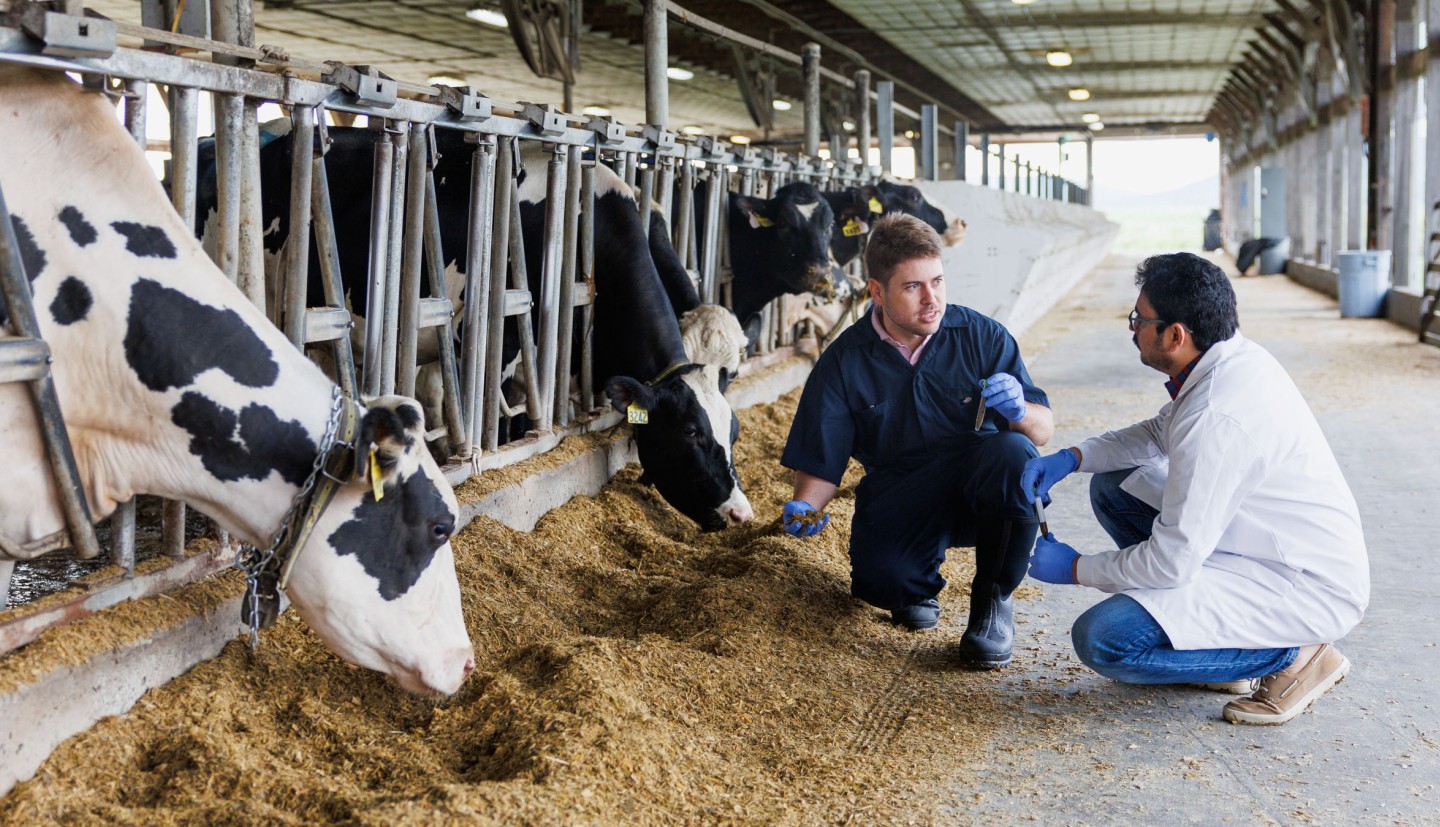
To study the rumen microbiome, Monteiro uses several genetic sequencing approaches, especially metatranscriptomics, which identifies active microbial genes under different conditions. With dual RNA sequencing, he characterizes gene expression from the cow and its microbiome simultaneously. He also incorporates proteomics to characterize biological functions and protein supply to the cow.

“I am interested in not only what microbes are there, but what each one is doing, how those activities affect other microbes, and ultimately how they affect the animal,” Monteiro said.

“I am interested in not only what microbes are there, but what each one is doing, how those activities affect other microbes, and ultimately how they affect the animal."

The resulting datasets are enormous. One of Monteiro’s first investments at Cornell was to acquire a high-performance computing system through BioHPC dedicated to rumen microbiome research. His group is already generating and analyzing terabytes of metagenomic, transcriptomic and proteomic data. 

To aid in analysis, Monteiro relies heavily on bioinformatics — using computational approaches to integrate biological information across millions of sequences and measurements. The researchers use artificial intelligence models to help identify patterns and annotate novel genes, proteins and molecules within these datasets. When looking at the proteins present in a cow’s microbiome, for instance, these methods allow Monteiro to sort through millions of data points and identify proteins and their source — whether they come from microbes or from feed. 

“We can computationally analyze the datasets and distinguish thousands of microbial proteins and metabolic functions,” Monteiro said. “Then we can start asking how nutrition can be used to selectively support particular microbes and their pathways and vice-versa.”

Another of Monteiro’s research goals is to identify how microbes contribute to disease resistance. He is creating new methods to identify cows that are predisposed to a particular disease, such as bovine respiratory disease or mastitis. Microbial communities inhabit environments such as the respiratory tract and mammary gland, where interactions among microbes, pathogens and the animal’s immune system may influence disease development.

“The presence of a pathogen does not necessarily tell us the whole story,” Monteiro explained. “Other microorganisms in that environment may facilitate its establishment or compete with it. If we can anticipate those interactions, microbiome information could eventually help us identify animals at greater risk of disease or develop more targeted approaches to prevention and treatment.”

Ultimately Monteiro intends to set up a publicly accessible database integrating cattle phenotypes, including milk production, feed efficiency and methane emissions, with microbiome and other molecular datasets. Such a resource could allow researchers to investigate biological relationships across studies and develop new hypotheses without having to generate every dataset independently.

He also plans to establish a biobank of rumen viruses and their associated microbial hosts. In addition to supporting research on the rumen microbiome, such a collection could contribute to the broader search for viruses with useful biological properties. 

“There is renewed interest in using viruses that specifically target bacteria as alternatives or complements to conventional antimicrobial approaches,” Monteiro said. “But we still know only a fraction of the viruses that exist in nature. I think these are going to be extremely valuable for human health in the future as we start increasing the number we can isolate.”

Keep Exploring

Hand watering a small sprout in the ground

News

A new model offers a proof-of-principle for how AI might be used to shed light on obscure biological processes.

  • School of Integrative Plant Science
  • Soil and Crop Sciences Section
  • Climate Change
a woman sits in front of a microscope

Field Note

Xingtan (Vera) Yu PhD’27 is a doctoral student working in the lab of Jingyue (Ellie) Duan , assistant professor of functional genomics. Vera’s research focuses on the effects of heat stress on the mammary gland of the dairy cow. We spoke to her...
  • PRO-DAIRY
  • Animal Science
  • Genomics