Back

Discover CALS

See how our current work and research is bringing new thinking and new solutions to some of today's biggest challenges.

CALS fosters a vibrant culture of team‑based science, where faculty collaborate across academia, industry, and government to address complex societal challenges.

Grounded in Cornell University’s Ivy League strengths and land‑grant mission, CALS supports both curiosity‑driven discovery and use‑inspired research with real‑world relevance. Faculty routinely partner across Cornell’s Ithaca, Geneva, and New York City campuses, as well as with colleagues in engineering, business, computing, medicine (human and animal), and the social sciences and humanities. Cornell’s expansive interdisciplinary networks accelerate discovery, strengthen scholarship, and expand the reach and relevance of faculty research and extension.

Through signature university-wide initiatives faculty participate in coordinated research communities focused on areas such as artificial intelligence, sustainability, genome biology, digital agriculture, and data science. These initiatives unite researchers around shared challenges and leverage the university’s deep, cross‑disciplinary expertise. 
Research

CALS Moonshot Program

The CALS Moonshot Program compliments university level research initiatives. CALS Moonshots support high‑risk, high‑reward ideas aimed at transforming fields and addressing global needs, from climate resilience and food systems to biodiversity, biotechnology, and conservation. Additional internal funding sources, strategic research development support, and administrative infrastructure are all designed to help faculty advance ambitious, impactful research agendas.

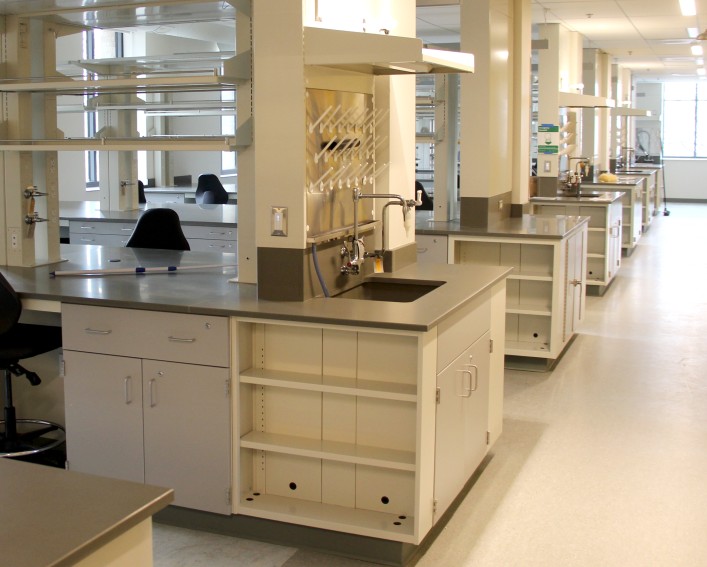
Plant Science Lab Space

CALS is also a global leader in agricultural innovation, pioneering solutions that shape the future of food, farming, land use and environmental stewardship.

Across its departments and schools faculty conduct research that spans the entire agricultural landscape. Innovations emerging from CALS include climate‑resilient crop varieties, precision‑agriculture tools, controlled‑environment and urban‑agriculture systems, next‑generation plant and animal genomics, and sustainable farm and food‑supply‑chain practices. These advancements move seamlessly from fundamental research to applied field trials and real‑world testing. Together, they ensure discoveries translate into practical tools, technologies, and policies that enhance food security, strengthen rural livelihoods, improve environmental outcomes, and promote a more equitable global agricultural system. 

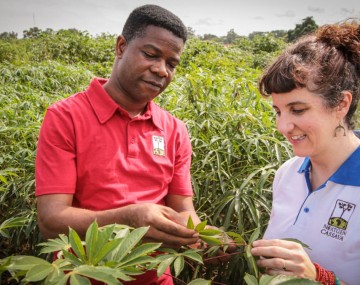
A man and woman stand in a agriculture field and examine plants
Ashley School of Global Development and the Environment

The Ashley School at Cornell CALS is a dynamic hub for addressing complex challenges facing people and the planet in the 21st century.

A student examines plants in a greenhouse.
School of Integrative Plant Science

Cornell's School of Integrative Plant Science (SIPS) fuels research-based innovation for a changing world.
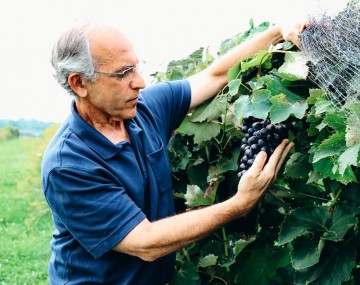
Bruce Reisch examines clusters of Everest Seedless in a research vineyard at Cornell AgriTech
Cornell AgriTech

By harnessing the power of transdisciplinary collaboration and cutting-edge innovation, Cornell AgriTech is on a mission to revolutionize the agriculture, food and beverage production for New York state and beyond.

Translating research into programs, policies, and practices
CCE

Public engagement is central to CALS’s research mission.

Through faculty‑led extension and collaboration with Cornell Cooperative Extension (CCE), CALS connects scholarship to communities in every county of New York State—translating research into programs, policies, and practices that support agricultural vitality, environmental resilience, public health, youth development, and economic growth. CCE’s local offices and regional teams provide a statewide delivery infrastructure that complements CALS’s campus‑based extension programs. This integration of ground-breaking research, social responsibility, and real‑world application enables CALS faculty to see the tangible impact of their work.

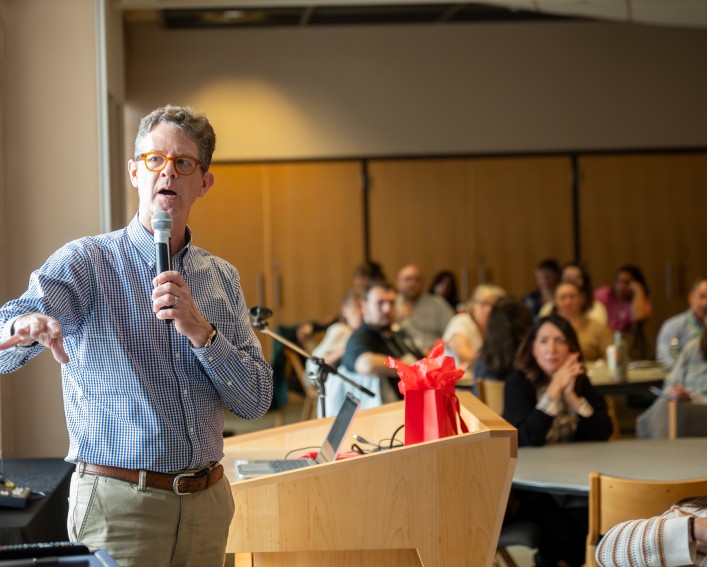
Andy Turner, director of CCE, gives closing remarks during the final day of the In-Service (Credit: R.J. Anderson/CCE)

CALS’s multi‑campus footprint offers distinctive opportunities for place‑based scholarship and engagement. 

At Cornell AgriTech in Geneva, New York, faculty conduct cutting‑edge research in direct partnership with New York’s agricultural economy and the state’s agricultural experiment station network. 

Across New York State and beyond, CALS faculty also leverage living laboratories and field sites, including the Cornell Biological Field Station, Cornell Lab of Ornithology, and Arnot Teaching and Research Forest, the Cornell Botanic Gardens and more, to support long‑term, systems‑level research in agriculture, ecology, conservation, and environmental science. The Shoals Marine Laboratory provides a rare island‑based research environment dedicated to marine science, ecology, fisheries, and coastal sustainability. 

These specialized CALS locations expand the geographic and disciplinary reach of faculty research and serve as venues for hands‑on extension education and demonstration, building collaborative, high‑impact programs.

An extensive network of shared facilities, core laboratories, and innovation hubs further supports faculty research across CALS and the broader university.

State‑of‑the‑art resources in genomics, imaging, proteomics, computational biology, food systems, plant transformation, and controlled‑environment research, including BioHPC, the Cornell Institute of Biotechnology, the Center for Innovative Proteomics, CALS‑supported greenhouses and growth chambers, and other college‑based core facilities, expand research scale, speed, and technical capacity. 

For projects with commercial or translational potential, Cornell’s innovation ecosystem, including the CALS Research & Innovation Office (RIO), the university’s Research & Innovation Office, the Center for Technology Licensing, and business incubators all support faculty in moving ideas beyond the lab and into real‑world application. 

CALS offers a genuinely collaborative research network that enables faculty to broaden the reach, relevance, and impact of their work—whether advancing science, shaping policy, partnering with communities, or translating discovery from the lab to the field.