

Search for News & Stories

News

News
Richard “Dick” W. Robinson, a professor at Cornell AgriTech whose groundbreaking work in cucurbit and tomato breeding is used worldwide, died March 22 in Geneva, New York. He was 93.

News

News

News
Mario Herrero, Timothy Ryan, M.S. ’86, Ph.D. ’89, Steven Strogatz and Peter Wolczanski are Cornell’s 2024 electees to the National Academy of Sciences, the academy announced April 30 at the close of its 161st annual meeting.

News
Cornell researchers and collaborators have developed a new framework that allows scientists to predict crop yield without the need for enormous amounts of high-quality data – which is often scarce in developing countries, especially those facing...

News
Human urine could be a handy resource in tending home gardens and compost piles, thanks to an interdisciplinary collaboration between two Cornell Engineering students and plant scientist Rebecca Nelson.
News
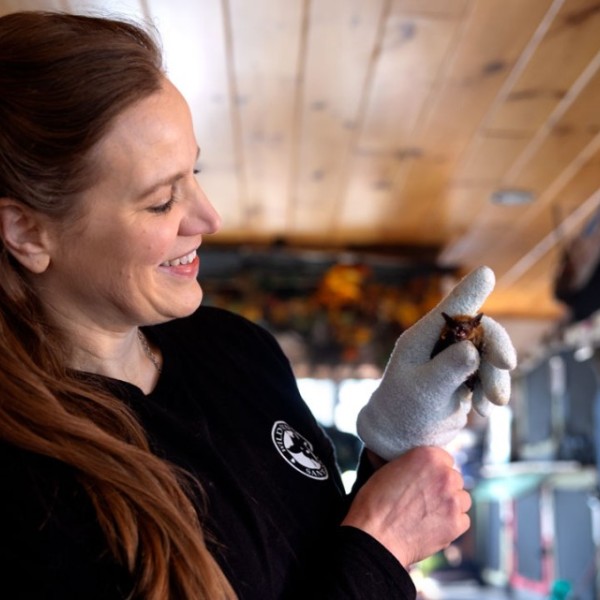
Cornell Lab of Ornithology staff member Victoria Campbell spends her free time caring for bats in need– setting tiny broken bones, feeding babies, treating illness and nursing native bats back to health so they can be released.

News
Researchers at the Hudson Valley Research Laboratory – part of Cornell AgriTech – are working to identify effective strategies that the region’s fruit growers can use to fight the invasive spotted lanternfly.

News
When hunting for mice in winter, red and artic fox are known to plunge headfirst into snow but their sharp noses reduce the impact force and protect them from injury, according to a new study.

News
Germicidal ultraviolet light is effective at killing a damaging fungus that infects table beets, adding an important organic tool to fight the growing problem of fungicide resistance, according to a new Cornell study.

News
William Tomek, a professor emeritus in the Charles H. Dyson School of Applied Economics and Management, died March 3 in Ithaca, New York. He was 91.
News
News
Professors Peng Chen, Mariana Wolfner ’74 and Timothy A. Ryan, M.S. ’86, Ph.D. ’89, have been elected to the American Academy of Arts and Sciences, the academy announced on April 24.
News
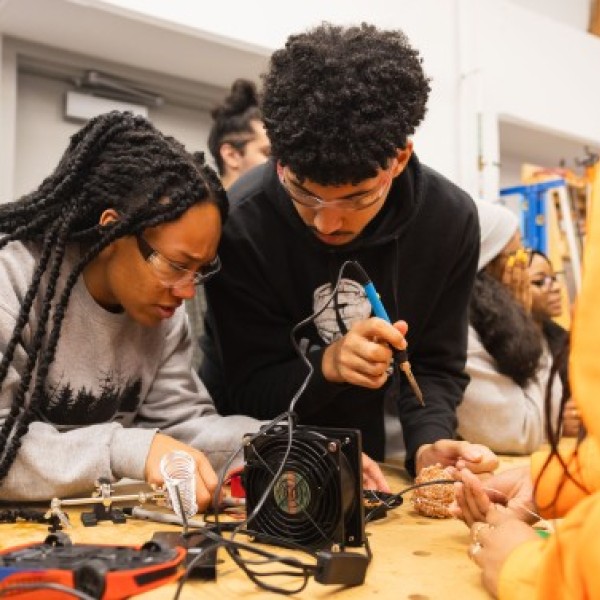
The Big Red Adaptive Play and Design Initiative has brought independence and joy to local children with disabilities – and has created space for the engineering of assistive technologies at Cornell.

News
Collaboration was the theme of the evening at the second annual Community Engagement Awards, held April 16 and hosted by the Einhorn Center for Community Engagement to celebrate excellence in local and global university-community partnerships.


News
A team of mostly first-year students created Brewing CommuniTea, an Earl Grey tea ice cream with caramel swirls and buttery shortbread pieces inspired by Cornell’s theme year.

News
Early results from a study of the April 8 total solar eclipse show a more noticeable effect on bird behavior than during 2017 eclipse.

News
Empire AI, a $400 million effort to create a shared academic research computing facility, is set to advance dozens of ambitious, cross-disciplinary projects at Cornell.

We openly share valuable knowledge. Often through email.
Sign up for more insights, discoveries and solutions.