The Cornell Hudson Valley Research Laboratory (CHVRL)’s new plant pathologist will focus on sustainable disease management in specialty crops, which is critical to New York’s agriculture industry.
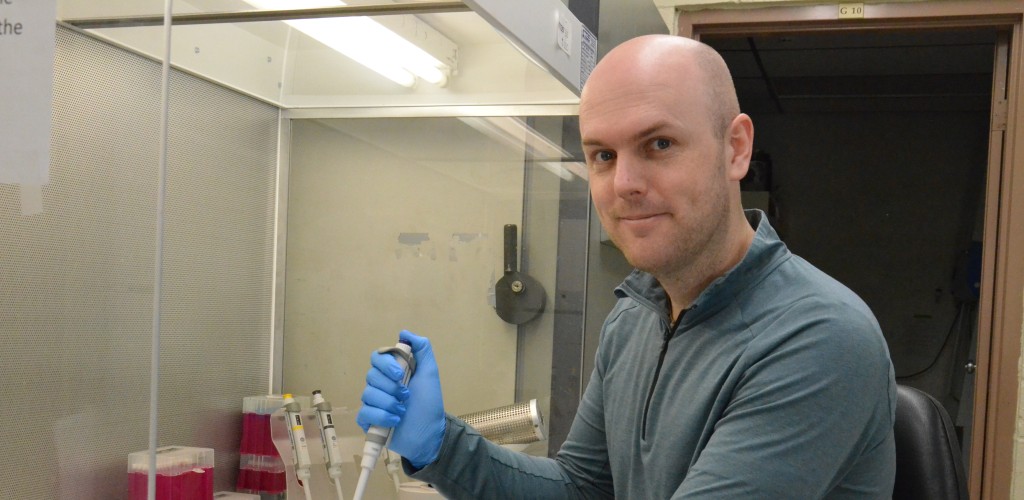
Scott Cosseboom started as senior research associate at CHVRL in February 2024. Prior to coming to Cornell, he was a graduate research associate and postdoctoral associate in the Department of Plant Science and Landscape Architecture at the University of Maryland.
“I’m looking forward to finding creative and realistic solutions to the most problematic diseases in Hudson Valley crops,” Cosseboom said.
A native of Salinas, California, Cosseboom earned B.S. and M.S. degrees from California Polytechnic State University San Luis Obispo, with a focus on fruit rotting pathogens of strawberry. He earned his Ph.D. at the University of Maryland, researching similar pathogens of wine grapes and other small fruit.
During his Ph.D., Cosseboom delved deeply into understanding the epidemiology of a disease called ripe rot caused by the fungus Colletotrichum. He continued as a postdoctoral associate at the University of Maryland, where he developed and validated a ripe rot prediction model. His research found that the model could be used to determine appropriate timings for applying fungicides, which helped control the disease while reducing fungicide applications.
Cosseboom will bring his research knowledge to his new position, working primarily in tree fruit followed by wine grapes and other small fruit. He aims to improve the sustainability of fruit production in the Hudson Valley and beyond through epidemiological investigations and by evaluating novel ways of preventing diseases in these important cropping systems.
He said the Hudson Valley and the surrounding regions are host to economically impactful specialty crop production that is threatened by a wide array of devastating plant pathogens. The climate in the region – specifically the wet and humid summer season – is highly favorable for these diseases, and Cosseboom’s prowess as a plant pathologist will complement the experts at the HVRL who are addressing other impactful issues.
CHVRL Director Jared Buono said Cosseboom’s position is highly research-led, which will allow him to devote extensive time and effort into investigating the important disease-related issues facing the industry. The position also contains a smaller extension component, and he will cooperate with extension-focused counterparts to ensure the research is well disseminated and research findings are applicable.
“We are very excited to introduce Scott Cosseboom as our new plant pathologist here at the lab. His experience in fungal pathogen research is a valuable asset for our growers as they face evolving disease pressures,” Buono said. “His arrival marks a significant milestone as we now have our complete senior research team in place. We look forward to him developing a robust applied research program through his collaboration with local growers.”