The Finger Lakes, Great Lakes, and upper Susquehanna River basin have seen the introduction of numerous non- native aquatic species, through spread by ballast water, canals, recreational equipment, and in some cases intentional introductions. This spread can pose a threat to native ecosystems. While there are numerous aquatic invasive species management activities being conducted by multiple agencies and special interest groups within Central New York, the Region 7 Aquatic Invasive Species Program was initiated in 2022 to increase capacity for similar efforts in inland waterways within the Great Lakes and Upper Susquehanna River watershed, as well as provide additional support for ongoing management projects throughout Central New York.

Cayuga Lake Hydrilla Management

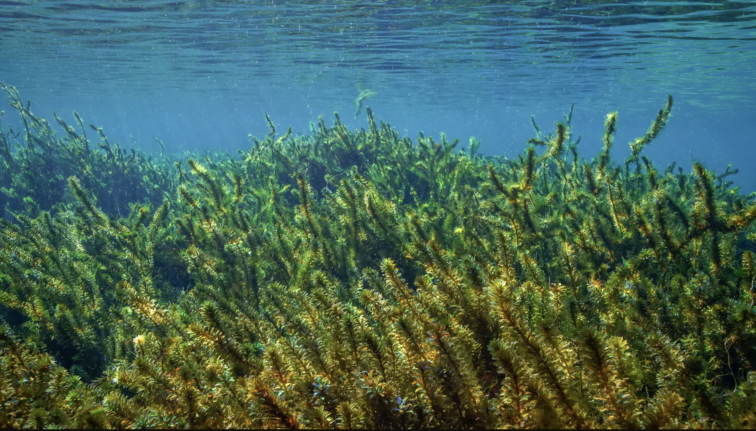
Hydrilla can grow in dense mats that can displace native vegetation, decrease the amount of dissolved oxygen in the water, and impede recreation. More information about hydrilla can be found here : https://dec.ny.gov/nature/animals-fish-plants/hydrilla
Hydrilla has been detected in other parts of the Cayuga Lake, including, the Wells College Boat house (Aurora NY) (2016), a private marina in Lansing NY,  Myers Park(2109), Sheldrake Point (2022) and at  a marina in Kings Ferry, NY (2018). In response to the increase in Hydrilla detections, local stakeholders and government agencies partnered together to create the “Cayuga Lake Hydrilla Management Plan 2021-2026”. This plan relies heavily on adaptive management to address new detections and outlines strategies for monitoring, management, and education and outreach. The plan allows for agencies and stakeholders involved to remain flexible and adjust plans as needed to address changes in priorities.

Hydrilla is currently actively managed in 6 sites across Cayuga Lake. Two sites, one in the “Northern Aurora Area” and another in the Cayuga Lake Inlet Area are managed by US Army Corps of Engineers (USACE) as part of the Cayuga Lake Hydrilla Control Demonstration Project. The management in the remaining three sites is overseen by the NYS DEC Regional AIS Coordinator and the DEC Invasive Species Control Section. These sites include the South Aurora Area and Long Point State Park Area in Aurora, NY, Ladoga Bay in Lansing, NY, and the Sheldrake Area in Ovid, NY. 

Hydrilla Management in Cayuga Lake

The Herbicide used to control hydrilla, Sonar H4C, has an active ingredient of fluridone, which is a selective systemic herbicide. Fluridone is taken up by the roots of aquatic vegetation and then travels to other parts of the plant. The herbicide acts by inhibiting photosynthesis, causing effected plants to turn white (chlorosis) and eventually die. For Sonar H4C to be fully effective, low concentrations of the herbicide must be maintained over an extended period of time, typically 30-90 days. Low dose applications are performed once a week over a period of 10 weeks to maintain the target concentrations. 

Harpoon Granular (active Ingredient copper), is also utilized in Hydrilla management. Copper is typically applied as a one time “spot treatment”. Managers utilize copper in locations where Sonar treatments may not have the desired level of efficacy. Harpoon granular is typically applied in mid to late August. 

Water testing for fluridone concentrations occurs 24-48 hours after each application. Results are typically received 4-5 days after the sample has been delivered to the lab. Water test results can be found under the weekly sampling reports section. 

In addition to managing hydrilla in Cayuga Lake, the Region 7 AIS Team monitors other high priority locations in Cayuga lake for hydrilla and other Aquatic Invasive Species. These locations include public and private boat launches, marinas, and other high traffic areas.