Recent articles

tops of the interior of 2 cans, showing different colors & textures

Report

Wine or cider can liner terminology – precision matters!
A case study on the importance of terminology: A canned beverage producer received and used cans from a supplier without issues over multiple months of storage. However, without warning, several runs of cans in 2024 showed evidence of hydrogen...
  • Food Science
  • Viticulture and Enology
2 pics of diseased, unusable grapes on the vines

Report

The U.S. Environmental Protection Agency (EPA) is currently reviewing the registration of the fungicide Mancozeb, with proposed changes that may impact its use in grapes nationwide. This includes the potential removal of grapes from the approved...
  • Plant Pathology and Plant-Microbe Biology Section
  • Viticulture and Enology
  • Crops
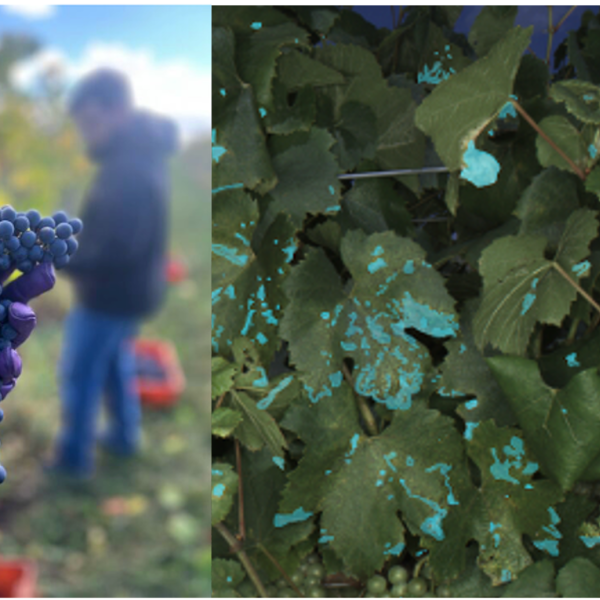
man standing in field (left), diseased grapevines (right)

Report

With forthcoming EPA restrictions on broad-spectrum fungicides, the future of integrated grape disease management is evolving. Biofungicides are stepping into the spotlight—a surprising development even for me, a recently reformed traditionalist...
  • Plant Pathology and Plant-Microbe Biology Section
  • Viticulture and Enology
  • Crops
man holding soil in his hands

News

Report

Betts Farms, owned by Bob, Dawn, and Thom Betts, has been on the forefront of vineyard middle-row soil management for the past decade, continuously improving soil health on their 185 acres of Concord vines. In contrast to standard Concord viticulture practice, where middle-row grass and weeds are burned in late spring to ensure optimum vine fertility, growers like the Betts are establishing cover crops to alleviate soil compaction, reduce erosion, build soil organic matter, and foster life in the soil. Bob Betts initially planted cover crops to correct the negative effects of soil compaction on water infiltration, root proliferation, and vine productivity, but he soon saw additional benefits in soil structure and the biological health. After 11 years experimenting on a 5-acre vineyard block, Betts saw results that convinced him to incorporate cover crops on all 185 acres.
  • Cornell AgriTech
  • Lake Erie Research and Extension Lab
  • Viticulture and Enology
man holding soil in his hands

News

Report

Betts Farms, owned by Bob, Dawn, and Thom Betts, has been on the forefront of vineyard middle-row soil management for the past decade, continuously improving soil health on their 185 acres of Concord vines. In contrast to standard Concord viticulture practice, where middle-row grass and weeds are burned in late spring to ensure optimum vine fertility, growers like the Betts are establishing cover crops to alleviate soil compaction, reduce erosion, build soil organic matter, and foster life in the soil. Bob Betts initially planted cover crops to correct the negative effects of soil compaction on water infiltration, root proliferation, and vine productivity, but he soon saw additional benefits in soil structure and the biological health. After 11 years experimenting on a 5-acre vineyard block, Betts saw results that convinced him to incorporate cover crops on all 185 acres.
  • Cornell AgriTech
  • Lake Erie Research and Extension Lab
  • Viticulture and Enology

Video highlights

2021 VR Fruit Thinning

Watch researcher Terry Bates' team linked a GIS-based prescription map to a grape harvester to achieve variable-rate fruit thinning in Concord grapes.  The map-based inputs were used to control the bow-rod oscillation speed to remove 10, 25, or 40% of the crop to achieve balanced cropping on variable-sized vines.

Grape breeding at Cornell University

Researchers unlock genetic clues to help grapes survive winter

EfficientVineyard Summary Video 2020