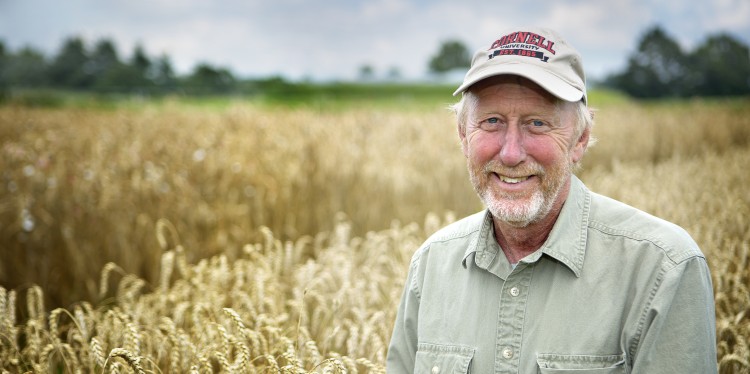
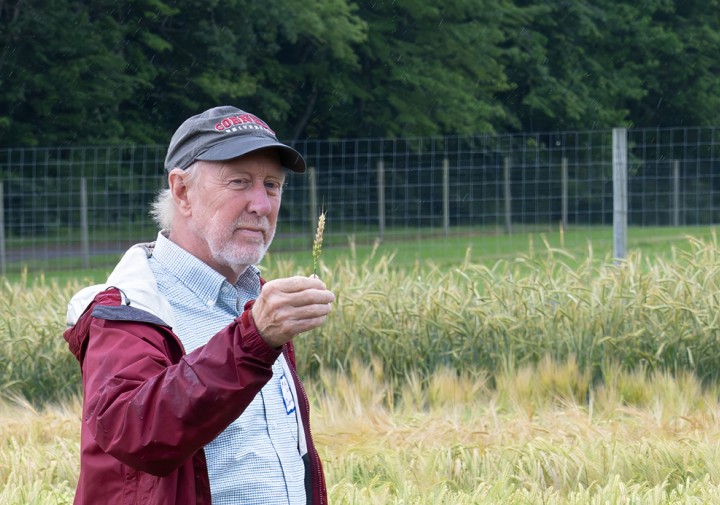
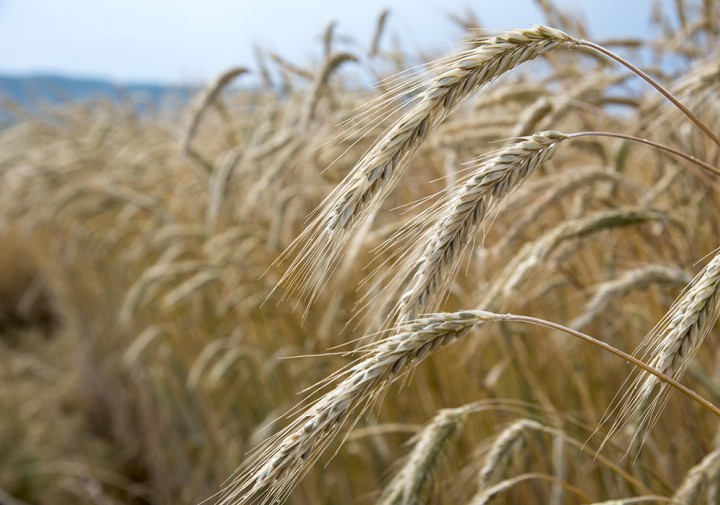
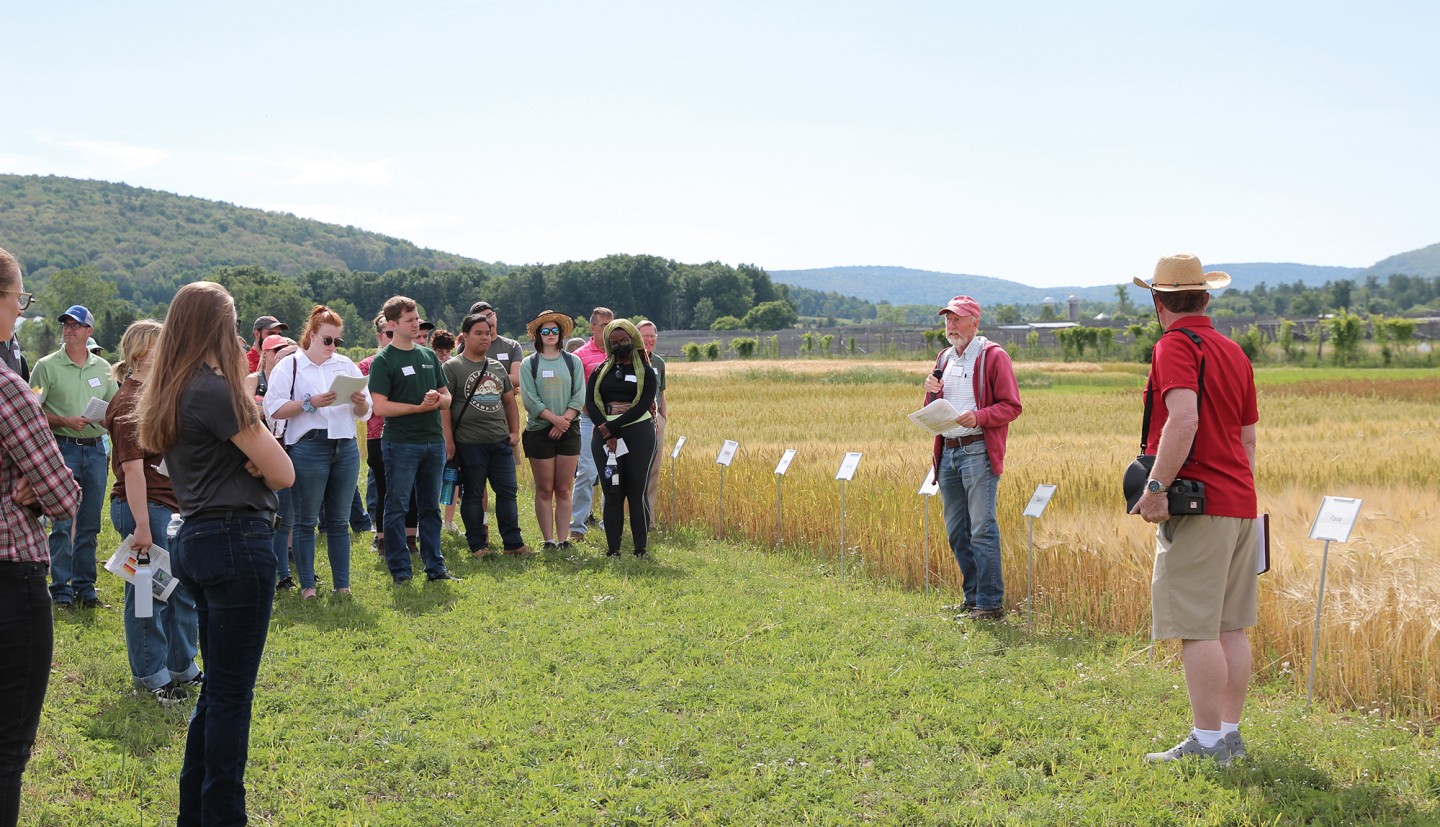
In the U.S., the overwhelming majority of wheat and other small grains are grown in western and midwestern states, where drier conditions help combat fungal-borne diseases and early sprouting, which can be brought on by rain and ruin crops for human consumption. Cornell’s is the only active small grains breeding program, public or private, in the Northeastern U.S. Over almost 120 years, it has been led by just three plant breeders. Mark Sorrells, professor of plant breeding and genetics in the School of Integrative Plant Science at Cornell, has led the program for 48 years and will be retiring at the end of this year.
"Cornell has been instrumental in helping farmers to address disease and pest problems, have better varieties, and meet the growing demand for New York State-grown products." - Kyle Gifford
Driving progress for growers
New technologies have transformed society over the past 50 years, and scientific research has been at the forefront of that transformation. Sorrells remembers in 1978 when he was the first person in his department to purchase a personal computer. He taught himself how to program his new Apple II and wired the first network in the building so he could send messages to his assistant and print on a laser printer. Sorrells was an early adopter of many technologies, including molecular genetics for crop improvement – the once-revolutionary and now-standard practice of studying genes and genetic relationships to speed selection of new plant varieties.
“Progress in plant breeding has always been based on new knowledge and new technology, so when something has come along – computers, genomic selection, drones – we’ve jumped right into it,” he said.
Sorrells credits his adaptability to growing up on a farm in Southcentral Illinois, where his family raised cows, pigs, chickens, wheat, corn and soybeans. Sorrells’ brother-in-law and nephew still manage the 500-acre farm, and supporting the livelihoods and quality of life of farmers like his family is a constant source of inspiration.
Thanks to dramatic improvements in plant varieties and farm management practices, per-acre yields of those staple crops have roughly doubled since he was a child, Sorrells said. Through his breeding efforts, Sorrells has released or co-released 27 new small grain varieties and seven germplasms (the full collection of genetic resources, including seeds, plant tissues, or pollen, that other breeders can pull from to develop improved plant varieties).
“Agricultural systems are really so fundamental to society. If people don’t have enough to eat, you can’t make progress on any other front,” he said. “Supporting the farmers and growers, here in New York and around the world, underpins everything we do.”