by Angelina Tang ’28
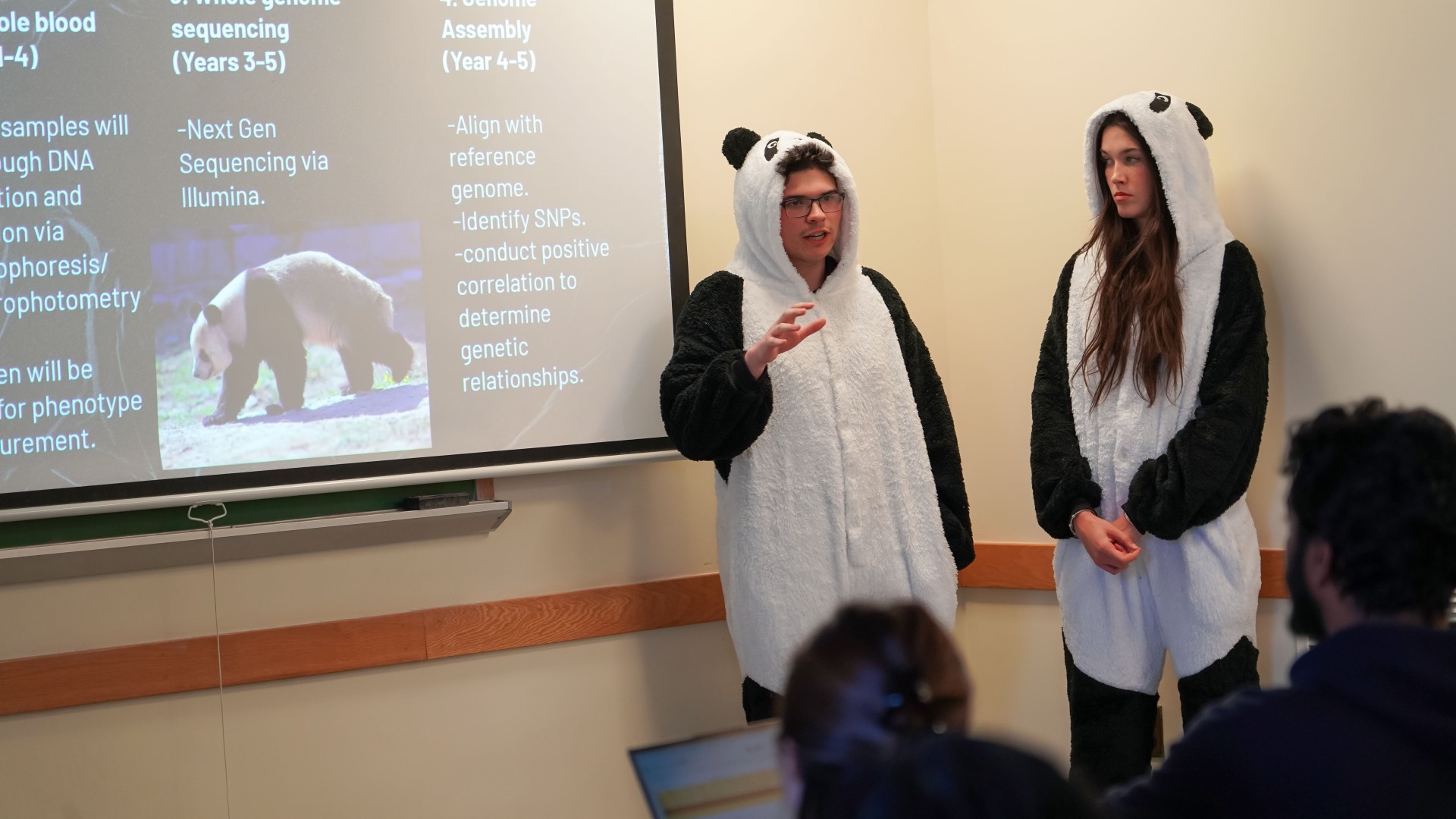
Students dressed in panda onesies to present a research proposal on the genetic quality of giant panda semen isn’t something you see in every class. But it’s a fun sight to behold in ANSC 2210: Principles of Animal Genetics. This class includes a final project that allows students to synthesize what they’ve learned throughout the semester into a research project proposal about the genetics of an animal of their choosing. Dressing as their chosen animal is optional.
“I really like seeing what they come up with for their research proposals,” said Heather Huson, associate professor of animal genetics, one of the professors teaching ANSC 2210. “Some of them are really funny and different, and it’s nice to see how they put their own twist and interests into a genetic framework.”
ANSC 2210 teaches the basics of genetics, such as DNA, gene expression and genetic mutations, while also discussing genetics research techniques and their specific applications in animal management and welfare. This past Spring 2026 semester, the course was co-taught for the first time by Huson and Ellie Duan, assistant professor of functional genomics. Three graduate and six to nine undergraduate teaching assistants also provide office hours, tutoring and valuable support for the class.
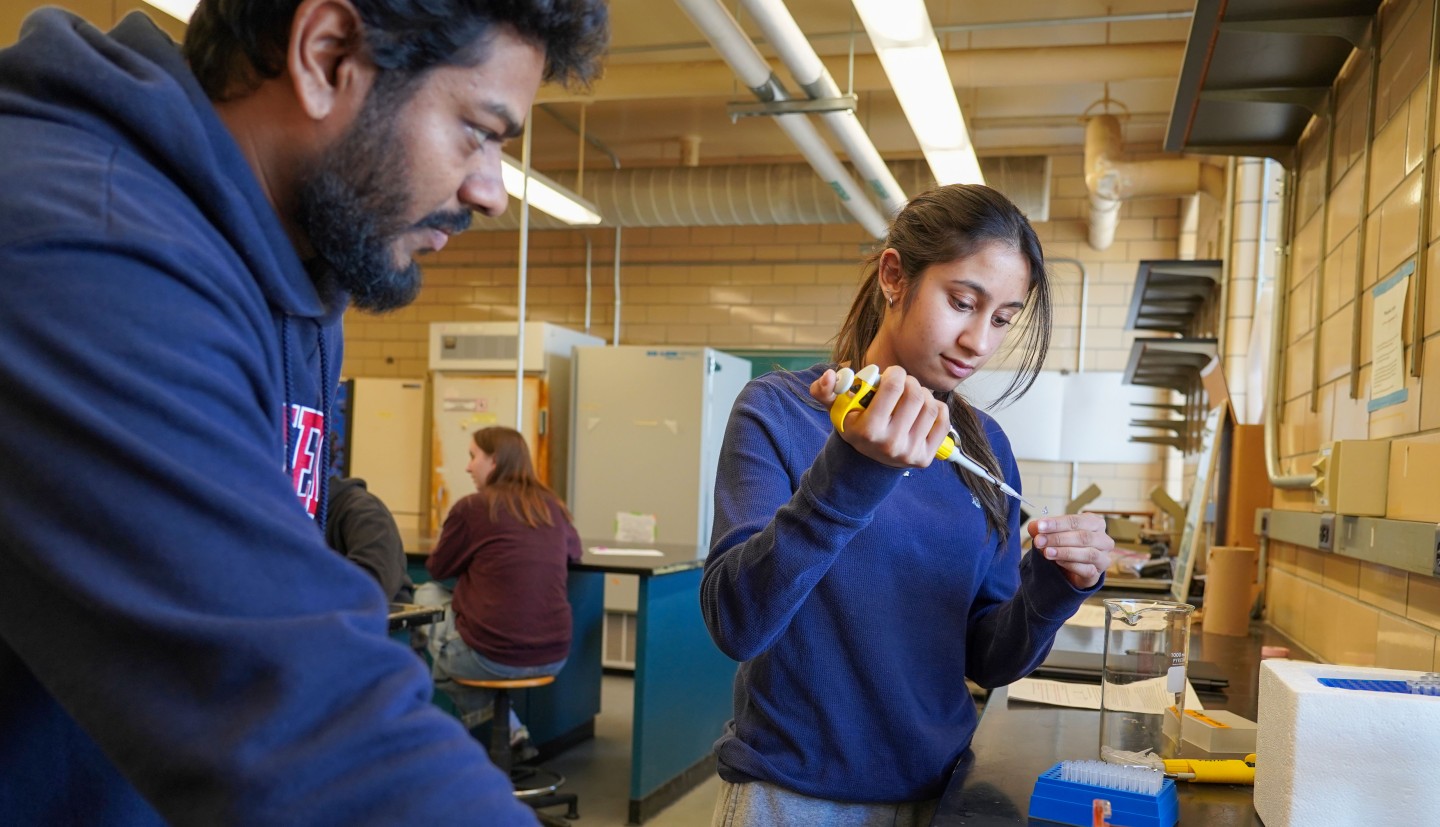
The 4-credit course, boasting 100 to 120 students, includes two lectures and one lab each week. Students are tested on lecture material by quizzes, two midterm exams and one final exam. Labs complement lecture topics, where students synthesize research papers, explore a digital DNA library database and gain hands-on experience extracting genomic DNA from sheep wool and tissue samples.
“Not only did [the final presentation] allow me to investigate an area in animal genetics I was interested in, but I was also able to learn about other interesting genetic conditions through my classmates’ presentations.” – Tiffany Chen '28
The labs culminate in the research proposal project. While it is one of Huson’s favorite parts of the class, it is also well-liked by students because it allows them to apply genetics to their own animals of interest.
“I enjoyed the freedom we had to choose a final project to work on,” said Tiffany Chen ’28, a student in the Spring 2026 class. “Not only did it allow me to investigate an area in animal genetics I was interested in, but I was also able to learn about other interesting genetic conditions through my classmates’ presentations — like osteochondrodysplasia or pituitary dwarfism, to name a few.”