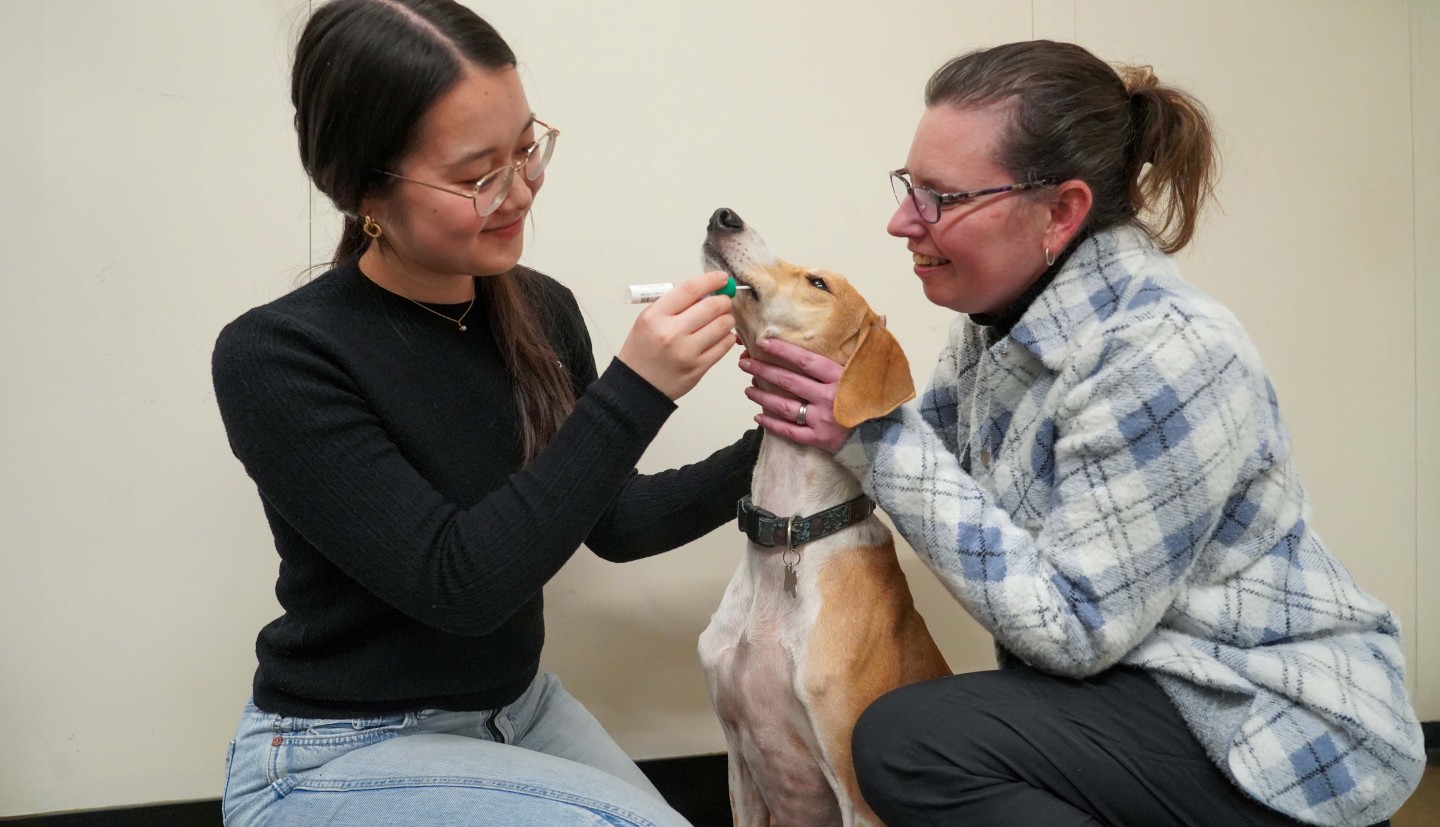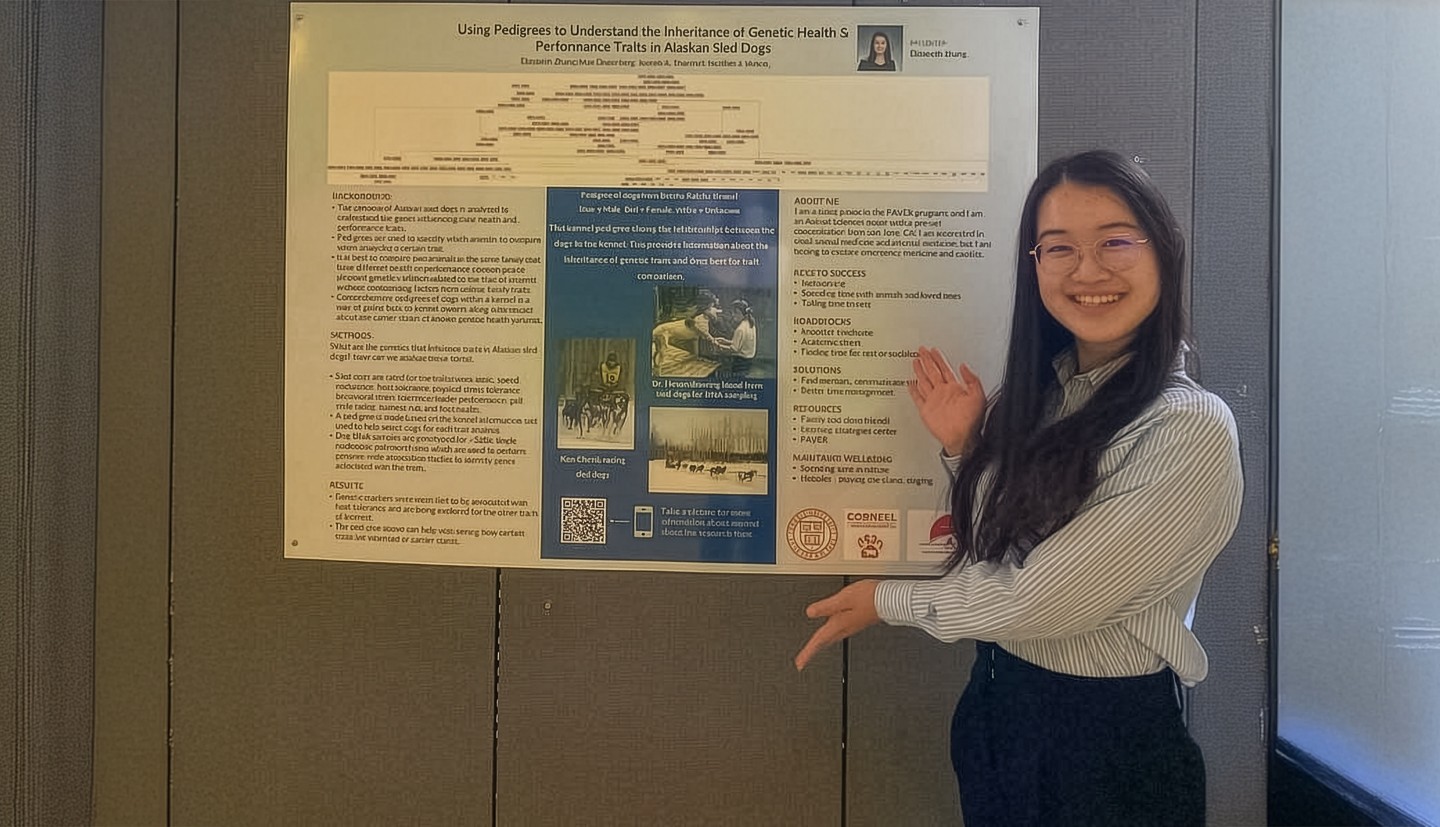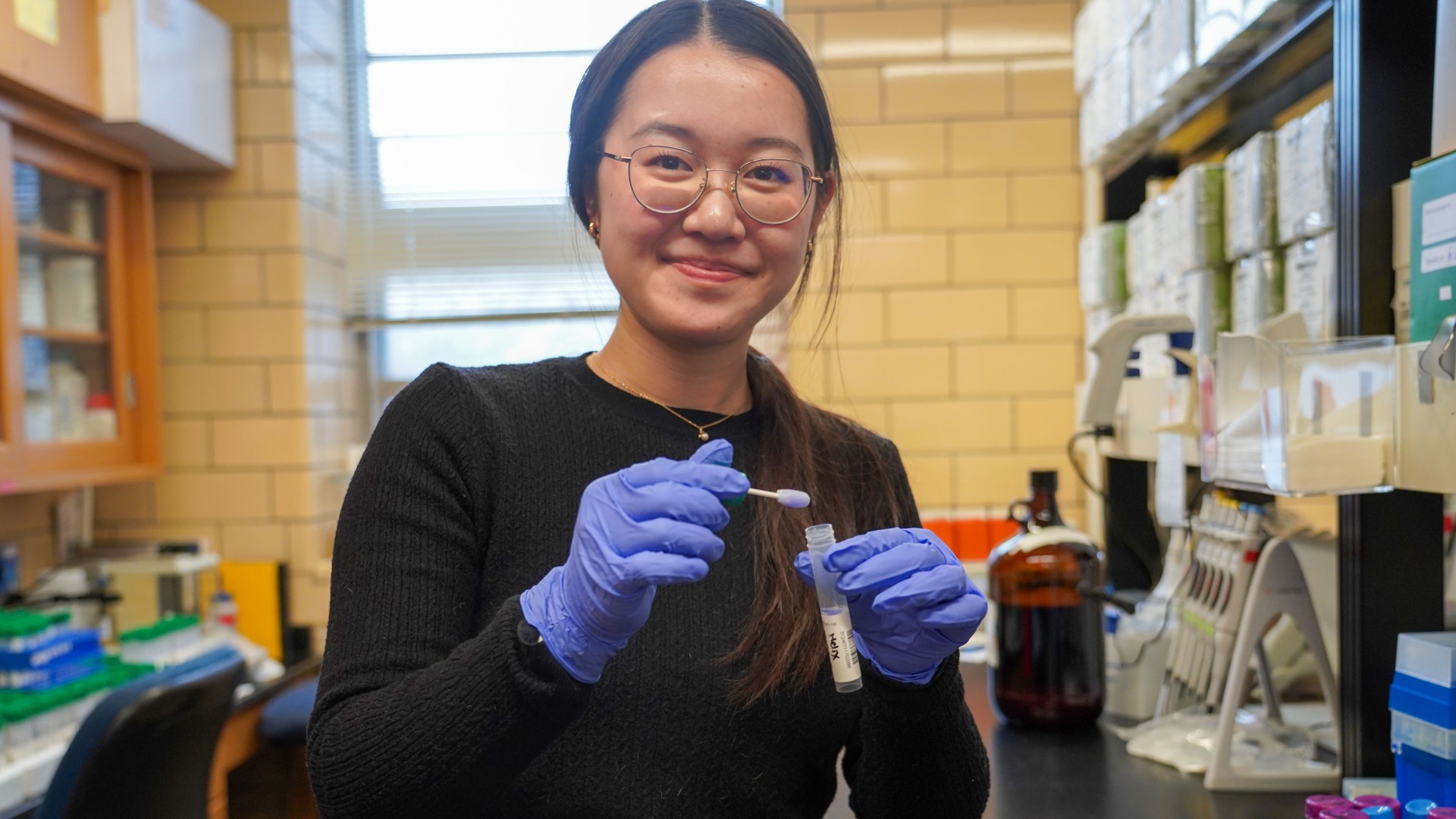
Elizabeth Zhang ’26 is a senior in Animal Science with a concentration in pre-veterinary medicine. Currently she is an undergraduate researcher in the lab of Heather Huson, associate professor of animal genetics. We sat down together to talk about her research experience.
Why did you decide to join the Huson lab?
I actually wanted to join Prof. Huson’s lab since before coming to Cornell, so it felt like a dream to finally get to work there. The purposes of her research projects perfectly align with my interests in small animal medicine, animal health and genetics.
I’ve always wanted to be a veterinarian and to apply to veterinary school after undergrad, so I chose the pre-vet concentration to fulfill these requirements best. But I’ve also loved genetics ever since learning about it in my high school biology classes. I was drawn to how intricately designed and complex genes are. Now I conduct genetics research with Alaskan Sled Dogs in Prof. Huson’s lab.
You’re helping with research on the gene known as General Transcription Factor II (GTF2), which helps regulate gene expression in the brain. Tell us more about that.
GTF2 variants contribute to hypersociability in dogs. They also contribute to Williams-Beuren Syndrome in humans, which is a rare disorder that includes an extremely friendly personality.
We’re looking at whether these gene variants are different between domestic dog breeds and within certain breeds with different working purposes. Domestic dogs breeds are so different in the ways they socialize with humans — some breeds and working roles are valued for companionship while others are valued for independence.
For example, the Siberian Husky is bred for multiple working roles. Some are bred to be pets, some are sprint racers or distance racers, and some are show dogs. We’re interested in seeing if there are differences between GTF2 variants among dogs bred for these different roles.