Back

Discover CALS

See how our current work and research is bringing new thinking and new solutions to some of today's biggest challenges.

Share
  • PRO-DAIRY
  • Animal Science
  • Animals
  • Genetics
  • Dairy

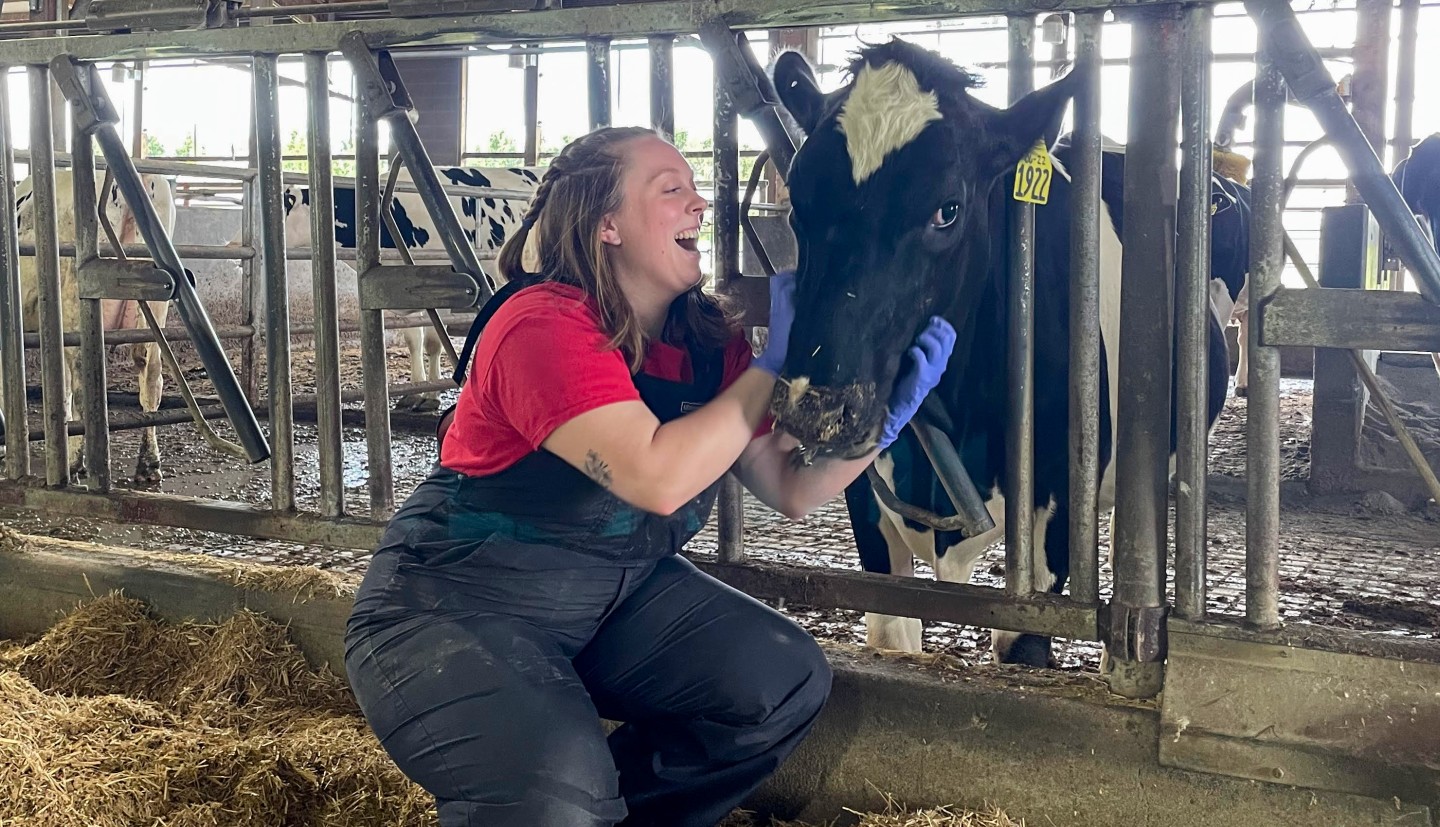
Sydney Jewell ’26 is a doctoral student in the Animal Science Department working in the lab of Heather Huson, associate professor of animal genetics. Sydney’s research focuses on epigenetics – the changes behavior and environment can cause to gene expression without changing the underlying DNA. 

We spoke with Sydney about her research on dairy cows. 

First, help us understand what the term “epigenetics” means.

Epigenetics refers to all the mechanisms the body uses to regulate gene expression. The genome of an animal includes instructions to make all the proteins the body could ever need, but not every cell needs to make all of those proteins all of the time. Epigenetic mechanisms allow flexibility in what genes are expressed, when and where. Epigenetic patterns are different between tissues, and can change over an animal’s lifetime and in response to environmental stimuli.

It might help to think of the genome as a cookbook. A cookbook is a large collection of recipes just as the genome is a collection of genes, each of which encode the recipe to make a specific protein. At the beginning of the week, you may mark what recipes you’ll make for dinners with sticky notes. You may choose easier or more difficult recipes, depending on how stressful you think the coming week will be and how much energy you will have to cook. Epigenetic patterns are kind of like those sticky notes; they indicate which genes are going to be expressed by the cell, and they are influenced by stress factors.
You are looking at the dairy cow transition period — the time around calving and the beginning of lactation. Why this particular time period? 

It’s one of the most stressful periods in a cow’s lifetime. A lot of research has gone into better managing cows to help them navigate it. Transition disease, which happens at the beginning of lactation, has negative effects on the cow’s milk production, fertility and longevity for the rest of that lactation even after she’s recovered.

We hypothesize that at least some of the time-lagged effect could be due to epigenetic patterns  acquired during disease. These patterns may have helped a cow partition her energy in a beneficial way during the disease. However, they may remain after the fact and affect how much energy she puts towards milk production or reproduction. 

Although we can use genetic evaluations to help us select cows that may be more resistant to these types of diseases, the genetic contribution to the disease trait is lower than the environmental contribution. So, since epigenetics are affected by the environment, they could be a way to quantify some of that environmental contribution and the interactions with a cow’s genes. 

How did you carry out your study?

We sampled first lactation cows before calving and at one month into their lactation to identify epigenetic patterns in blood associated with transition disease. We allowed farm personnel to manage, monitor, and diagnose the animals as they normally would during the transition period (three weeks before and after calving) and selected cows that had a common transition disease called ketosis and healthy cows for comparison. 

We then evaluated DNA methylation (one type of epigenetic mechanism) in these cows and found changes in DNA methylation patterns from before calving to one month into lactation in cows with subclinical ketosis. The changes occurred in regions of the genome that we know play a role in ketosis. This suggests that expression of these genes could be changed even after a subclinical ketosis event is over. 

So, transition disease affects a cow’s gene expression after the disease is over, but does it also affect her unborn calf? 

Yes. We think a calf conceived shortly after the cow’s recovery from the initial disease event and gestated during the rest of the lactation, could have changes in its epigenetic patterns, too. To study this, we sampled calves born to dams that either had metritis, a common transition disease, in the previous lactation or had no disease reported in the previous lactation. 

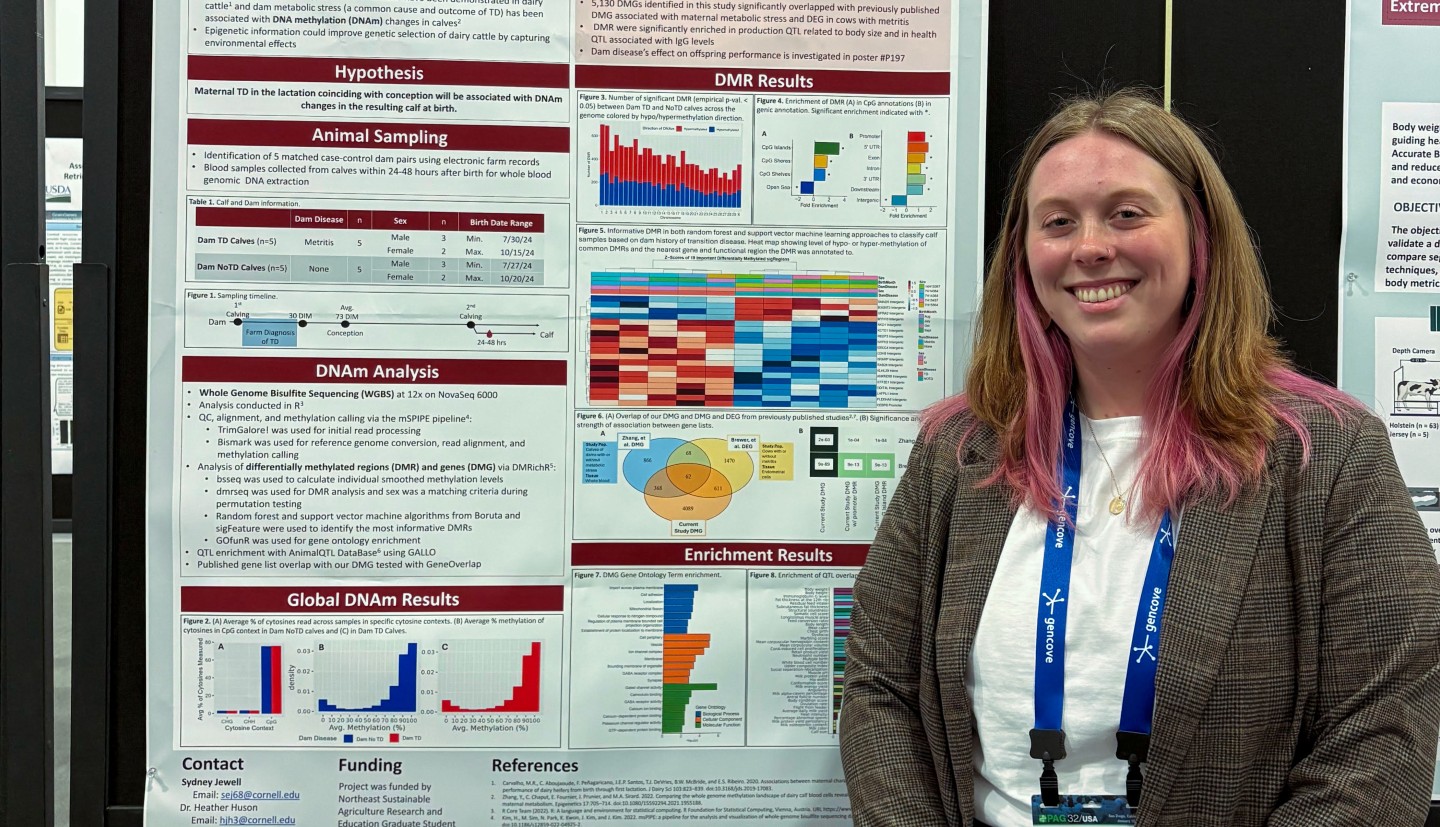
We found numerous differences in DNA methylation patterns in the blood of these calves at birth. A lot of these differences were in regions of the genome that play a role in growth and immune response. That means activity or expression of genes that affect growth and immune response could be different between calves born to dams with a history of metritis and those born to healthy dams.   

Looking forward, what are the next steps? 

I presented some of these results at the 2025 Plant and Animal Genome Conference in January and at the 2025 American Dairy Science Association meeting in June. We are currently working on drafting two papers from this study. We’ve also been conducting a companion study to try to validate the DNA methylation changes we see in our results and connect them to actual gene expression changes in an independent group of animals.

Jackie Swift is the communications specialist for the Cornell CALS Department of Animal Science.

Keep Exploring

a group of young people stand together in front of a building

News

The New York State 4-H Livestock Ambassador Program recently offered an immersive, multi-day educational experience for youth participants, providing hands-on exposure to New York’s diverse livestock industries. The program began with a visit to...
  • Animal Science
  • Animals
Bee

News

Five new projects from the Cornell Atkinson Center for Sustainability and The Nature Conservancy seek to protect pollinators, restore oyster habitats, manage flood risk and support “cattlevoltaics.”

  • Cornell Atkinson
  • Ashley School of Global Development and the Environment
  • Natural Resources and the Environment Section