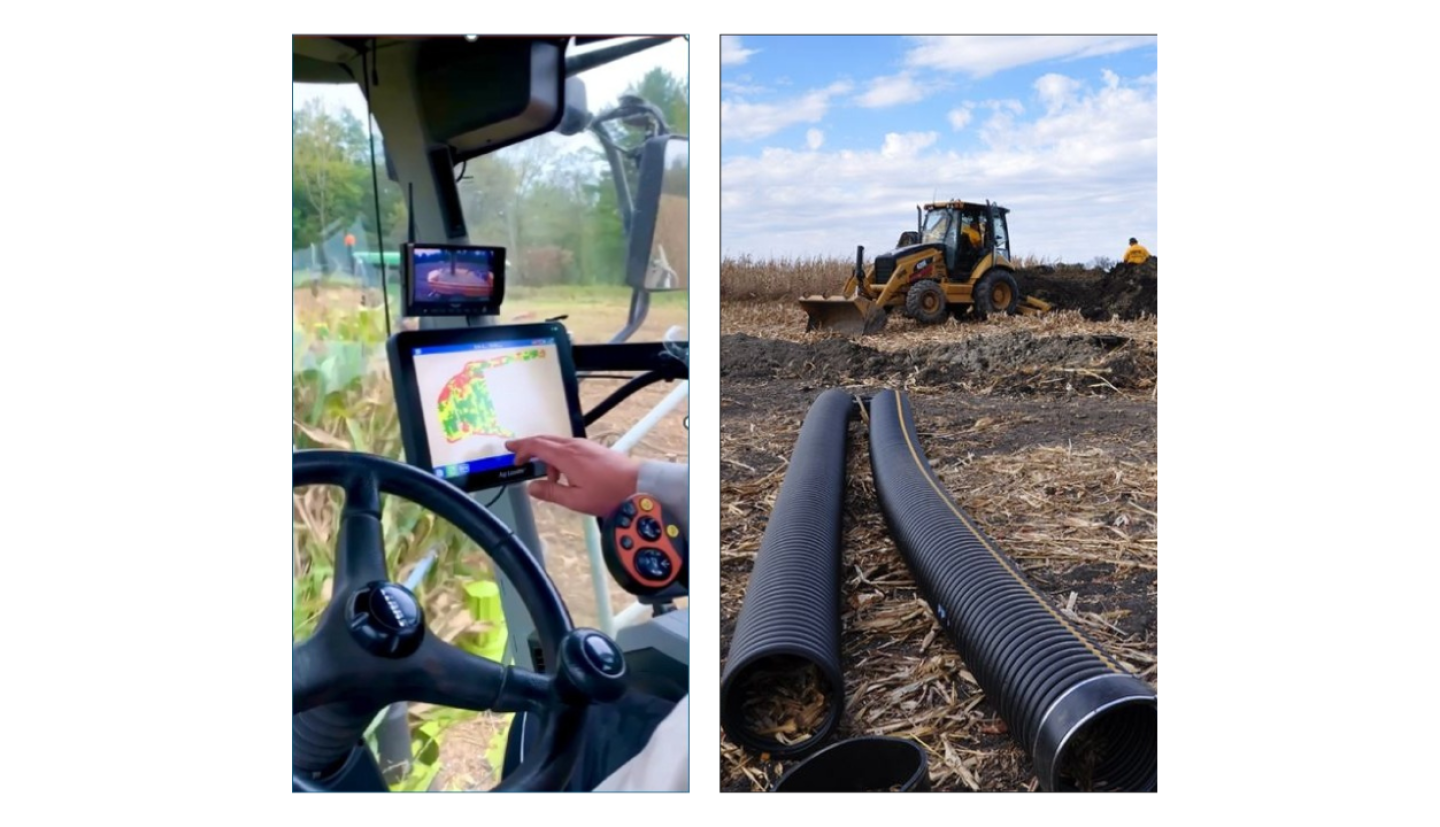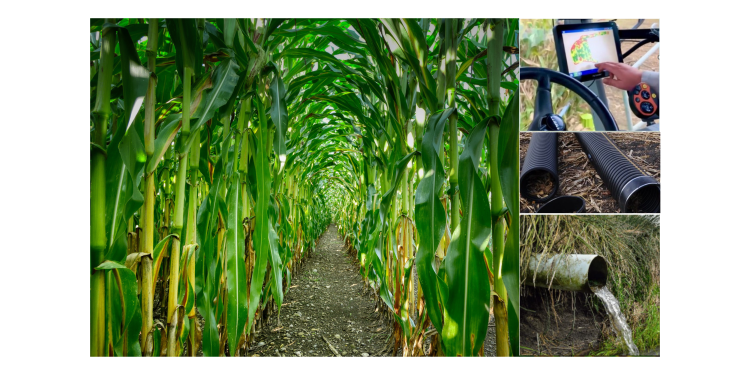
Installing artificial drainage in farm fields is an ancient concept that remains relevant today. While its benefits are well-known among farmers, the increasing use of yield monitors means that we now have access to the data necessary to measure those benefits. Cornell researchers are conducting ongoing studies and looking to recruit more farmers so they can expand their dataset and paint a complete picture of the impacts of tile drainage on corn silage, corn grain and soybean fields.
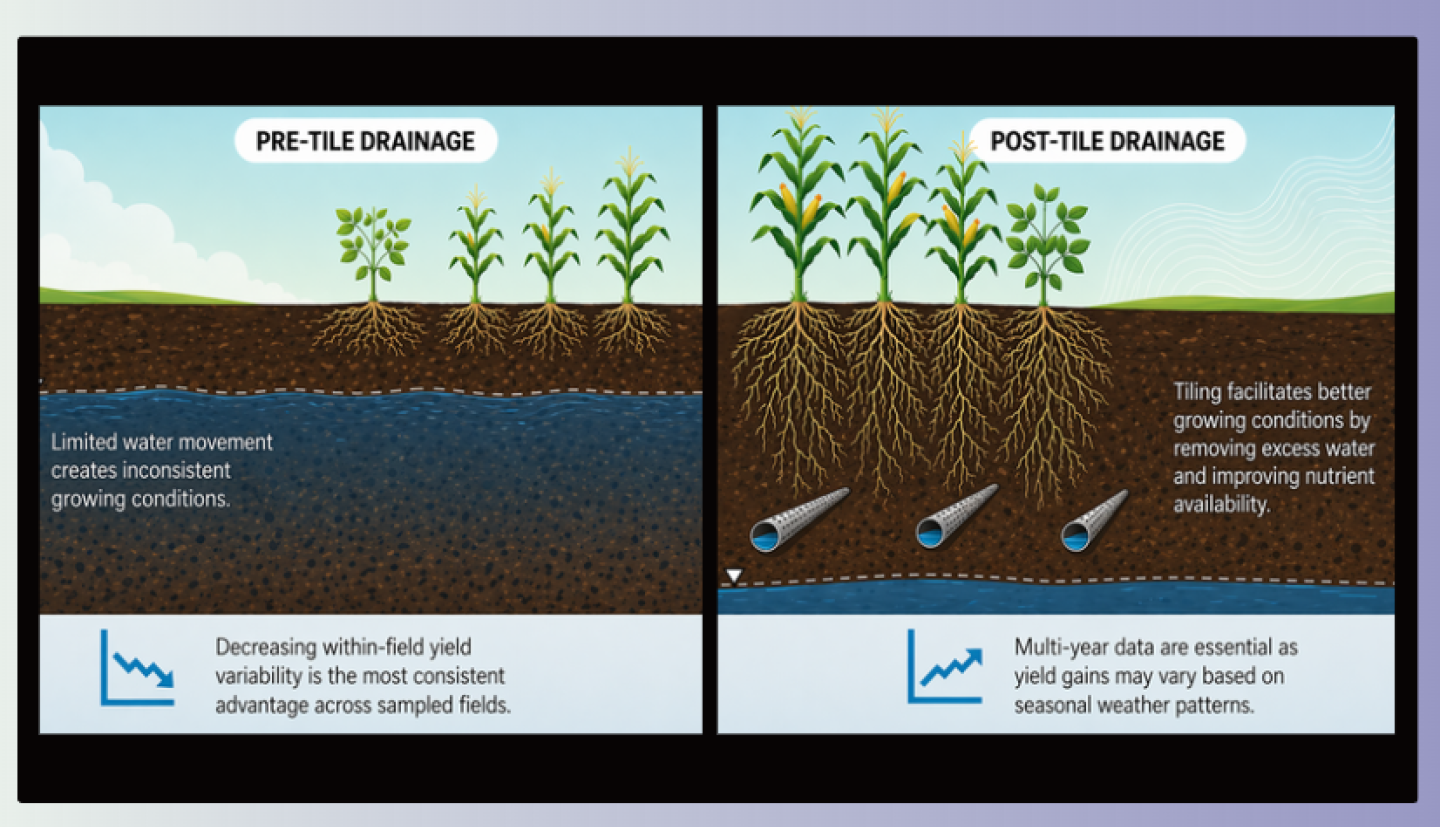
Subsurface tiling involves placing slotted drain tubes beneath the soil surface in poorly drained, wet areas of fields. Farmers install tiles in fields to artificially drain excess water, creating better growing conditions for plant roots.
Fields with ideal moisture conditions allow crops to thrive and establish deeper root systems, resulting in better access to soil nutrients and water as well as reduced sensitivity to extremely wet and dry conditions. Theoretically, this would mean higher yield and quality of crops, as well as a decreased loss of soil and nutrients through erosion and runoff.
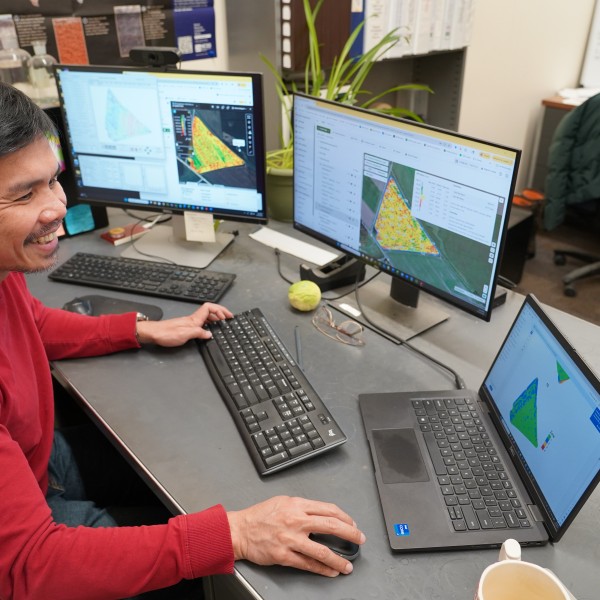
The yield benefits of tiling are well known among farmers, but quantification of yield benefits has been limited in the past. However, with increased availability of yield monitor data on farms in New York, researchers can now quantify the impacts that tile drainage has on crop yield.