Back

Discover CALS

See how our current work and research is bringing new thinking and new solutions to some of today's biggest challenges.

Supporting farms, local food systems and climate resilience in New York State

Share
  • Cornell Cooperative Extension
  • PRO-DAIRY
  • PRO-LIVESTOCK
  • Animal Science
  • Climate Change
Cornell CALS Department of Animal Science is creating a statewide PRO-LIVESTOCK team of extension specialists who will support NY livestock farms, strengthen the food system and enhance environmental sustainability practices.

The new PRO-LIVESTOCK team will develop and implement programs statewide and conduct applied research in collaboration with Cornell faculty and Cornell Cooperative Extension educators. PRO-LIVESTOCK mirrors Cornell CALS PRO-DAIRY, a nationally recognized extension and applied research leader serving dairy farms for more than 35 years, housed through the Cornell Department of Animal Science.

“Livestock farmers are a vital part of New York’s economy and food system, and they’ve been asking for more science-backed guidance and technical support to address some of their top challenges and grow their businesses,” said Senator Michelle Hinchey. “The new PRO-LIVESTOCK team at Cornell CALS will meet those needs for livestock farmers statewide, building on the successful model of the PRO-DAIRY program, which has long supported New York dairy farmers. I was proud to help secure funding for this effort in the state budget, and thank my colleagues and the Governor for their support as well as Cornell CALS for their continued service to all sectors of New York agriculture.”

Livestock farms are an important resource, producing a local, nutrient-dense protein for consumers that has worldwide demand, while also serving a critical role to develop carbon-sequestering management practices and provide ecological benefits on millions of acres of farmland. 

But over 85 percent of NY livestock farmers stated in Securing the future of the New York state livestock industry report, developed from a Cornell Small Farms Livestock Summit, that they need more science-based production guidance and market development to expand their businesses.

"The creation of a statewide PRO-LIVESTOCK team at Cornell CALS was an important step towards filling current gaps in production guidance and market development that have long limited the livestock industry,” said Assemblywoman Donna Lupardo. “As we've seen with PRO-DAIRY, dedicated extension specialists provide invaluable expertise and support to grow NY's various agricultural sectors. I was a strong advocate for this funding in the recently passed state budget and thank my colleagues and the Governor for their support."


Livestock growth

The 2022 United States Department of Agriculture National Agricultural Statistics Service census reported that livestock, and particularly beef production, is an area of strong growth in NY. Poultry and egg farmers have grown from $194 to $356 million in market value since the 2017 census, with an increase of over 200 new farmers. The beef sector has also grown from $190 million to $493 million in market value, with a stunning 568 new farmers, likely reflecting a shift from smaller and medium scale dairy to beef operations. Meat processing is believed to be a stumbling block to further growth.

“Cornell’s College of Agriculture and Life Sciences continues to be an invaluable resource to our farming community here in New York, providing expert, science-based guidance to farmers across many agricultural sectors. I know that Cornell’s new PRO-LIVESTOCK team will fill a critical gap and help our producers continue to grow their businesses with sustainable, research-backed practices,” said State Agriculture Commissioner Richard A. Ball.

With $250,000 annual funding support from NYS Department of Agriculture and Markets, Cornell is focused on reinvigorating its ability to serve the non-dairy segment of the livestock industry with the hire of two Extension specialists: a beef production systems specialist and a small ruminant systems specialist.

“Empowering livestock farmers with science-driven solutions is essential to building a resilient, sustainable, and thriving food system, said Benjamin Houlton, the Ronald P. Lynch Dean of Cornell CALS. “The launch of PRO-LIVESTOCK reflects our college’s deep commitment to serving all sectors of New York agriculture—notably our fast-growing livestock sector—with the same excellence that has defined PRO-DAIRY for decades. This is more than a program; it’s a promise to our farmers, our environment, and our future.”

Extension and applied research

A broader long-term strategic plan for PRO-LIVESTOCK includes addition of a poultry and swine systems specialist, a livestock processing business specialist, and a forage and grazing systems specialist pending additional funding. 

"We view the non-dairy livestock sector as a growth area in New York. Providing extension and applied research programs in support of these producers is critical for New York agriculture," said Thomas Overton, department chair, professor of dairy nutrition and management, Cornell Department of Animal Science. 

PRO-LIVESTOCK is modeled after PRO-DAIRY, which has specialists with expertise in climate leadership, environmental systems, farm business management, forage systems, herd health and management, nutrient management, production education, strategic farmstead planning, student internships, and youth development. 

“There’s a handful of us on regional Extension teams that specialize in livestock. Our goal was to set up a PRO-LIVESTOCK structure like PRO-DAIRY that would have a high level of expertise and more secure funding to sustain the positions,” said Nancy Glazier, a leader in the Cornell Cooperative Extension Livestock Program Work Team that helped drive creation of PRO-LIVESTOCK. “NY has land suited for grazing and forages, and we are looking to grow opportunities for markets and processing for livestock farmers.”

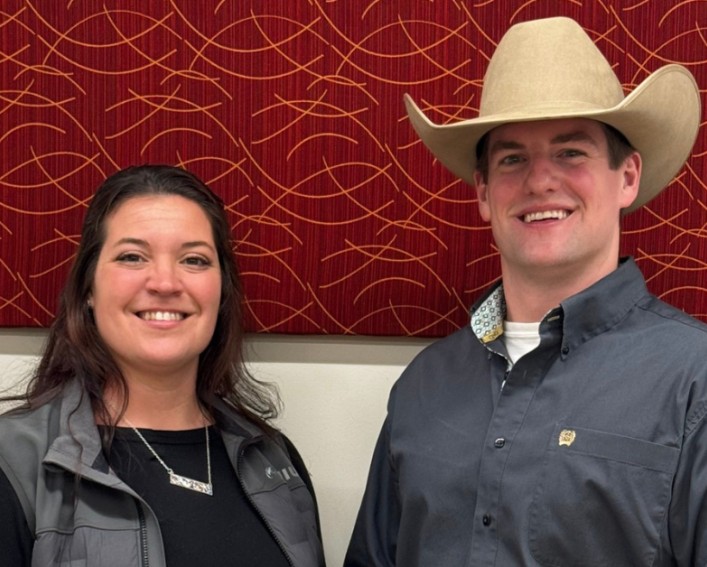
The first team members hired to join PRO-LIVESTOCK are Adam Murray, beef production systems specialist, and Jessica Waltemyer, small ruminant systems specialist. Murray brings a passion for extension education, experiential learning for students, market trends, consumer education, and research interests that focus on how cattle management practices throughout their life impacts beef quality. Waltemyer's focus is on support of small ruminant producers, including limitations in meat processing capacity, small ruminant veterinary care, and a need for farm succession planning. She will offer statewide extension programming, conduct applied research, and support Cornell Cooperative Extension educators, the Cornell Small Farms Program, and allied industry professionals.

New PRO-LIVESTOCK team

Beef and small ruminant systems specialists hired

Inaugural members of the new PRO-LIVESTOCK team include Adam Murray, beef production systems specialist, and Jessica Waltemyer, small ruminant systems specialist.

two people standing together

PRO-LIVESTOCKCornell CALS Department of Animal Science, leads extension and applied research efforts for NY livestock farmers.  

Keep Exploring

Researchers have found that enhanced rock weathering – which uses rock dust to sequester carbon in soil - could remove up to a gigaton of carbon by 2100 if adopted globally.

News

One of the most recent technologies for sequestering carbon, enhanced rock weathering could remove up to a gigaton of carbon by 2100 if adopted globally.

  • Ashley School of Global Development and the Environment
  • Global Development Section
  • Climate Change
Cropland map

News

The new, high-resolution maps calculate global emissions from croplands by region, crop and source – enabling hyper-local mitigation.

  • Ashley School of Global Development and the Environment
  • Global Development Section
  • Agriculture