Back

Discover CALS

See how our current work and research is bringing new thinking and new solutions to some of today's biggest challenges.

|
By Craig Cramer
Share
  • Cornell Integrated Pest Management
  • Cornell Orchards
  • Cornell University Agricultural Experiment Station
  • School of Integrative Plant Science
  • Horticulture Section

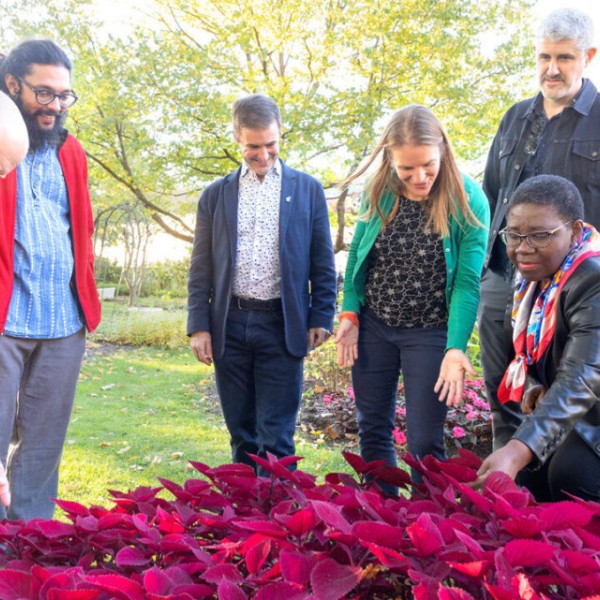
Cornell Cooperative Extension’s Fruit and Soil Health Program Work Teams held a joint meeting July 11 to tour research orchards and facilities for updates on the latest science from Ithaca-based faculty and staff. 

The day started with a morning tour of apple and grape research at Cornell’s Lansing Orchard led by Cornell AES orchard manager Jay Owens, Cornell IPM fruit coordinator Anna Wallis, and Horticulture Section associate professor Greg Peck

The Lansing Orchard tour featured graduate students across many programs at Cornell:

  • Oksana Bihun (Peck Lab, graduate student) discussed her work with cider apples and fruit thinning trials
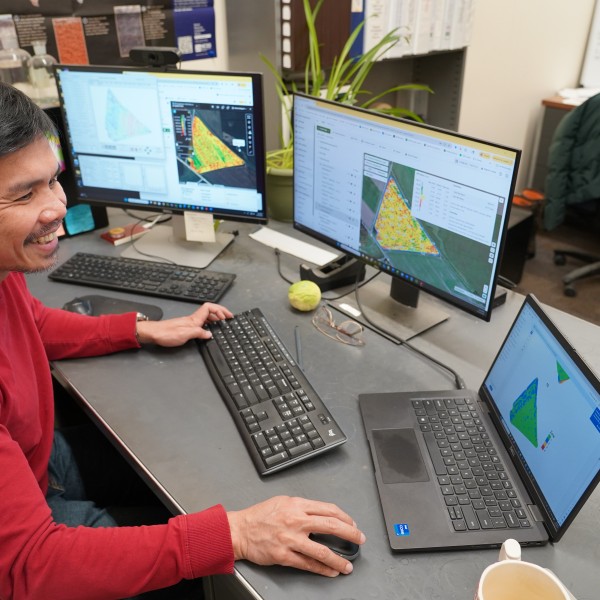
  • Manushi Trivedi (Vanden Heuvel Lab, PhD ’25) shared results from her research on remote sensing for nutrient and grape crop quality management.
  • Angela Paul (Vanden Heuvel Lab) talked about her work on Botrytis cluster rot in wine grapes

Also at the Lansing Orchard:

The afternoon program shifted to Cornell Orchards, where stops featured field talks by Horticulture Section faculty:

  • Chris Watkins and Yosef Al Shoffe on the latest post-harvest technology pioneered by Cornell that keeps apples crisp and tasty until the following season’s harvest.
  • Lynn Sosnoskie on electric weeders and other new tools for orchard and specialty crop weed management.
  • Lailiang Cheng on the nutrition and stress physiology research he conducts using container-grown apple trees.
  • Marvin Pritts on berry and small fruit opportunities for growers.

The joint tour wrapped up in Bradfield Hall, where attendees learned how fruit growers can benefit from analyses conducted by the Cornell Soil Health Lab of their soil’s chemical, physical and biological characteristics led by the lab’s director Bob Schindlebeck, assistant director Kirsten Kurtz and their staff.

Wallis and Peck organized the tour in collaboration with the other PWT co-chairs, which was attended by more than 30 Extension educators, faculty, staff and students.

Keep Exploring

Several red 'Crimson Beauty" raspberries hang from green leaves and stems.

Report

Relevance Raspberry and strawberry production in the United States is concentrated in California and Florida, where climate variability and rising costs challenge long-term sustainability. Demand for locally grown fruit is increasing, creating...
  • Cornell Cooperative Extension
Charles Midega (left) and Roy Odawa display the Kontiki kiln they modified to make biochar from human feces. Credit: Rebecca Nelson

News

Cornell researchers and Kenyan partners have developed a fertilizer made from human excreta. The product improves soil health and food production, while preventing pollution in informal settlements and the aquatic environment.

  • Ashley School of Global Development and the Environment
  • Global Development Section
  • Agriculture