The safety and well-being of our community is our highest priority. We know the recent news and allegations are deeply concerning, and we are committed to a safe environment for all. Learn how Cornell is addressing sexual violence.

Alert Close
Back

Discover CALS

See how our current work and research is bringing new thinking and new solutions to some of today's biggest challenges.

Share
  • PRO-DAIRY
  • Animal Science
  • Agriculture
  • Digital Agriculture
  • Field Crops

Graduate student Issa Diaz ‘28 grew up in San Luis, Comayagua, Honduras. She has always been passionate about helping farmers streamline their practices and dreamed of coming to Cornell University. Now that she has joined the Nutrient Management Spear Program (NMSP) team in Cornell’s Department of Animal Science, she strives to fuel her passion by learning more about innovative nutrient management solutions on-farm. She hopes to use her knowledge to support farmers for years to come.    

We sat down with Diaz to learn more about her journey and what she hopes to achieve while earning her PhD.

What drove you to join Cornell CALS’ NMSP? 

I got my bachelor’s degree in agronomic engineering from Zamorano University in 2020, and then my master’s degree in soil physics at Auburn University in Alabama this past May.

I really wanted to pursue a PhD and one of the professors in my department at Auburn directed me to Dr. Quirine Ketterings and her work with soil fertility and precision agriculture. That immediately sparked my interest. I have always wanted to study at Cornell, though I once thought getting accepted here was a far-fetched dream. Yet, that discussion with that professor paved the way for me to join NMSP. 

Tell us more about the variety of work you will be doing with NMSP. 

I will be working on the Cornell Agricultural Systems Testbed and Demonstration Site (CAST) for the Farm of the Future. CAST focuses on data-driven solutions for climate-smart agriculture. Researchers there are developing a networked ecosystem of technology and techniques that farmers can use to address the needs of modern farming. 

Working with CAST for my PhD program includes figuring out ways to improve and implement better manure and fertilizer nutrient management practices using advanced data and precision ag technologies, which is my main area of interest. 

This project aligns closely with my background in soil science and precision agriculture and gives me the chance to follow my passion for applying advanced tools to improve farm nutrient management. I’m thrilled to contribute to practical solutions that help farmers manage field variability more effectively. 

What are you looking forward to most when it comes to your time here?  

I want to improve my research skills and broaden my expertise in soil science and precision agriculture. I am eager to deepen my knowledge and conduct meaningful research with outcomes that farmers can apply directly to their operations. One of the most valuable experiences I anticipate is the opportunity to collaborate directly with farmers.

I hope to communicate scientific concepts clearly to students and farmers managing both small-scale and large-scale operations– and in the long term, I aim to use this knowledge to support farmers in both the United States and Latin America. 

Keep Exploring

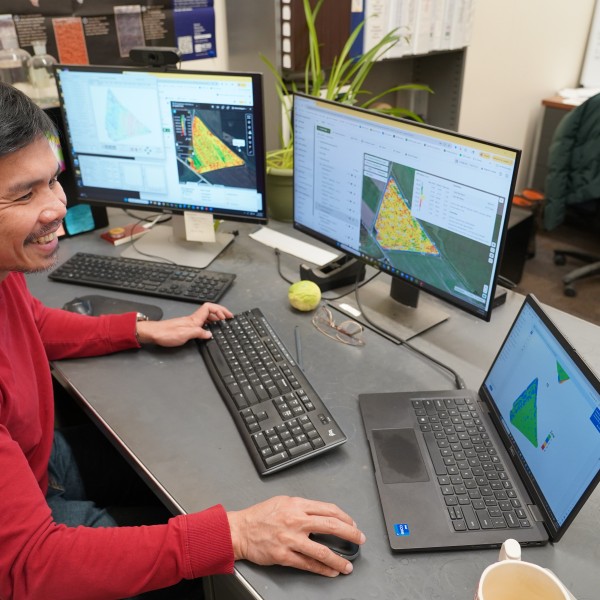
A man works on three computers. He is wearing a red shirt, sitting at a desk and smiling.

Field Note

With hundreds of thousands of acres of corn in New York, it's crucial to support farmers’ efforts to optimize crop production. Yield varies in crop fields for many reasons, including soil fertility and topography. In a recent study, Cornell CALS...
  • Animal Science
  • Soil
  • Agriculture
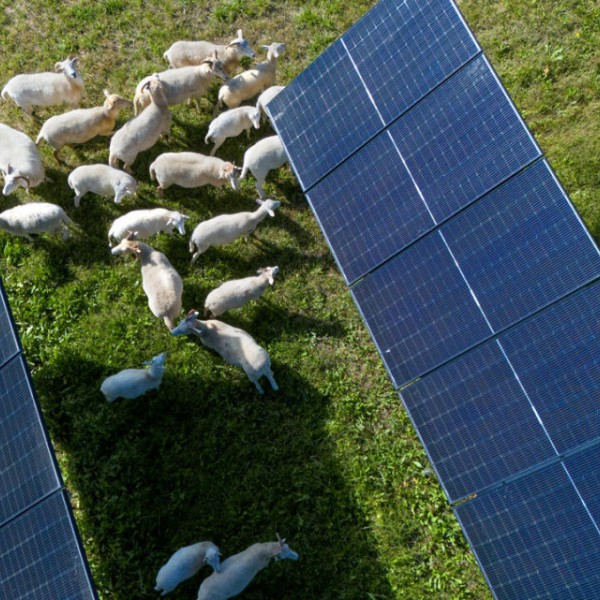
A solar farm in Lansing, New York.

News

As solar grazing expands across the country, new research helps sheep farmers increase profitability and sheds light on the how the number of sheep in solar array fields interacts with beneficial insects.

  • Natural Resources and the Environment Section
  • Agriculture
  • Solar