
2024–2025 Research and Results Highlights
New York State Integrated Pest Management 2024–2025 Annual Report
$8.8M
Loss risk
Spotted Lanternfly impact on NY grape industry in three years
50
Farms sampled
Soil tested for weed seedbanks
110
Registrants
Within the first three weeks of course availability
Study looks at financial impact of spotted lanternfly
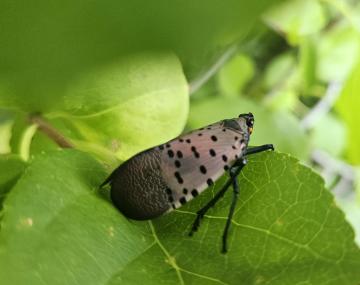
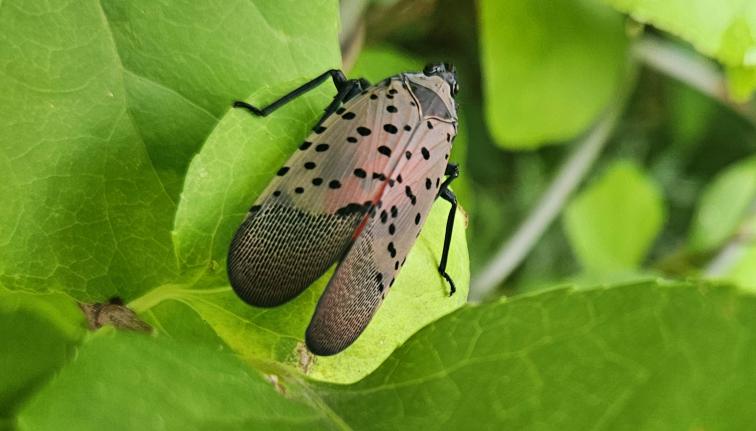
A first-of-its kind study by New York State Integrated Pest Management (NYSIPM) Agricultural Economist Allan Pinto found that New York’s grape industry could face losses of up to nearly $9 million annually as a result of invasive spotted lanternfly (SLF).
Published in the Journal of Integrated Pest Management, the study, “Assessing the potential economic impacts of spotted lanternfly (Hemiptera: Fulgoridae) infestations on grape production in New York State,” used ongoing research from Pennsylvania State University, experiences from growers and assumptions about production and economic impacts to simulate a scenario in which farmers do not manage the pest. It estimated damages of $1.5 million in year one, $4 million in year two and $8.8 million in year three if SLF populations reach the same levels that Pennsylvania experienced during its first years of infestation and no management actions are taken.
The first SLF in the United States were detected in Berks County, Pennsylvania in 2014. The invasive species has now been confirmed in 17 states, including New York. The first population in the Finger Lakes was recorded in 2024.
Pinto, who collaborated with NYSIPM Director Alejandro Calixto; Miguel Gomez, Robert G. Tobin Professor in Cornell University’s Charles H. Dyson School of Applied Economics and Management; NYSIPM Associate Director Brian Eshenaur; and Pennsylvania State University researchers Michela Centinari and Flor E. Acevedo on the study, used acreage and production statistics as well as insight and data from growers and extension stakeholders to calculate potential worst-case-scenario losses.
The Finger Lakes Region is the leading producer of wine in New York State, while the Lake Erie Region is the largest concord grape producer in the world. The study is important, as it highlights the potential damage of SLF on quality and yield without early detection and eradication. However, NYSIPM continues its efforts to ensure that growers, producers and regulatory agencies have access to the research and management techniques they need to prevent widespread loss.
Project targets weed reduction on New York farms
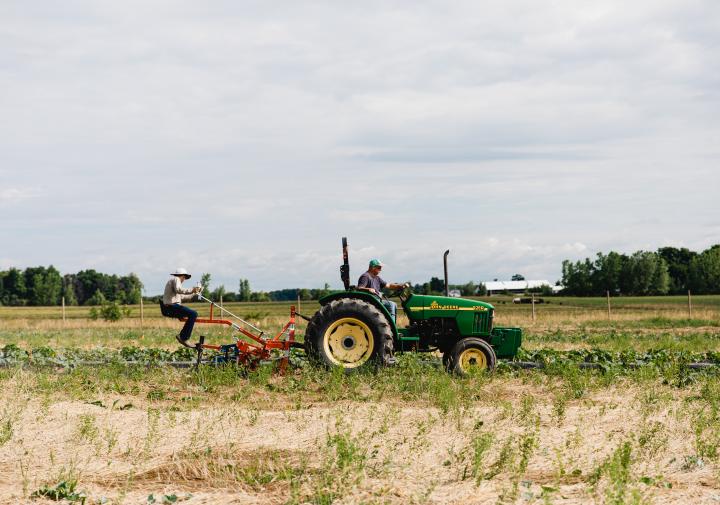
Weed management has long been one of the most challenging production-related issues for organic farmers, but due to herbicide resistant weeds, labor shortages, and increasingly variable weather, New York farmers of all types are now struggling with weed management. To help growers develop comprehensive weed control strategies, our Integrated Weed Management Specialist, Bryan Brown, launched a project to help farmers deplete the weeds in their soils.
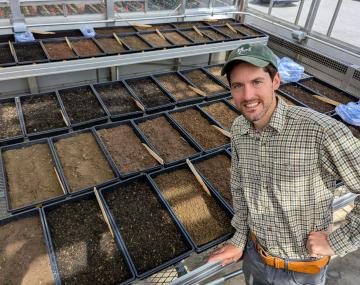
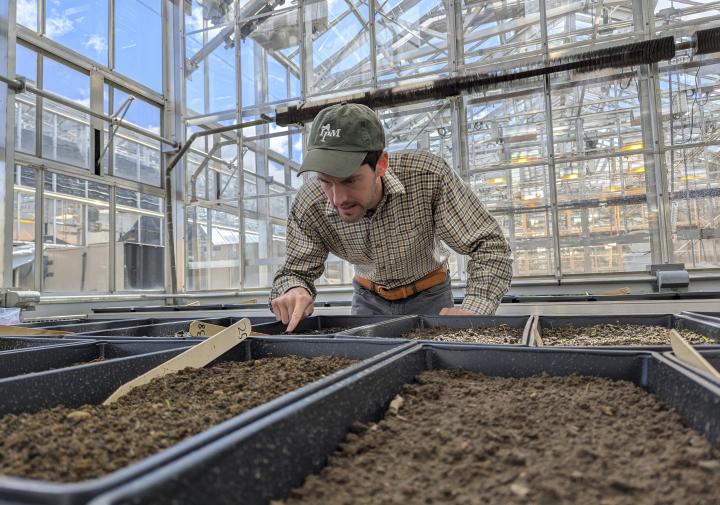
Brown, with the help of summer technician Saige Crawley and Extension Aide Kassady Cerny, collected soil samples from 50 farms throughout the state and grew weeds in a controlled environment, where they identified the species and will provide individualized reports to help farmers understand which weeds are present in their soil, and more importantly, what they can do to manage them.
Unintended impacts of pesticide use on macro-organisms
As pest pressure increases, so does pesticide reliance—New York State reported an increase in applications between 1997 and 2022—but new research from New York State Integrated Pest Management Program suggests that mass spraying may have unintentional consequences for beneficial macro-organisms.
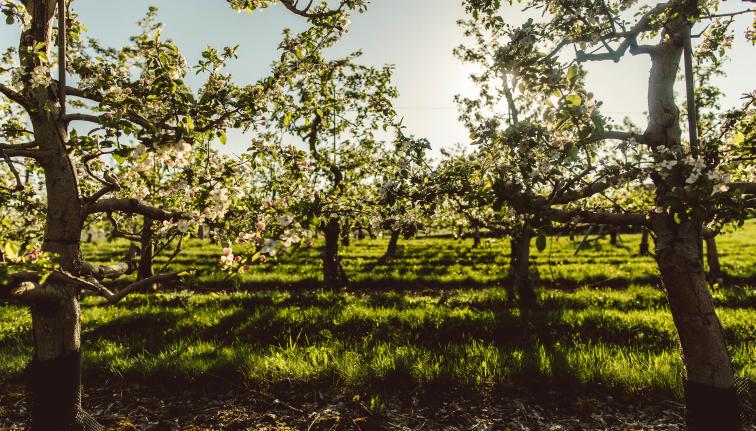
NYSIPM Post Doctoral Research Associate Diana Obregon Corredor used New York’s booming apple industry for her study, sampling soil and flowers from 24 of the state’s more than 600 commercial apple farms to assess how macro-organisms–organisms that can be seen with the naked eye–are impacted by widespread pesticide use.
Beneficial organisms are essential to the apple industry, with soil macro-organisms aiding in decomposition, nutrient cycling and pest suppression, and pollinators contributing to apple fruit set and size. However, Obregon Corredor’s research found that of the 79 reported active ingredients used to control pests on subject farms, 42 were found in the tested soil samples and 36 were found in sampled fruit flowers.
The study concluded that due to pesticide spraying, populations of several macro-organisms, including earthworms, springtails and wild bees, were significantly reduced. In order to mitigate future loss, Obregon Corredor made several suggestions, including a reduction in the use of more problematic pesticides, rotating pesticide use based on toxicity, seeking alternatives with less persistence in the soil, using NYSIPM’s Network for Environment and Weather Applications to forecast pest and weather pressure and using NYSIPM’s Environmental Impact Quotient (EIQ) to identify the minimum effective amount of specific pesticides.
Course offers clarity, compliance for neonicotinoid applicators
As part of our ongoing commitment to helping New Yorkers meet regulatory requirements, New York State Integrated Pest Management’s Pesticide Safety Education Program (PSEP), is offering “Introduction to Neonicotinoid Insecticides,” a course that meets the mandated neonicotinoid training requirements under the New York State Birds and Bees Protection Act for applicators in non-production roles treating outdoor ornamental plants and turf.
The course, developed by NYSIPM Director Alejandro Calixto and Tobias Mueller, a Ph.D. student in Cornell University’s Department of Entomology who was participating in an Extension and Outreach Assistantship, covers what neonicotinoid insecticides are and how they work; the benefits of neonicotinoid insecticides; non-target risks with neonicotinoid insecticides and strategies to reduce these risks; what the Birds and Bees Protection Act is and how it affects the use of neonicotinoid insecticides in New York State; and alternatives to neonicotinoid insecticides. Within three weeks of its implementation, more than 110 applicators had registered for the course, which became a requirement under the State’s Birds and Bees Protection Act December 31, 2024. The course is also accepted for state recertification training credits for applicators in Connecticut, Maine, Maryland, Massachusetts, New Hampshire, Rhode Island, West Virginia and Vermont. The Birds and Bees Protection Act requires any applicator using pesticides containing clothianidin or dinotefuran in non-production settings for treatment of invasive species affecting woody plants, or under a DEC-issued environmental emergency must take a DEC-approved neonicotinoid course annually. Applicators need to keep a record of this training for three years. Beginning December 31, 2026, this neonicotinoid training requirement will extend to applicators using a pesticide containing imidacloprid, thiamethoxam, or acetamiprid in the same situations. “Introduction to Neonicotinoid Insecticides,” is part of NYSIPM’s ongoing support during the transition from widespread use of neonicotinoids. NYSIPM has also worked to identify and conduct innovative research to source alternatives to neonicotinoids, develop risk assessment tools and bolster outreach and extension efforts.
About 2024-2025 Annual Report
Published by New York State Integrated Pest Management [month] 2025.
Design/Layout: Jody Benedict and Henry Zelenak
Content/Editing: Carrie Carmenatty