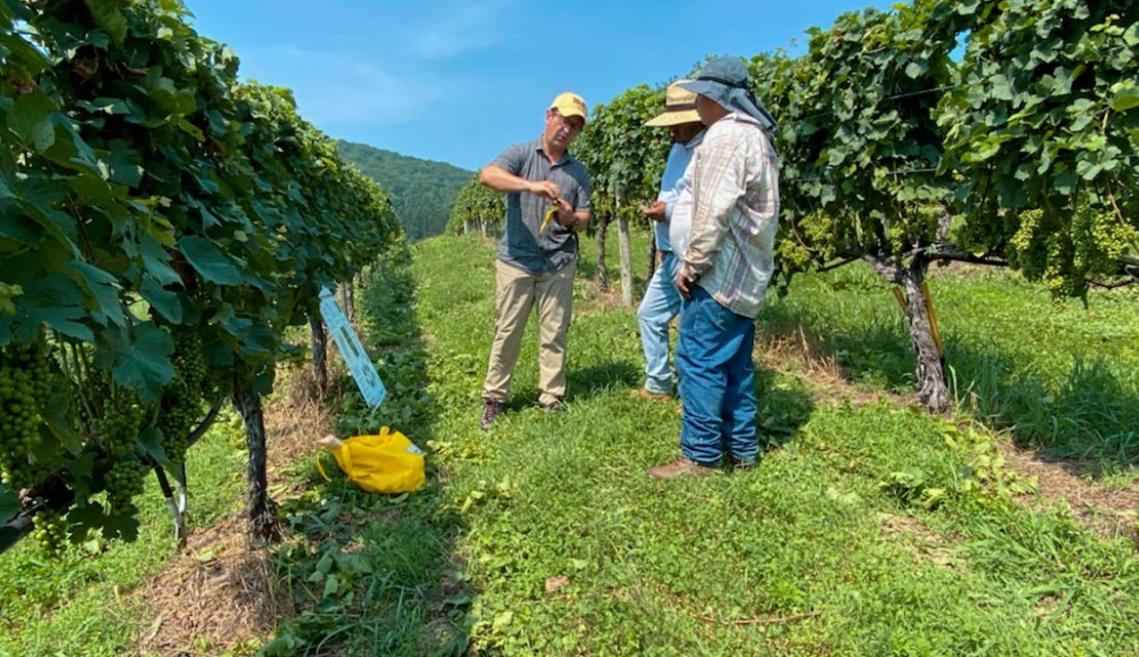
To help with outreach and education in the state’s agricultural communities, Cornell has been running trainings. This week, Calixto and others conducted sessions with Hispanic agricultural workers in Highland, Ulster County.
“They’re the ones on the front lines, so we’re teaching them how to identify and spot those insects and then to report them to their managers so they can take action quickly,” Calixto said.
In areas where the pest has been found, Ag and Markets staff slows its spread by applying insecticides and removing infested plants, especially tree of heaven.
Native to Asia, the spotted lanternfly was first discovered in the U.S. in southeastern Pennsylvania in 2014. It has since spread to New Jersey, Delaware, Maryland, Virginia and New York.
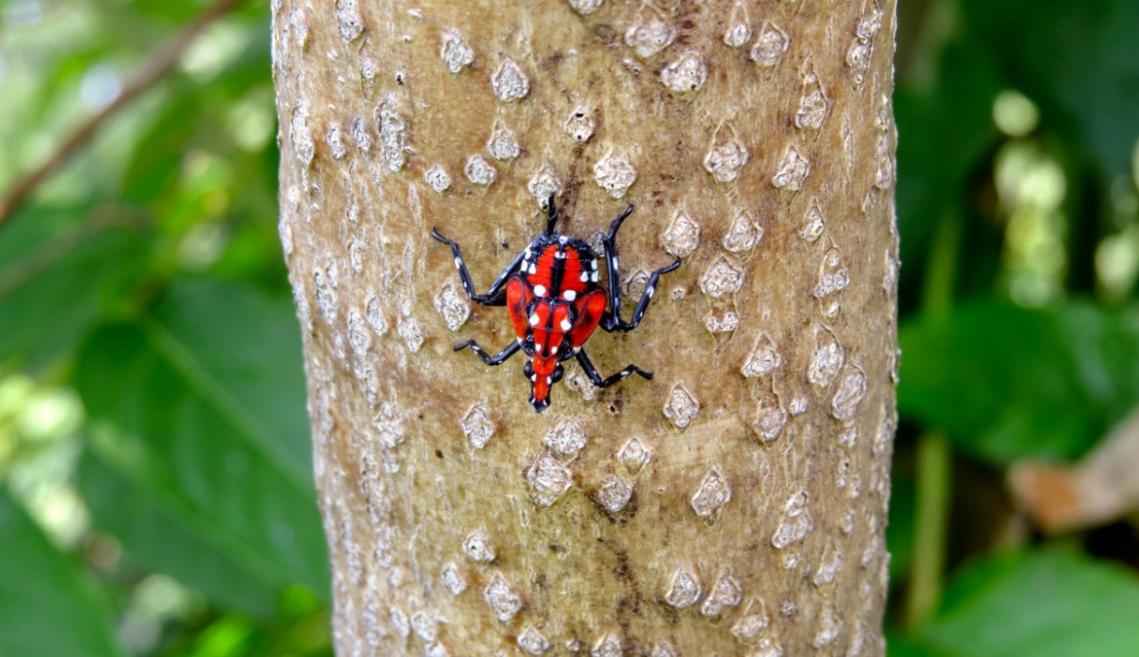
Spotted lanternflies are not flies, but are actually large planthoppers, with adults growing to about an inch long with gray wings and black spots. They undergo five life stages before reaching adulthood, including a fourth stage when they are vibrant red, with patches of black with white spots. They don’t bite or sting, and pose no threat to people or animals.
The nymphs and adults have mouthparts that drill into plants and suck sap, causing damage that makes plants susceptible to other bugs and disease. They also excrete a sticky fluid called honeydew, which attracts other insects, sticks on cars and can become a breeding ground for sooty mold.
This story first appeared in the Cornell Chronicle.
Header image: An adult spotted lanternfly. Photo by Alejandro Calixto/Provided