


2024-2025 Letter from the Director
New York State Integrated Pest Management 2024–2025 Annual Report
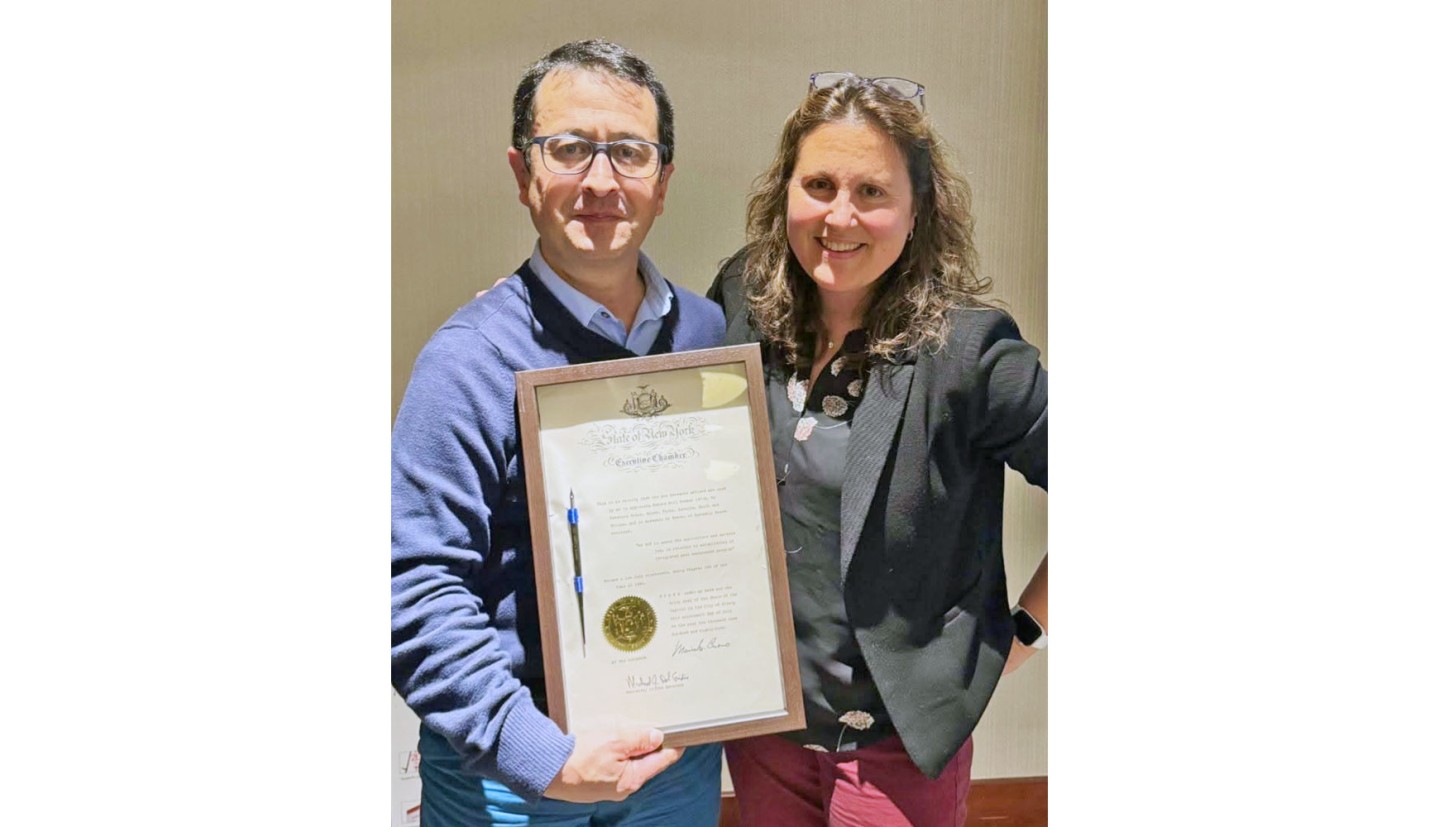
During a recent all staff meeting, CALS Dean of Land Grant Affairs and Director of Translational Research Programs Julie Suarez presented our team with the pen late New York State Governor Mario Cuomo used to sign the legislation establishing the New York State Integrated Pest Management Program in July, 1985. Now proudly on display in our offices at Cornell AgriTech, the pen serves as a reminder of our storied history and galvanizes our commitment to carrying on the work of the pioneering leaders and team members who came before us. More importantly, however, it reminds us to look toward our future.
As we prepare to celebrate 40 years of providing safe and sustainable solutions for managing pests in New York homes, schools and farms, we’ve built a solid foundation, driven—driven by our Five Pillars—for success over the next five years through the development of a new comprehensive strategic plan. With the help of Illume Projects of Ithaca, the entire NYSIPM embarked on a year-long journey that allowed us to strengthen our vision for the future and identify key priority areas for this year and the years to come. Those areas: Research, Education, Policy and Capacity are driving forces behind our daily work and the cornerstones of our mission to advance research and education on options to manage pests while protecting human, environmental, and economic health.
Research
In partnership with Cornell University, the New York State Department of Environmental Conservation and the New York State Department of Agriculture and Markets, we responded quickly to conduct innovative, impactful research to minimize the impact of legislation restricting the use of certain neonicotinoids for New York farmers, growers and pesticide applicators.
We’ve led the development of innovative IPM tools and practices to neonicotinoid seed treatments, built the framework of a cutting-edge risk assessment tools and conducted comprehensive studies to keep help protect pollinators and non-target organisms, while ensuring that growers have access to effective tools for managing pests and protecting crop quality and yield, ensuring economic sustainability.
Through strong collaborations with our Cornell Cooperative Extension and College of Agriculture and Life Sciences colleagues, we’ve also launched the largest on-farm research project in our program’s history.
Education
From preschools to nursing homes, playing fields to corn fields, our team has helped educate New Yorkers on managing pests like bed bugs, cockroaches and rodents in public housing; shared strategies for recognizing and responding to invasive species like spotted lanternfly and box tree moth; raised awareness of ticks and tick-borne diseases, worked to keep right-of-way pesticide applicators safe and up-to-date on new regulations and best practices; made Fruit IPM for the Home Garden and Landscapes accessible through our annual conference and helped peers from across the nation develop effective pesticide safety manuals.
Policy
In collaboration with The City of New York, Office of the Mayor and Department of Health and Mental Hygiene, we presented the inaugural National Urban Rat Summit, a two-day event for academic researchers, municipal managers and regulatory agency staff to share research and collaborate on municipal rat management. The event drew international attention and served as an opportunity to evaluate gaps and identify opportunities for research and innovation.
Capacity
We expanded our statewide reach by adding key team members to bring expertise to grape growers and wine producers, strengthened our digital tools and platforms and empowered public housing agencies with integrated strategies for combating pests. We also increased support for Spanish-speaking New Yorkers through the addition of our first full-time statewide bilingual program specialist.
Looking to the Future
With a rich history to build on and a clear plan for the future of IPM, we are more inspired than ever to bring integrated pest management to all New Yorkers, while serving as a model for programs throughout the country. We couldn’t be more grateful to those who have made our work possible. We hope you’ll join us as we celebrate 40 storied years and that you’ll continue to be a part of our next 40.
With Gratitude,
Alejandro Calixto, director
About 2024-2025 Annual Report
Published by New York State Integrated Pest Management [month] 2025.
Design/Layout: Jody Benedict and Henry Zelenak
Content/Editing: Carrie Carmenatty