2024-2025 Education Highlights
New York State Integrated Pest Management 2024–2025 Annual Report
60
People trained in home garden fruit production
260
Pesticide applicators and vegetation managers trained
20
States represented at the National Pesticide Applicator Training Manual Workshop
Gardeners develop a taste for fruit IPM at Annual Conference
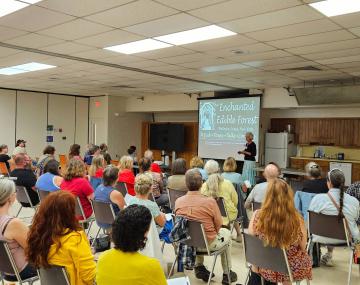
NYSPM’s annual conference, “Fruit IPM for the Home Garden and Landscapes,” provided novice and seasoned growers and gardeners with strategies for reducing pests in home fruit crops. More than 60 participants learned how to incorporate fruit into their landscapes, while gaining an understanding of how to safely reduce the impacts of pests. Speakers provided insight and instruction on incorporating sustainability and trusted IPM strategies for managing common pests, pollinators and natural enemies of tree and small fruit.
Keynote speaker, Dani Baker of Cross Island Farms, author of “The Home-Scale Forest Garden,” shared stories from her experience with a multitude of native food plants for pollinators and people.
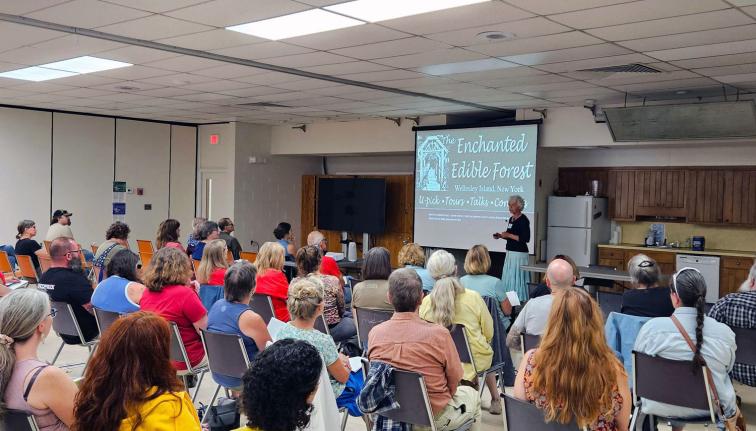
Keynote speaker, Dani Baker of Cross Island Farms, author of “The Home-Scale Forest Garden,” shared stories from her experience with a multitude of native food plants for pollinators and people. Additional presentations included lessons on plant selection, food forests, healthy soils and fruit IPM concepts and examples from specialists from Cornell University and Cornell Cooperative Extension.
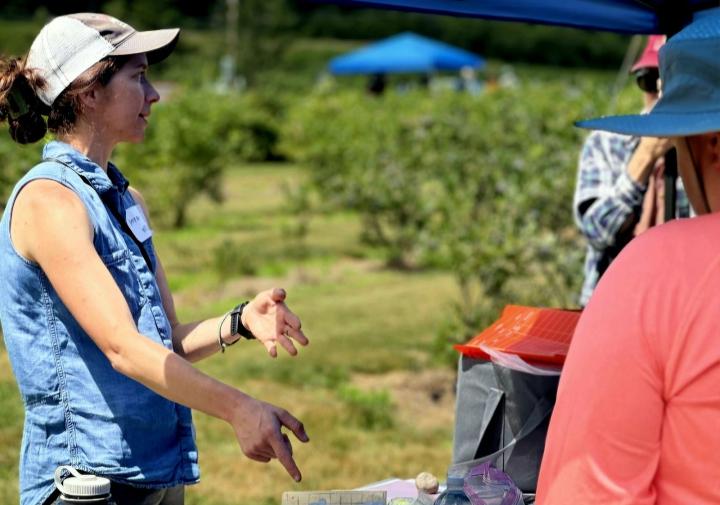
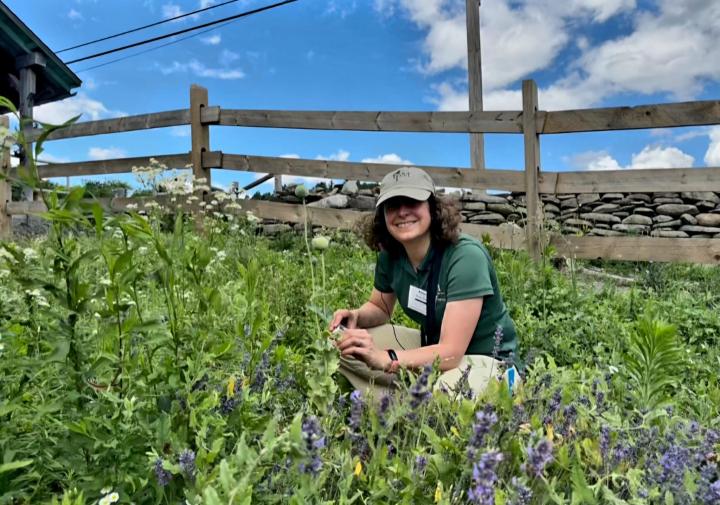
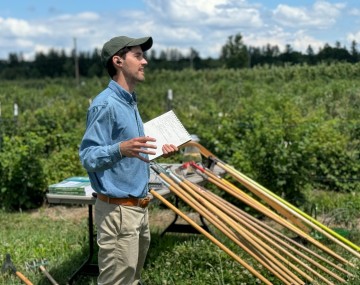
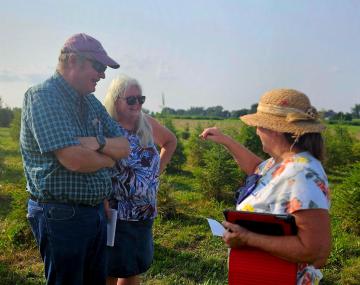
The Conference’s afternoon session was hosted by Indian Ladder Farms in Altamont, NY, a mid-sized, family-owned, diversified farm with rich agritourism opportunities ranging from U-Pick crops to farm school for elementary students. Participants visited different locations on the farm to see examples of fruit in the landscape and IPM practices in action. Demonstrations included berry and tree fruit pest monitoring and identification with NYSIPM Fruit IPM Coordinator Anna Wallis and CCE Regional Berry Specialist Laura McDermott. Attendees learned about difficult pests like invasive spotted wing drosophila (SWD) and the traps used to detect them. NYSIPM Weed IPM Specialist Bryan Brown shared weed management tips and tools. Garden beds with native and non-native species were used by Biocontrol Specialist Amara Dunn-Silver to demonstrate practices that support beneficial insects.
A hugely collaborative effort, many members of the NYSIPM team contributed to organizing, presenting, and connecting with participants. As a result of the program, an already knowledgeable audience of farmers, master gardeners and community members increased their familiarity with fruit IPM and pledged to share their experience with friends and colleagues in their communities.
Training aims to protect right-of-way pesticide applicators
Through their work with the Category Six Right-of-Way Training Committee, Pesticide Safety Education Program Lead Mike Helms and Program Extension Aide Amber VanNostrand helped coordinate annual right-of-way training that reached 260 individuals from public utility, contract vegetation management and tree care companies, as well as state and local transportation and public works departments, pesticide manufacturers and regulatory agencies.
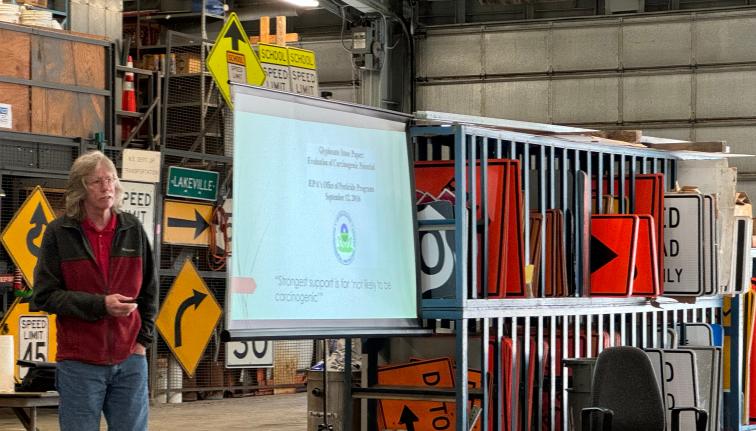
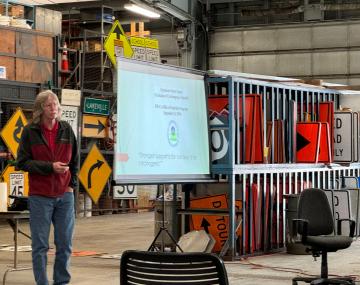
Held in Auburn, NY, October 10 and 11, 2024, the Category Six Right-of-Way Recertification Training Program, offered an opportunity for pesticide applicators and vegetation managers to learn the latest in integrated vegetation management (IVM) strategies, receive updates on new herbicide products, hear regulatory updates from the New York State Department of Environmental Conservation and access pesticide safety refresher training. The program included both in-field and classroom training focused on rights-of-way related to electric transmission and distribution, pipelines, highways, and railroads.
National workshop looks at training manuals for pesticide applicators
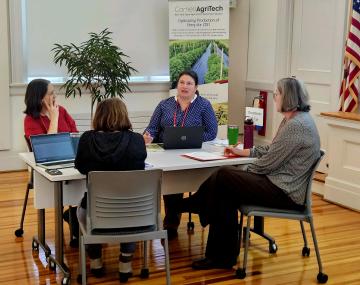
NYSIPM's Pesticide Safety Education Program hosted the National Pesticide Applicator Training Manual Development Workshop at Cornell AgriTech from October 22 through 24. The event brought 36 pesticide safety educators and regulatory officials from 20 states, the District of Columbia, American Samoa and Canada together to share knowledge and expertise for updating and improving training manuals.
Keeping public housing pest-free: an integrated approach
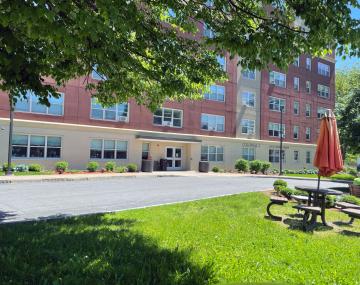
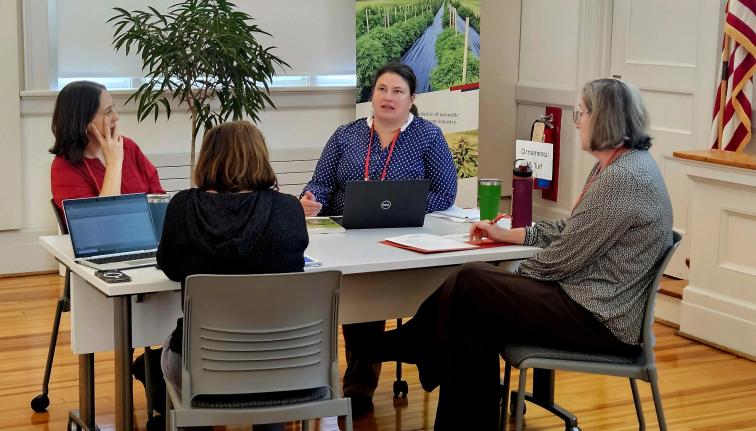
Public housing units and nursing facilities face countless challenges when it comes to pests, however, traditional treatments are often one dimensional, relying solely on pesticides to address infestations. Through extensive outreach and training, New York State Integrated Pest Management (NYSIPM) Community IPM Specialist Susannah Krysko has helped change that practice at several New York properties.
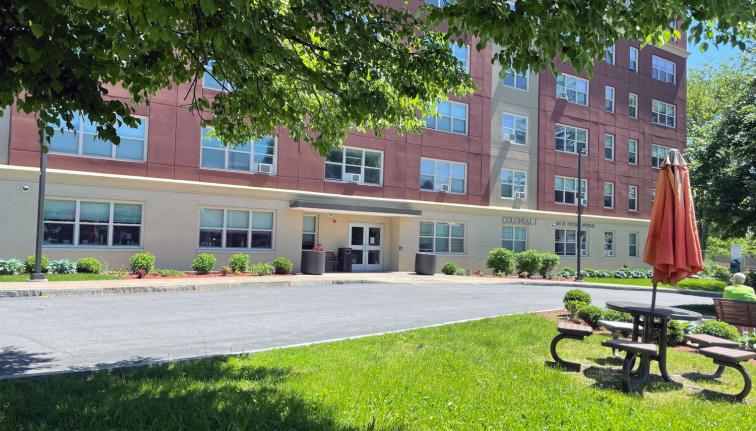
Krysko, who spent ten years overseeing the Department of Housing and Urban Development’s StopPests in Housing Program with the Northeastern IPM Center prior to joining NYSIPM, worked with five affordable housing properties and one nursing home to offer training and technical assistance to building managers, staff and residents, enhancing pest control efforts and empowering residents and staff with knowledge about safe and effective tools for managing common pests like bed bugs, cockroaches and rodents.
“Once building managers grasp the concepts of integrated pest management and the significance of monitoring, inspections and using a more comprehensive approach, they can mandate that those tools be used by outside contractors during treatments,” Krysko said.
One of the properties Krysko worked with had been battling building-wide bed bug infestation for at least 10 years, with one of its units still reporting active bed bugs after 41 pesticide treatments. Through her efforts, Krysko was able to recommend that the property owners work with a pest control company that would employ a different strategy—replacing constant chemical treatments with careful inspections, effective monitoring tools, physically removing insects with vacuums and using a safer, more targeted biopesticide.
Using an integrated approach to pest management helps keep some of New York’s most vulnerable residents safe from the physical, psychological and socioeconomic risks associated with pests and gives property managers a long-term strategy for keeping their properties and residents protected.
About 2024-2025 Annual Report
Published by New York State Integrated Pest Management [month] 2025.
Design/Layout: Jody Benedict and Henry Zelenak
Content/Editing: Carrie Carmenatty