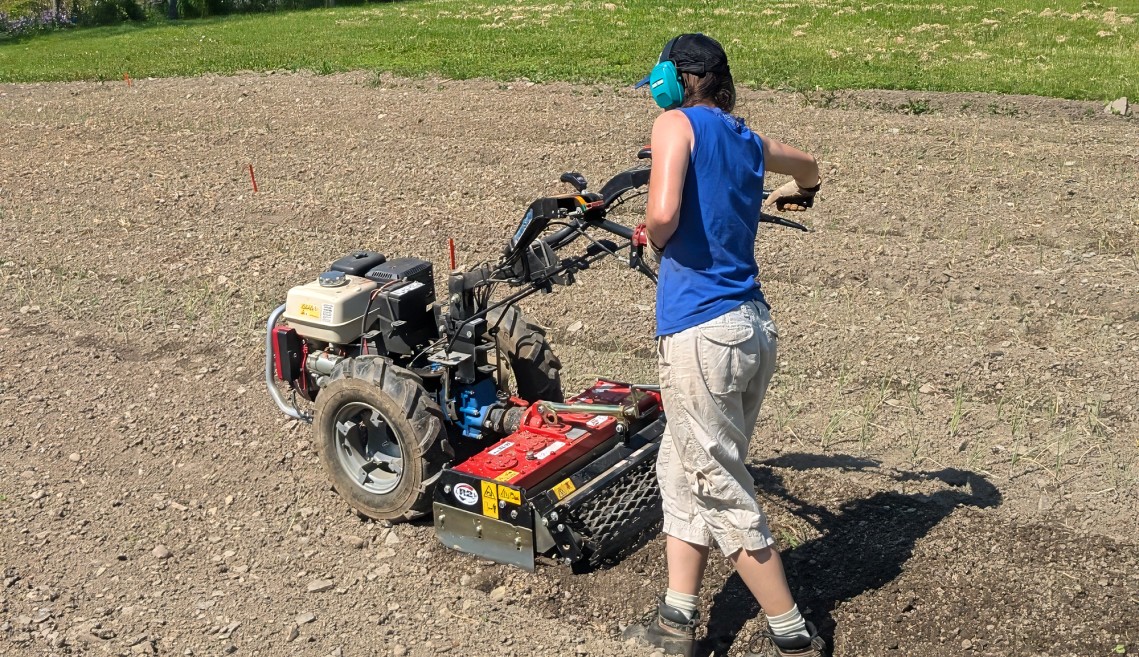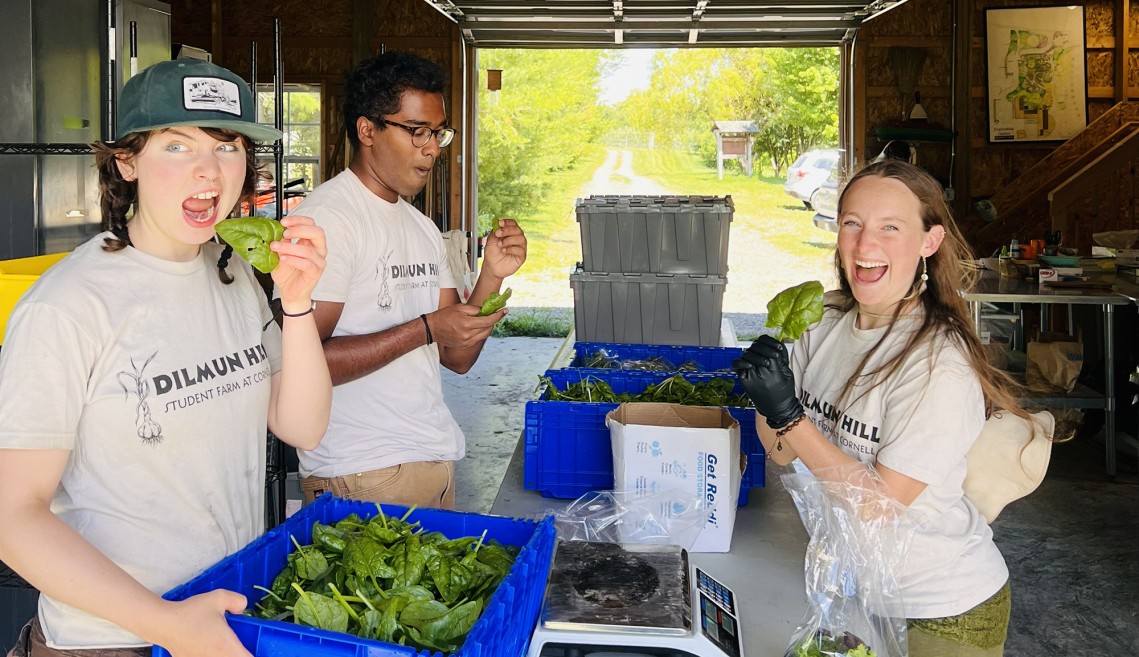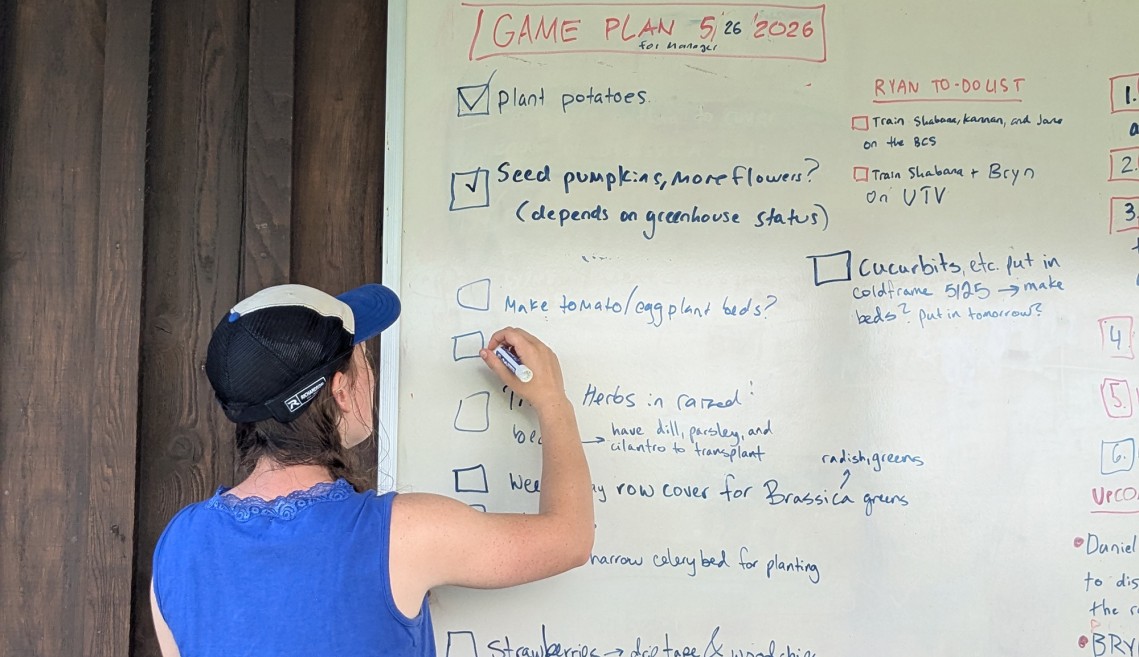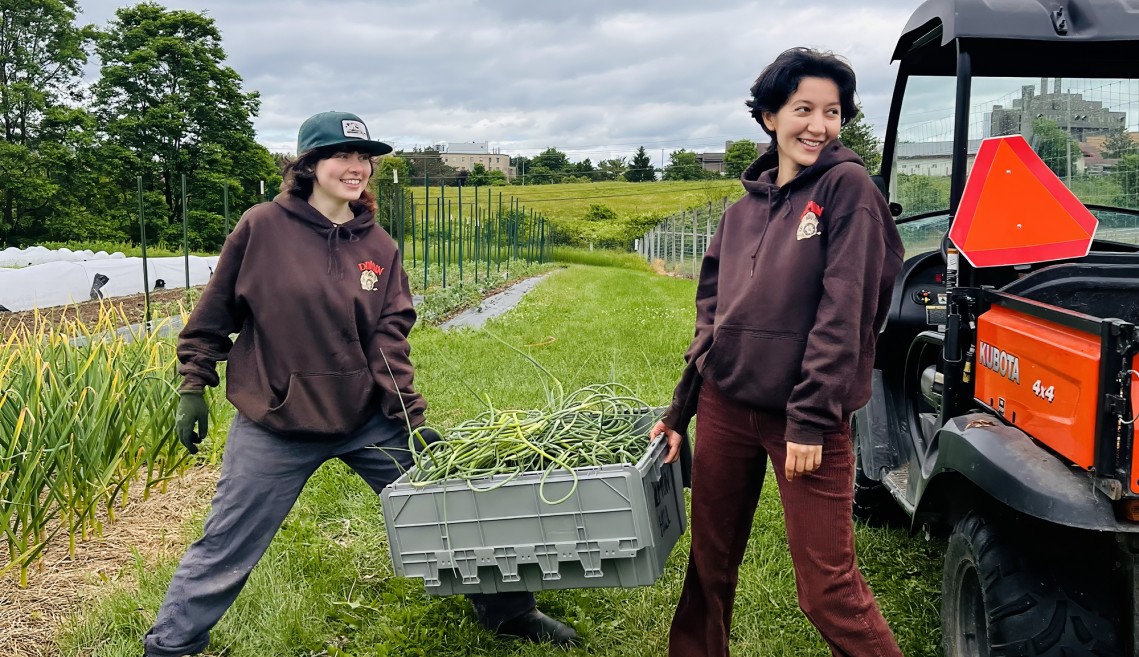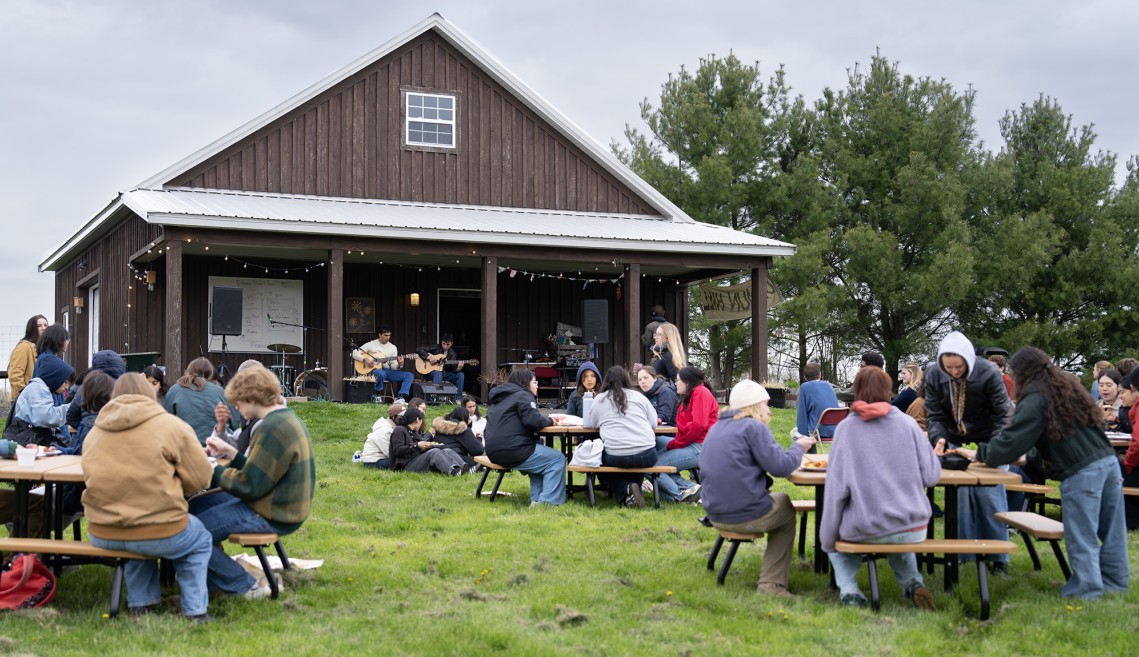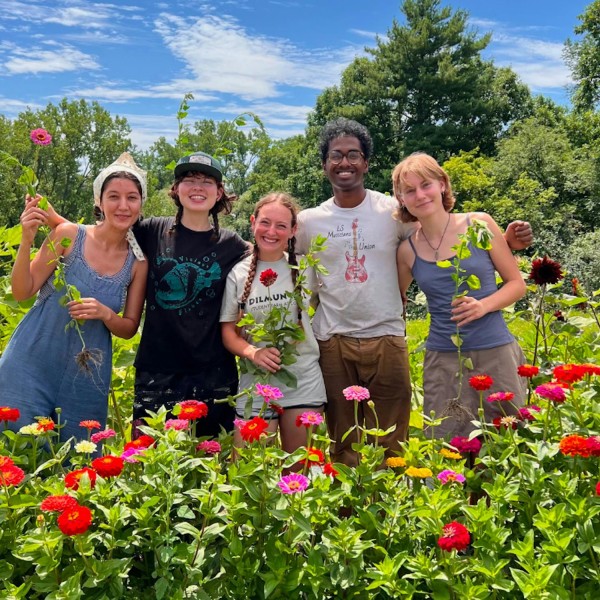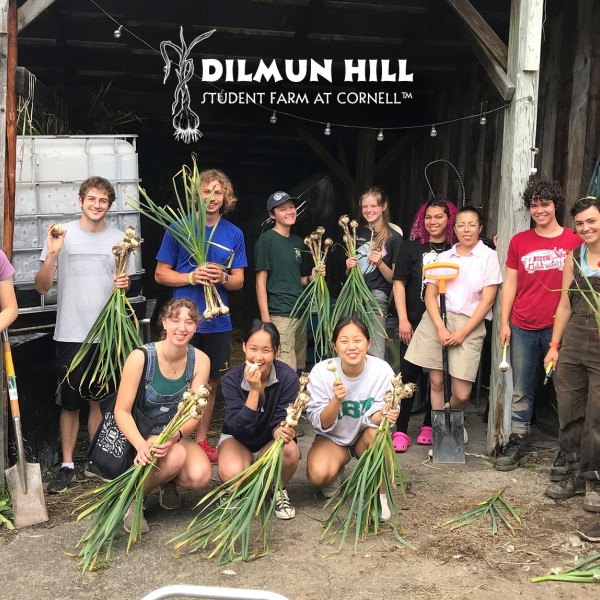
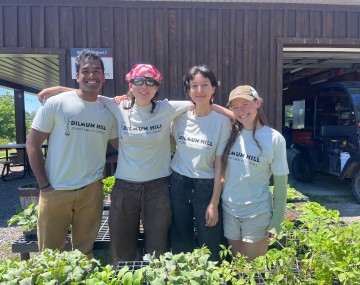
Dilmun Hill is a place where students build hands-on skills in sustainable agriculture, manage a working farm, and grow collaborations and community. 

For three decades, Dilmun Hill has shaped leaders who carry what they learn here far beyond the field. Each year, a fresh cohort of inspired students flocks to the farm, eager to cultivate their skills, deepen their knowledge, and explore new possibilities.

What happens here:

  • Hands-on farming
    Student managers lead day-to-day decisions, growing fresh produce for the wider campus community. 

  • An outdoor classroom
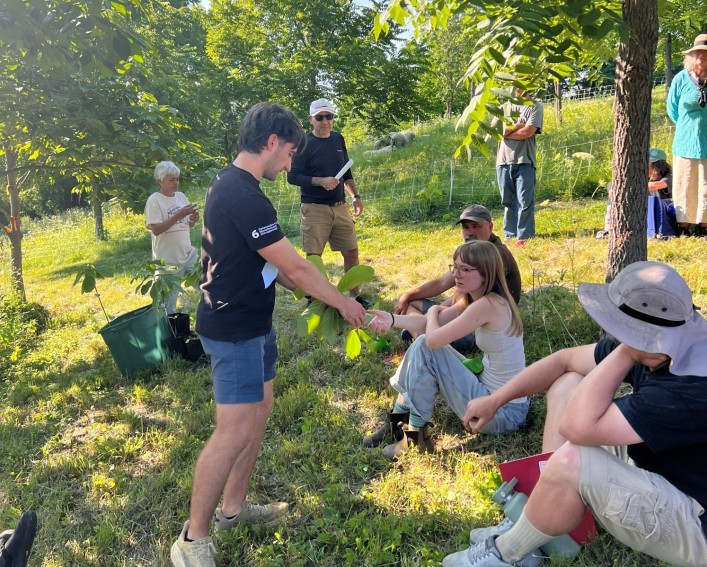
    Class tours and projects, student clubs and workshops turn the farm into a living lab for sustainable agriculture, soil science, food systems, engineering, landscape design, and more.

  • Student-led research & demonstration
    From urban agriculture to agroforestry and the bio-circular economy, students test ideas in the field and bring creativity and innovation to life.

  • Community connection
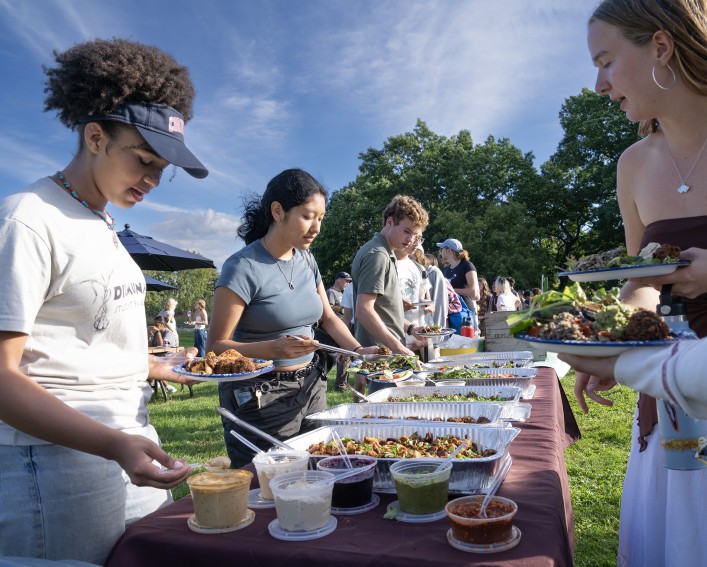
    Student leaders build partnerships across Cornell, using food and farming as a way to bring people together.

Highlights

Agroforestry

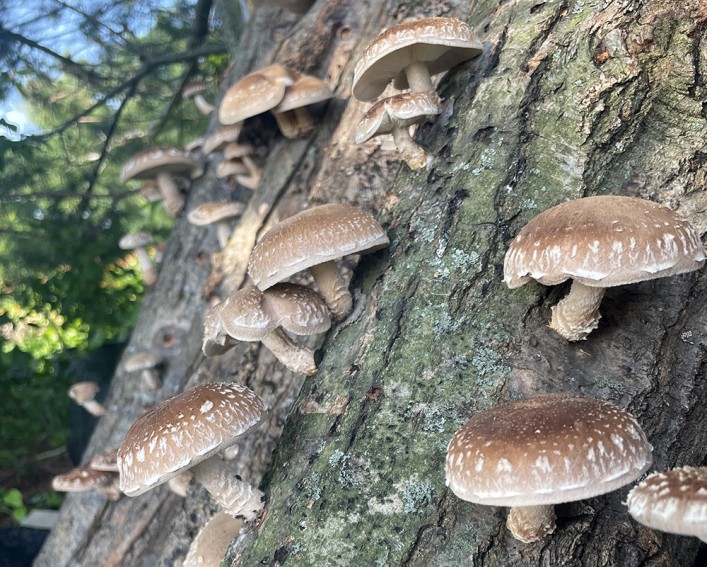
Shiitake Cultivation

After their year-long rest, we’re finally producing shiitakes from the 100 logs we inoculated on Hill Day 2024! We soak them for 24 hours, wait 7-10 days, then harvest the mature mushrooms. This summer, we are selling them during our CSA pick-ups on Wednesdays from 4-7 pm at the farm and on campus at our Thursday markets. In the fall, look out for them at Anabel’s Grocery, Cornell’s student-run grocery store.

We also inoculated 30 more logs with your help this past semester during Hill Day 2025, so that we can reap an even more abundant harvest next year! 

Agroforestry

Honeyberries

Have you ever heard of honeyberries? Also called haskaps, these supersized (~1 inch long) raisin-shaped fruits in the honeysuckle family have a mixed-berry flavor that depends on the variety. While uncommon in the US, they are popular in China, Japan, and Slavic cultures, and are well-suited to Dilmun’s environment.

This past Hill Day 2025, we planted 42 individual bushes of 6 cultivars- Boreal Beast, Boreal Beauty, Boreal Blizzard, Indigo Gem, Indigo Treat, and Tundra- arranged to promote pollination and extend our harvest season. While they won’t be ready to eat this summer, look forward to seeing these in future CSA shares and markets!

Agroforestry

Pawpaws

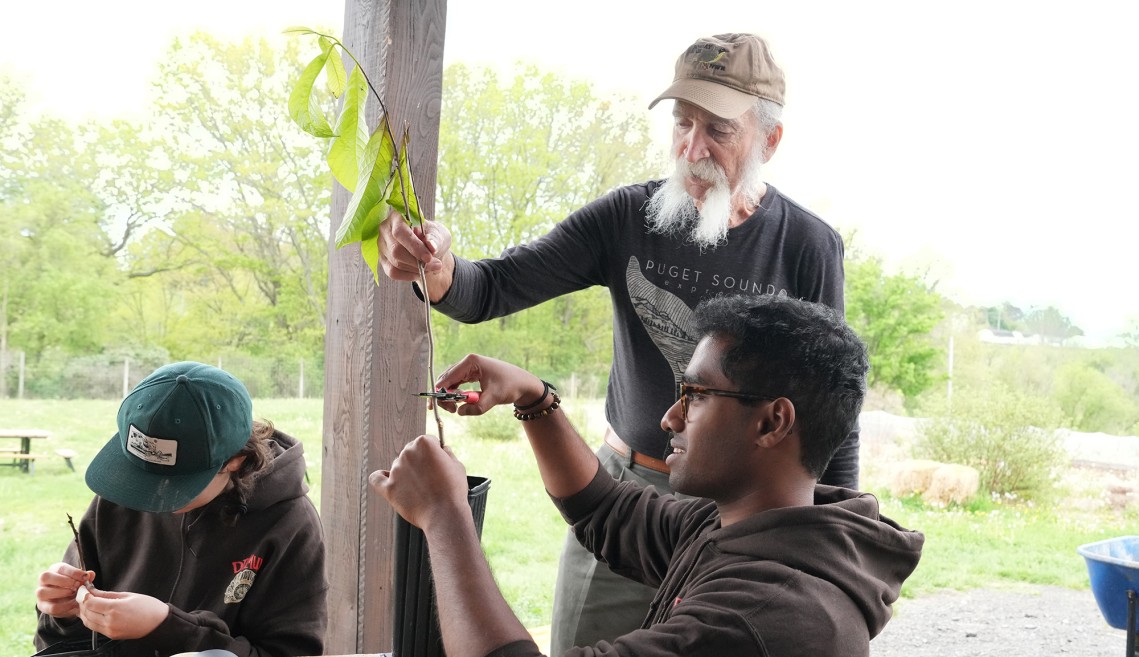
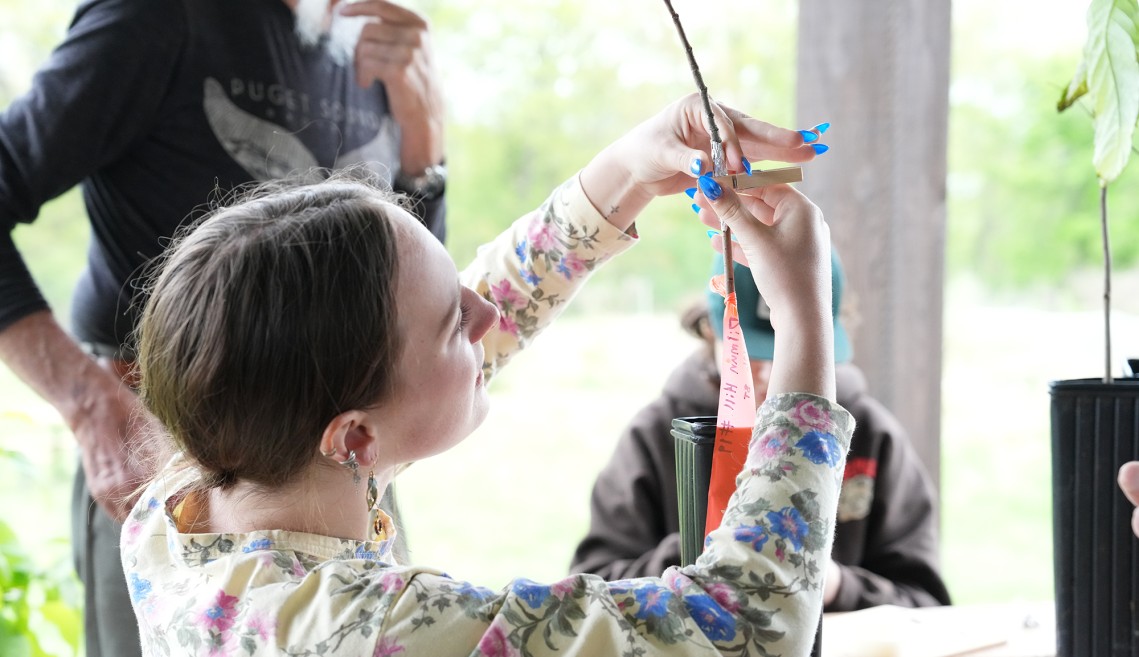
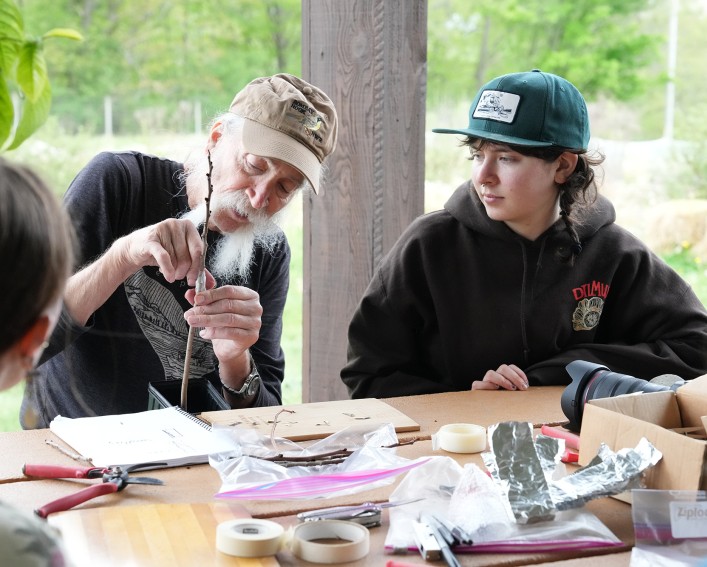
This May, we were joined by pawpaw expert and Cornell alum Bob Meadows to learn how to graft pawpaws – a tropical-tasting fruit native to North America. Grafting involves attaching the rootstock of trees with unknown/less desirable characteristics to the budding branches of cultivars with more desirable characteristics. In June the seedlings began to leaf out, and in July we fertilized and repotted them. We’ll plant these this coming winter so that future students can enjoy the fruits of even more abundant trees!

Last year we harvested over 150 lbs. from the pawpaw trees planted at Dilmun in 1999. Since we don’t know their cultivars, we are documenting characteristics like fruit size and canopy cover, and mapping the orchard to determine where the best spots for our grafts will be.

Traditional Indigenous Crops

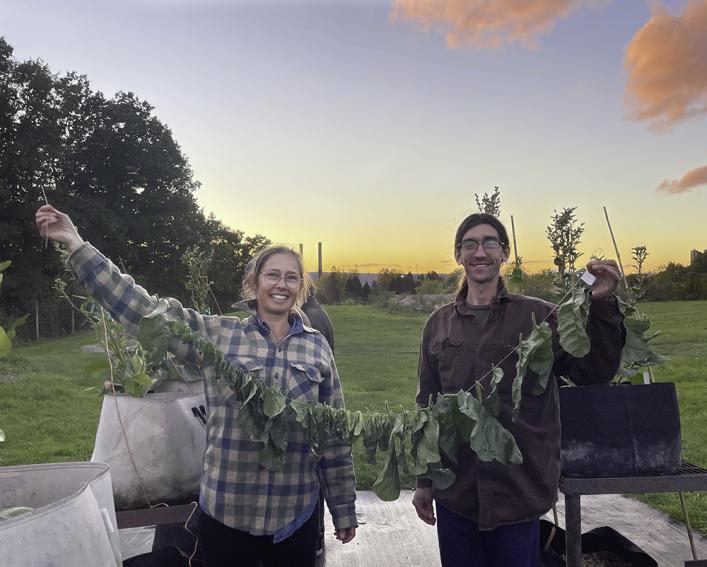
Indigenous communities are some of the most food insecure populations in the USA and are often geographically separated from their traditional foods. This project uses container-based gardening and freely available fertilizers, such as human waste, fish effluent, and black soldier fly frass, to grow culturally relevant foods and ceremonial tobacco. Seeds are returned to members of the Haudenosaunee through the American Indian & Indigenous Studies Program.

Circular Bionutrient Economy

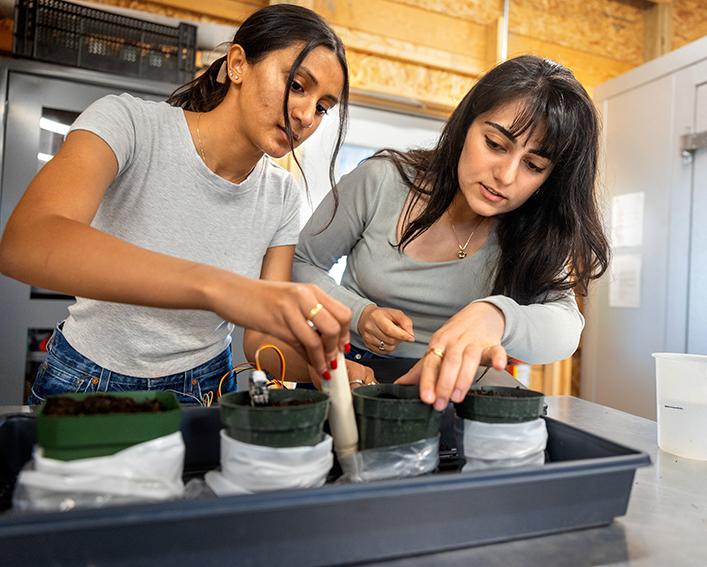
One of the high tunnels is dedicated to a research project that seeks to recycle nutrients from human and agricultural waste into fertilizer. Connecting sanitation and agriculture in this way can add valuable nutrients to the soil where they are needed.

Produce Production

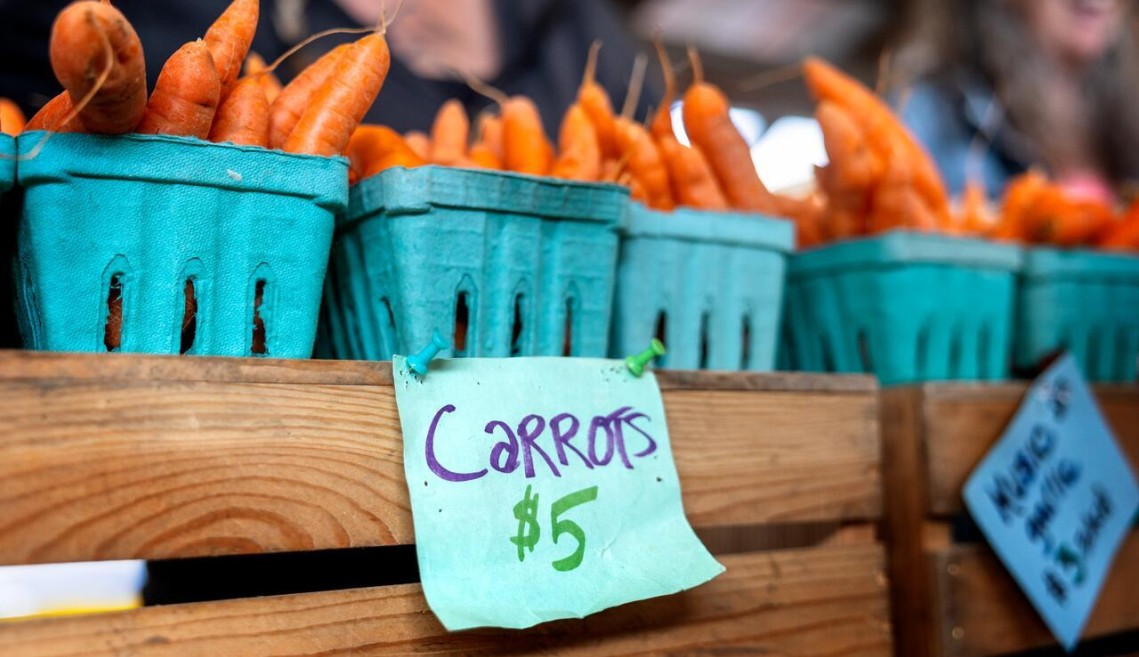
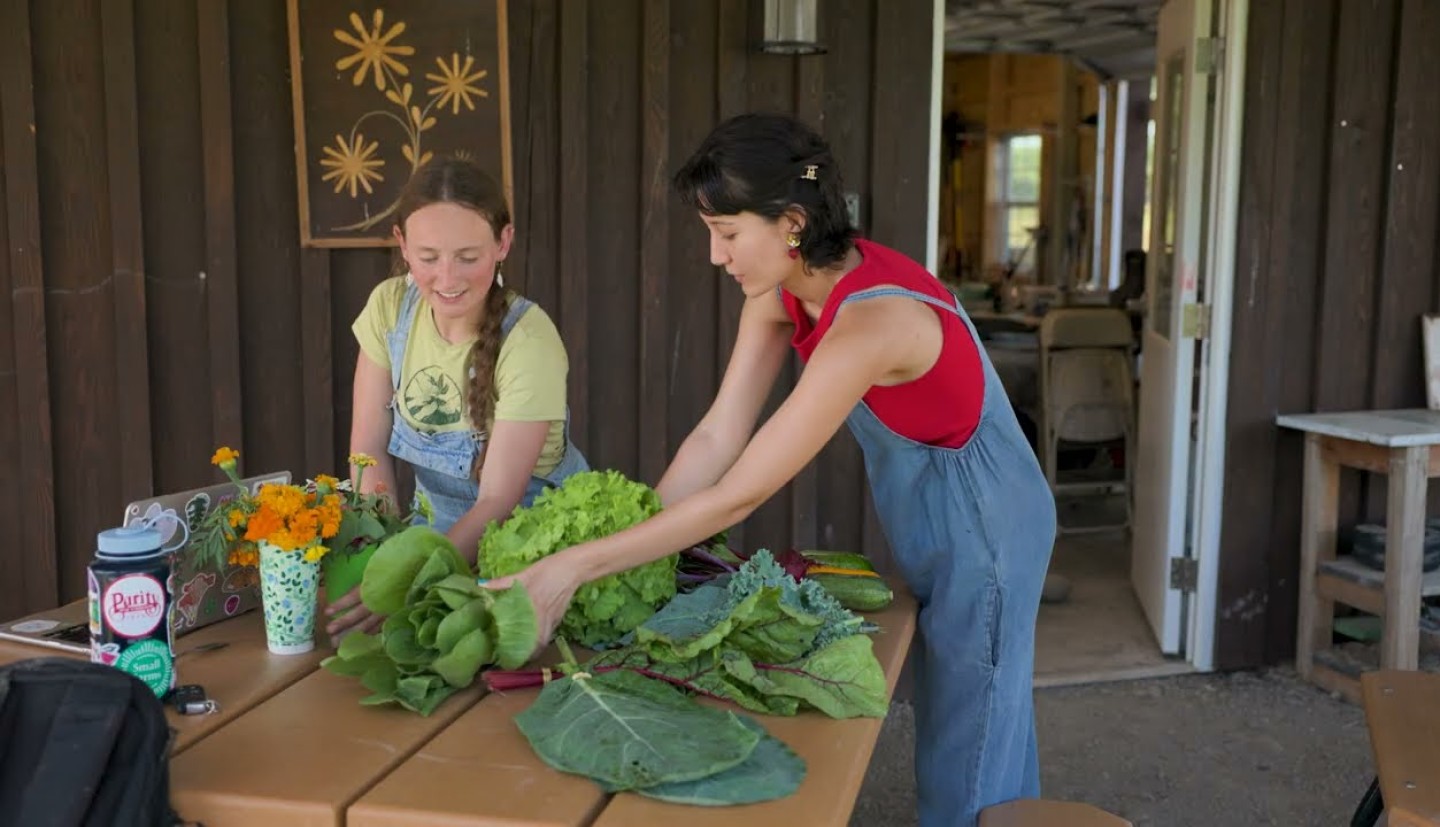
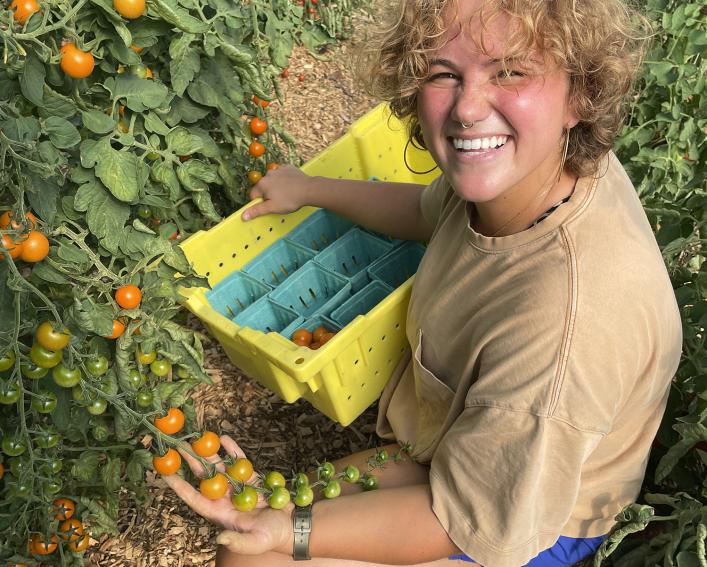
From planning which crops to grow and tending them throughout the season, to harvesting – growing food is our passion. We love to experiment with novel crops and methods, and to share our abundant harvest with the Cornell community. 

Look for our produce at Anabel's Grocery, visit our market stand on campus, or check out our CSA and u-pick options. 

Shiitake harvest
Students panting shrubs
Bob Meadows is watering young pawpaw trees
Two young people holding harvested ceremonial tobacco
Students work with pots and a sensor system
Person with a broad simle harvesting cherry tomatoes
Farm report
2024 Dilmun Hill Farm Report

It's been an amazing year! If you are curious what we planted, how we grew our veggies and community, or if you want to hear more about our wonderful managers and dedicated volunteers, you'll find it all in the new farm report.
Dilmun students at a picnic table with produce
Stay Connected

Click link below to join our email list.
Type the single word join for the subject of the message, and leave the body completely blank.

Farm photos and graphics for the Dilmun Hill podcast
The Garlic: Dilmun Hill Podcast

Tune in to "The Garlic," the Dilmun Hill Student Farm podcast on Spotify! Hear from students, including current and past student managers, on their farm experiences and perspectives on sustainable agriculture and local food systems.

In the news
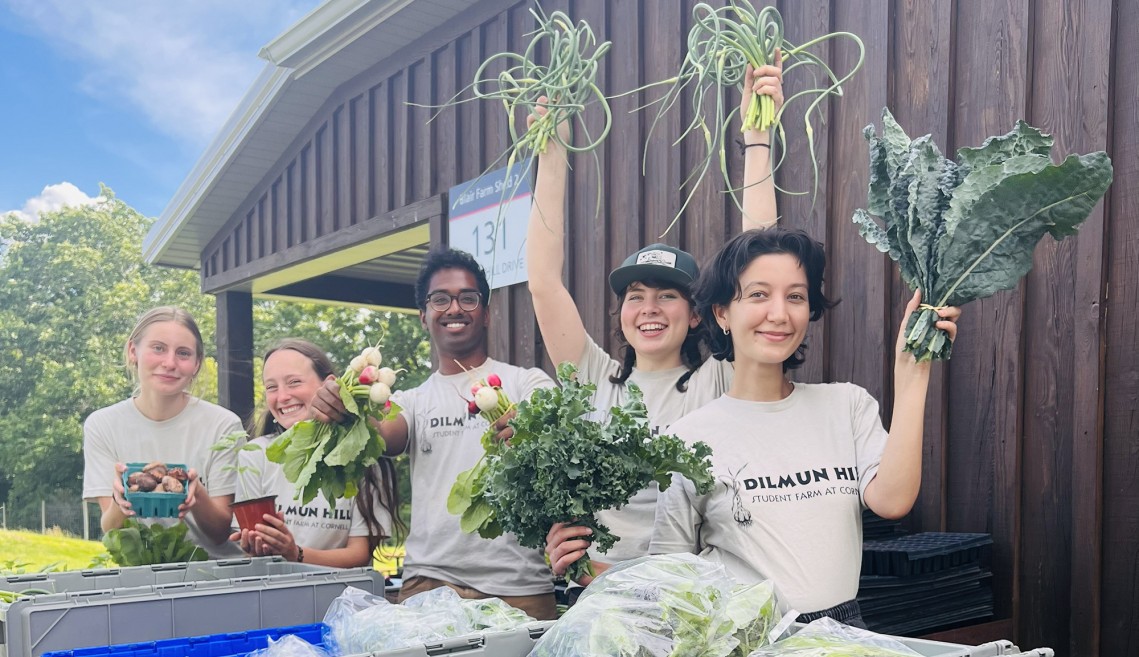
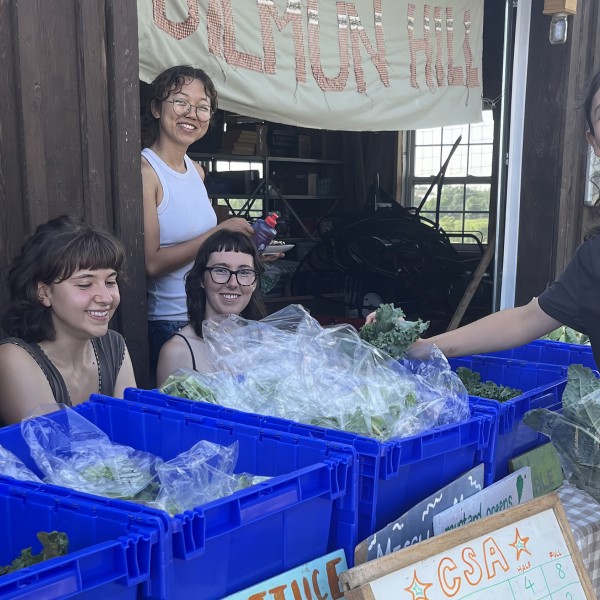
Students around bins of fresh produce

News

“It felt like a calling” Students find purpose at Dilmun Hill Student Farm
For Kieri Keys ’28, it was love at first sight. Before beginning her freshman year at Cornell, Keys attended the Outdoor Odyssey pre-orientation program, which included a visit to the Dilmun Hill Student Farm. “I was immediately obsessed with it...
  • Cornell University Agricultural Experiment Station
  • Dilmun Hill Student Farm
  • Agriculture
Students in a field of goldenrod

News

Kendrick Nakamura ‘24 kept ants as a hobby for years while maintaining a career in IT, before realizing that the insects were his real passion. He came to Cornell to major in Entomology and said that one of his favorite courses was Insect...
  • Cornell University Agricultural Experiment Station
  • Dilmun Hill Student Farm
  • Entomology
Jonathan Russell-Anelli with students in the field

News

Emily McFadden ’25 has always wanted a career in agriculture and the environment. When she toured Cornell as a high school student, she sat in on a soil science course (PLSCS 2600) taught by Jonathan Russell-Anelli, senior lecturer and senior...
  • Campus Area Farms
  • Cornell University Agricultural Experiment Station
  • Dilmun Hill Student Farm
students sit in a circle in the grass

News

If you’re searching for a slice of calm during the early school months at Cornell, I’ve got the perfect remedy: October. Think back to the first week of the month—the crisp weather, fall events, and vibrant orange leaves. While fall is beautiful...
  • Dilmun Hill Student Farm
students dig in the soil of a garden

News

For more than two decades, Dilmun Hill has raised both produce and awareness about the value of agriculture. On the more rural stretch of Dryden Road, not far from Cornell Orchards, is a small wooden sign for Dilmun Hill Student Farm, hand...
  • Cornell University Agricultural Experiment Station
  • Dilmun Hill Student Farm

Impressions