Cornell Orchards
Research project highlights

Ground-nesting bees to enhance pollination
Develop the protocols and best practices for propagating ground-nesting bees to diversify pollinators in agricultural landscapes, and enhance food security through resilient and sustainable bee management.
Project website and community science project
Researchers: Bryan Danforth, Jordan Kueneman
Automation and Robotics
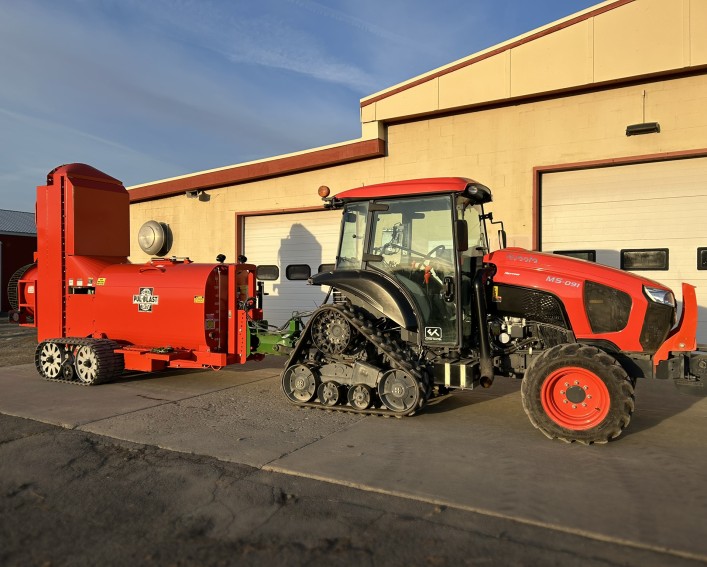
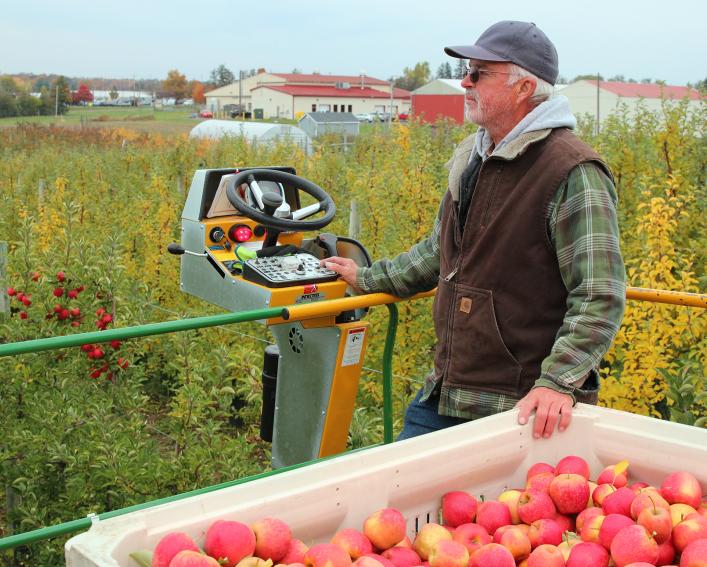
Develop AI-enabled automated and robotic solutions for various farming operations in orchards and vineyards including self-navigation and guidance, robotic harvesting, pruning and flower/fruitlet thinning, autonomous bin hauling and nutrient management.
Researcher: Manoj Karkee
Weed control in perennial crops
Evaluate the performance of novel weed control technology, including electric weeders and vision-guided spray systems, to enhance the sustainability of fruit, berry, and grape production.
Researcher: Lynn Sosnoskie
Improve wine grape production systems
Improve both the environmental and economic sustainability of wine grape production systems in cool climates through vine and soil research.
Researcher: Justine Vanden Heuvel
Tree fruit production systems
Develop fruit production systems that facilitate the long-term economic and environmental viability of commercial tree-fruit growers, with a particular focus on hard cider production.
Researcher: Greg Peck
Storage life of apples
Maintain quality and nutrition of apples during storage, especially of new and emerging varieties, using new postharvest technologies such as dynamic controlled atmosphere storage.
Researcher: Yosef Al Shoffe
Tree root biology
Promote sustainable landscapes through a better understanding of tree root biology and provide a teaching resource for below-ground processes in plants.
Researcher: Taryn Bauerle
Metabolism in apples and grapes
Understand how the metabolism in apples and grapes responds to carbon and nitrogen, and provide guidelines for fertilizer applications in orchards and vineyards.
Researcher: Lailiang Cheng
Resources for Cornell Researchers
Find detailed information for each Cornell AES research farm. Cornell login is required.

Contact
Address
Cornell Orchards locations:
- 709 Dryden Road (Rt. 366)
Ithaca, NY 14850 - 178 Sweazey Road
Lansing, NY 14882
General inquiries:
607-255-4542
orchards [at] cornell.edu (orchards[at]cornell[dot]edu)