Improving Manure Management Practices
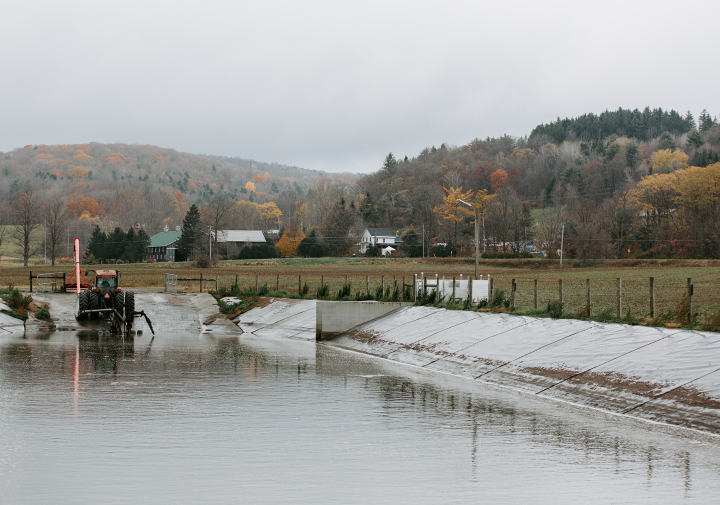
Dairy manure management practices have evolved mainly around water quality protection, with the primary best management practice being long-term storage (usually in six-month or longer increments) of liquid manure. This long-term storage practice allows the nutrients contained in the manure to be applied to cropland during plant uptake periods and conducive weather to minimize nutrient runoff.
However, the storage of liquid manure results in an anaerobic condition that produces methane as the volatile solids (VS) in the manure are degraded. This methane conversion is substantially impacted by temperature, causing most of the emission to occur during the warmer season. Some long-term manure storages can develop a thick, dry crust which can emit nitrous oxide in combination with reduced methane emission.
Current practices that reduce methane emission from long-term manure storage are used by some farms of varying sizes. These include:
- Solid-liquid separation (removing some VS from long-term storage)
- Reducing summer slurry storage via properly managed stockpiles and composts
- Covering the long-term storage and flaring the methane captured
- Utilizing anaerobic digestion to capture and then use the methane as a source of continuous renewable energy that offsets use of fossil fuel energy
Opportunities for Mitigation
The continuing effort to divert organics, including food waste from landfills, provides an opportunity for dairy farms. Anaerobic digestion of dairy manure can be augmented with the addition of food waste that cannot be donated or fed to animals. This results in a trifecta of benefits: achieving landfill diversion (and subsequent methane reduction), creating additional renewable energy production, and recycling nutrients in the food waste back to growing crops
Anaerobic digestion of manure (and significantly more from co-digestion) is the only opportunity for net negative greenhouse gas emissions on a dairy farm system. Anaerobic digestion also brings other benefits, including:
- Lower odor
- Less pathogens
- Weed seed reduction
- Improved nutrient management
- Improved conditioning for post treatment of digester effluent (digestate)
While some digestate treatment technologies are commercially available and understood, challenges remain. These include economically minimizing greenhouse gases and managing the digestate to efficiently utilize the available nutrients where they are needed.
Quantifying Emissions
The accepted equations (IPCC 2006 and 2019) to quantify methane and nitrous oxide emissions from dairy manure management practices produce gross estimates, predicting annual totals using average ambient temperature and VS content. Many assumptions need to be made to extend these equations across different manure management practices (Aguirre-Villegas et al. 2019, Wright and Gooch 2022).
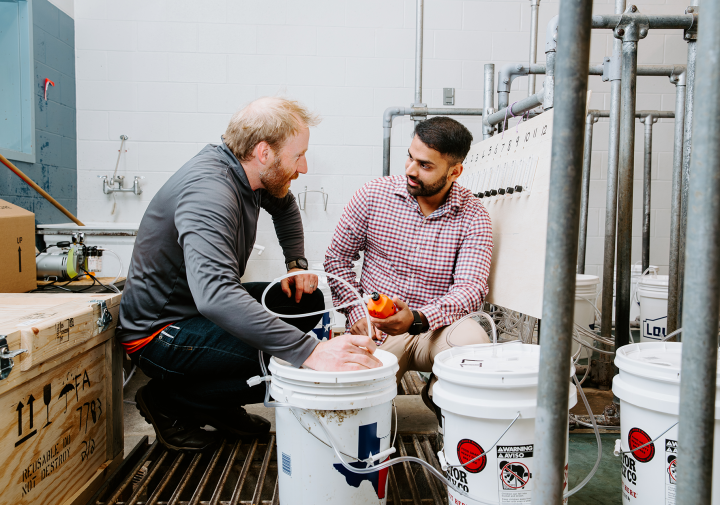
There has been limited on-farm verification of the available equations used to estimate methane and nitrous oxide emissions from manure management practices. As such, greenhouse gas measurement techniques are still being evaluated (Arndt et al. 2018, Balde et al. 2016, Fredenslund et al. 2018, Scheutz and Fredenslund 2019). There are attempts to develop equations that offer more granular methane estimates, but they require input of percent degradability of VS (Aguirre-Villegas et al. 2019). To improve accuracy, updated methods to measure the spectrum of VS degradability are needed.
Additional measurements of methane from manure systems are also needed to validate models. Physical measurement techniques include:
- Dispersion modeling from directly measured methane concentrations (either continuous using open-path laser technology or periodic)
- Tracer gas flux ratio (periodic)
- Closed-path using aircraft (periodic)
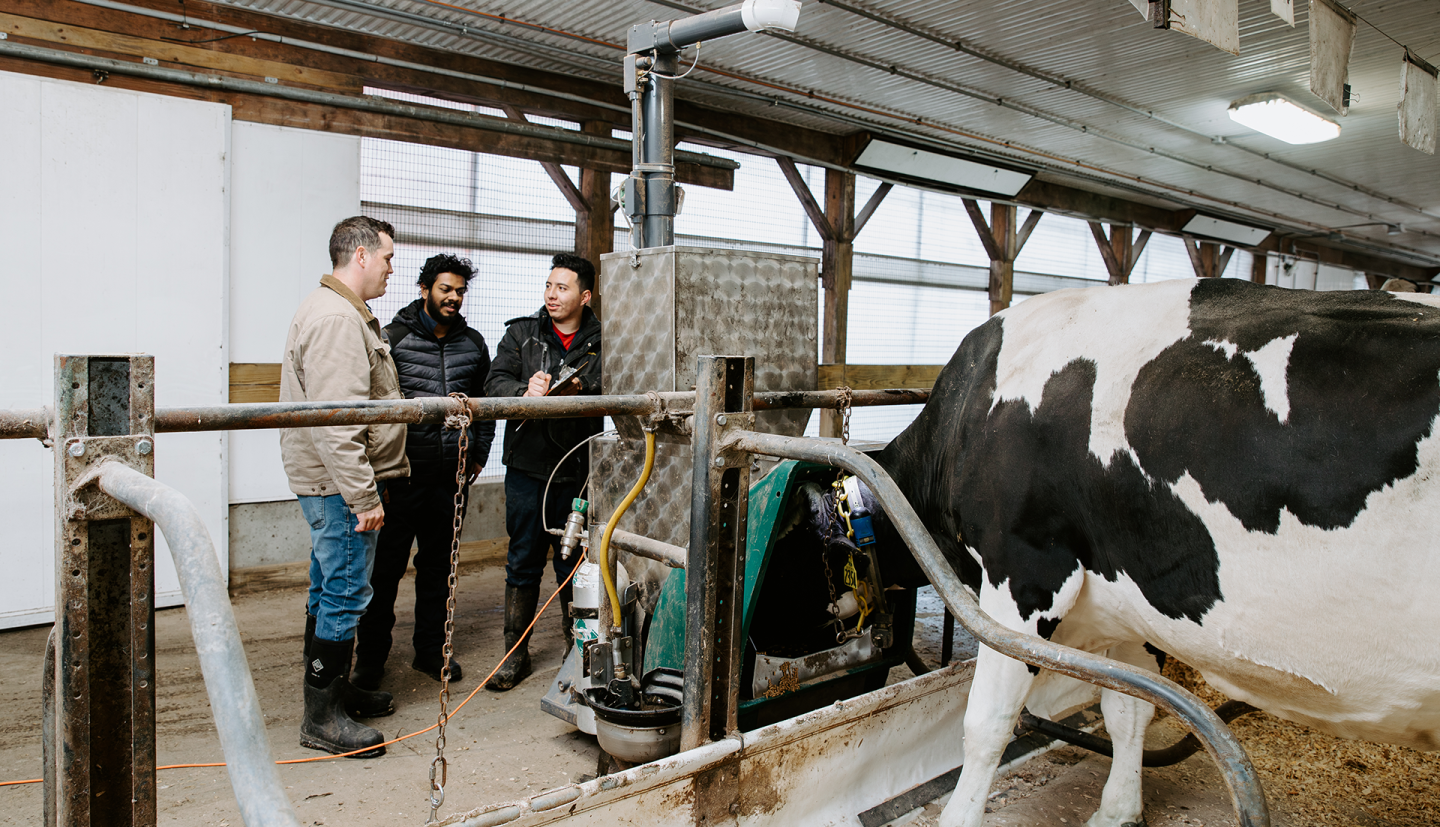
A key finding of these studies of on-farm methane emission from manure management is that significant variation occurs throughout the year, and measurements need to occur monthly or more frequently. Additionally, impacts on manure emissions due to enteric methane reduction solutions are not understood, nor are manure treatment impacts on crop production.
Looking Ahead
Manure management is an integral part of the total dairy farm system. It offers opportunities to maximize the return from the renewable energy created and to fully utilize any by-products. The input and output values may fluctuate as policy and demand change. These price changes will impact which technologies can be adopted. If feasible, heat from digesters could be utilized to operate chillers for milk/animal cooling.
Goals
- Verify methane and nitrous oxide quantification equations and the inputs that apply to different manure management practices and manure treatment systems.
- Identify the commercially available manure management practices and treatments that can best fit dairy farm size groups and quantify the methane and nitrous oxide reduction for each practice.
- Identify, quantify and potentially optimize the developing technologies for manure management and their applicability to farm size and potential methane and nitrous oxide reductions.
- Determine the impact of enteric methane reduction on manure management greenhouse gas emissions in the dairy farm system.
- Determine the opportunities and challenges when utilizing food waste as a co-digestion process and the need for subsequent nutrient partitioning of the digestate.
- Educate New York State dairy producers, their advisors, and policymakers on all available manure management and treatment practices and their potential to sustainably reduce greenhouse gas emissions.
Team

Professor of Dairy Cattle Biology
Animal Science
Northeast Agribusiness and Feed Alliance Sesquicentennial Faculty Fellow
- (607) 255-9941
- jwm43 [at] cornell.edu

Senior Extension Associate and Dairy Environmental Systems Engineer
PRO-DAIRY
Animal Science
- jpo53 [at] cornell.edu

Senior Extension Associate/Agricultural Sustainability and Energy Engineer
PRO-DAIRY
Animal Science
- (607) 351-2151
- ler25 [at] cornell.edu

- (607) 254-4910
- mev1 [at] cornell.edu

- (585) 314-5314
- pew2 [at] cornell.edu
Collaborating faculty

David Croll Sesquicentennial Fellow and Professor, Smith School of Chemical and Biomolecular Engineering