What is NYCORE?

The New York Center for Organics Recycling and Education (NYCORE) is a statewide program that serves the public through research, outreach, education, training, and technical assistance, with a focus on organic residuals management. We are a new initiative that will continue and expand the work of the Cornell Waste Management Institute. 

Our Focus

  • Identifying critical needs through direct stakeholder engagement
  • Collaborating with stakeholders, Cornell colleagues, external partners, and state agencies
  • Conducting multidisciplinary work that creates local impact
  • Integrating research, teaching, extension, and outreach

Technical Assistance

  • A cornerstone of our work is providing hands-on technical assistance to farmers, municipalities, communities, individuals, and businesses
  • We lead site visits, train-the-trainer events, webinars, tours, workshops, and develop educational resources
  • We respond to emerging threats and opportunities that arise from organics recycling and management

Contact Us

For further assistance or to be added to our mailing list, please email us at: nycore [at] cornell.edu (nycore[at]cornell[dot]edu)

NYS Woodchip Sources Map

This map was created to help composters find a source of woodchips for composting. The places listed on this map have woodchips that can be dropped at your place or for pick-up at their facility.

NYS Compost Facilities Map

In addition to compost facilities, this map includes compost education and demonstration sites as well as transfer stations and places that are diverting organics to centralized facilities. Any effort to divert organics from the landfill is a positive effort. Please use the link above to get your diversion efforts on the map.

eCommons

Access archival resources produced by the Cornell Waste Management Institute (CWMI)

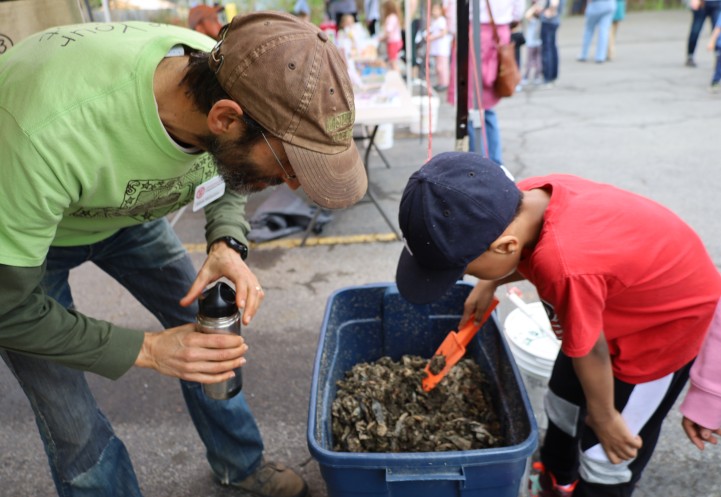
Two people look at a vermicompost box

News

Master Composters turn food waste into community action
  • Cornell Cooperative Extension
Jonathan Russell-Anelli with students in the field

News

Emily McFadden ’25 has always wanted a career in agriculture and the environment. When she toured Cornell as a high school student, she sat in on a soil science course (PLSCS 2600) taught by Jonathan Russell-Anelli, senior lecturer and senior...
  • Campus Area Farms
  • Cornell University Agricultural Experiment Station
  • Dilmun Hill Student Farm
Two female students hold plastic containers and examine circuitry.

News

Human urine could be a handy resource in tending home gardens and compost piles, thanks to an interdisciplinary collaboration between two Cornell Engineering students and plant scientist Rebecca Nelson.

  • Cornell University Agricultural Experiment Station
  • Global Development Section
  • School of Integrative Plant Science