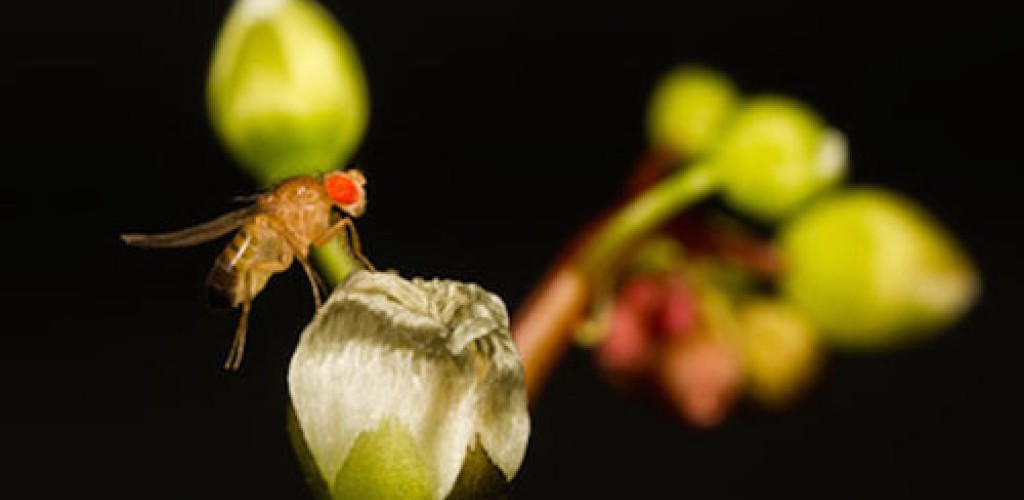
A scientific finding in fruit flies on the interplay of genes, nutrition and immunity provides insights that may one day inform personalized medicine.
The study, published in the March 12 issue of the journal PLOS Genetics, demonstrates that specific genes influence the effect of dietary nutrition on resistance to infection.
While future studies will explore these relationships more deeply, many genes in fruit flies perform similar functions in humans, including those that are influenced by diet.
“It’s been known for a long time that there is an interaction between genes and environment, so that a particular gene might have an important role in one environment, but in another environment, it might have a different role, or no role,” said Robert Unckless, the paper’s first author and a postdoctoral research fellow in the lab of Brian Lazzaro, associate professor of entomology and co-author of the paper.
Now, technological advances have made it possible to observe the genetic basis for effects caused by the environment. With regard to humans, the findings offer hope for pursuing inquiries into how genes (or genetic variation) can interact with diet or stress and provide “a more complete picture to predict heart disease or an individual’s response to infectious disease” and improve treatments, Unckless said.
There’s more, and the complete story can be found at the Cornell Chronicle.