The safety and well-being of our community is our highest priority. We know the recent news and allegations are deeply concerning, and we are committed to a safe environment for all. Learn how Cornell is addressing sexual violence.

Alert Close
Back

Discover CALS

See how our current work and research is bringing new thinking and new solutions to some of today's biggest challenges.

Share
  • Food
  • Cornell AgriTech
  • Cornell Cooperative Extension
  • Cornell AES
  • Agriculture

Across New York, Cornell’s network of research farms and orchards host experiments and extension programs that benefit growers – but they also produce a lot of food. In close collaboration with networks of community partners, the research farms donate thousands of pounds of apples, potatoes and vegetables to people in need each year.

“For me, I realize that the primary purpose of this college-owned property is research, but I also see it as an orchard full of food,” said Peggy Kent, administrative assistant for the 20-acre Hudson Valley Research and Extension Center (HVREC) in Highland, New York. “I hate to see food waste and am grateful to have the food going out of here to communities in need.”

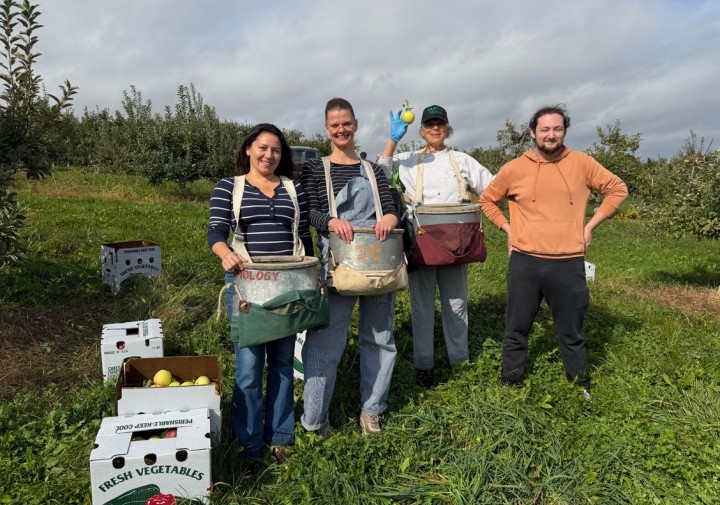
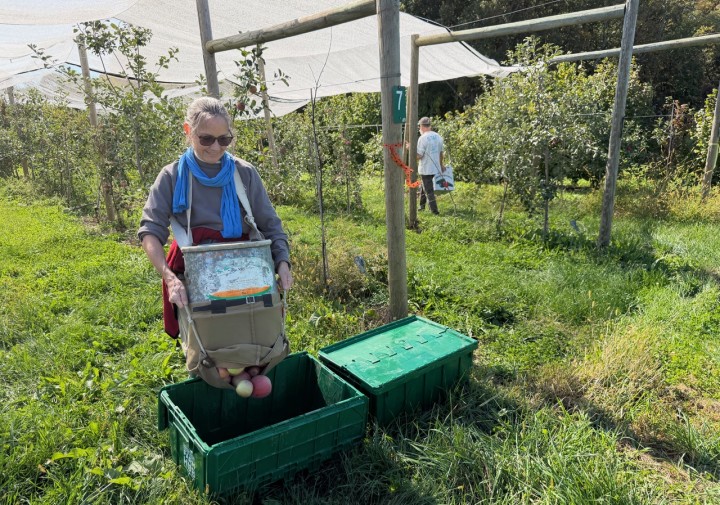
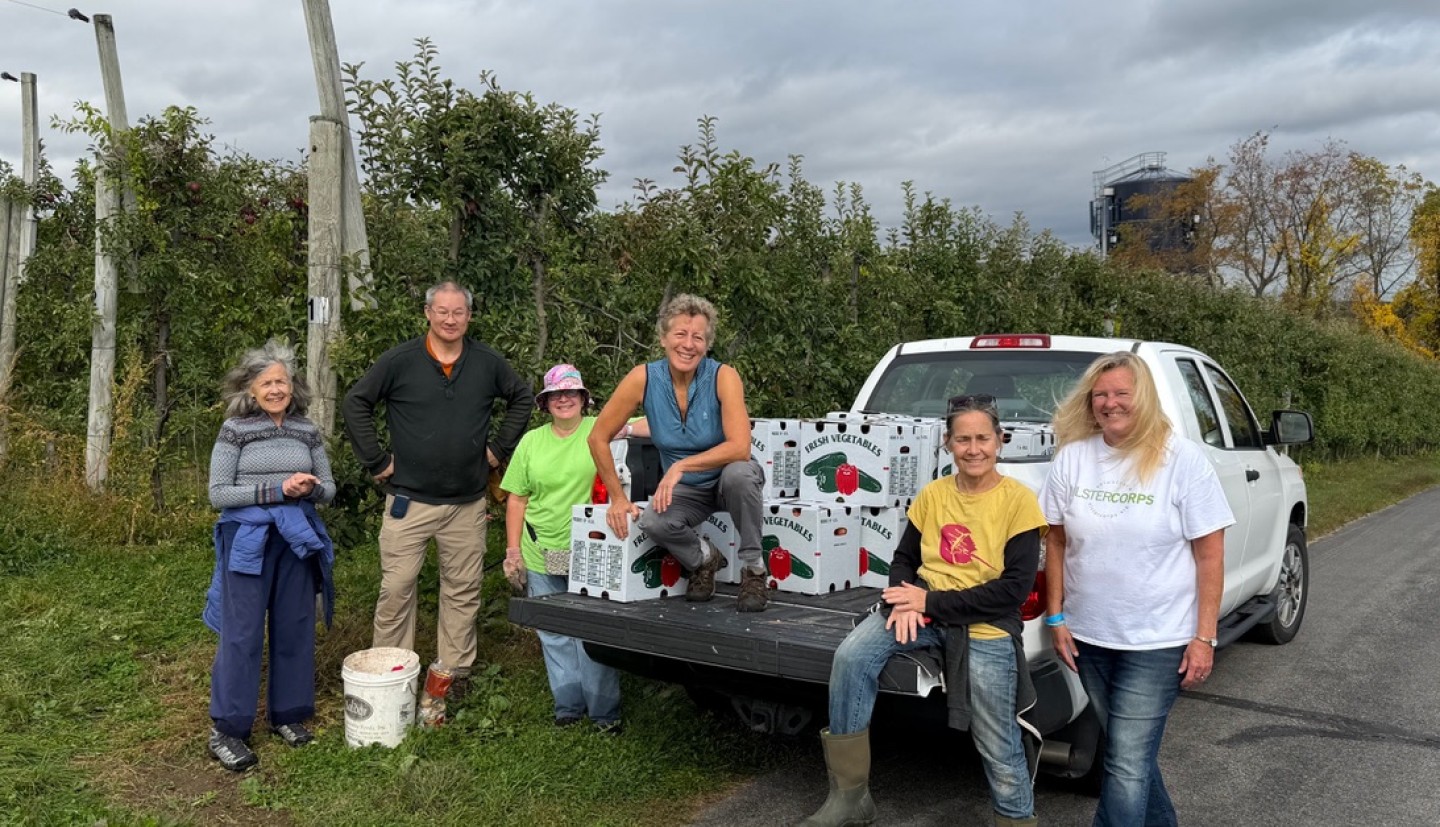
Kent organizes the lab’s annual apple donations – roughly 30,000-35,000 pounds each year – alongside Stiles Najac, food security program manager for the Orange County office of Cornell Cooperative Extension, and Beth Albright, co-founder and director of UlsterCorps, a nonprofit that connects volunteers with local service opportunities and community initiatives. Kent coordinates with researchers and orchard staff to ensure that scientific priorities and farm operations are taken care of, then she schedules volunteer time so orchards can be gleaned and food rescued. Najac secured a grant to purchase produce boxes, and she facilitates regional distribution. Albright recruits and organizes harvest volunteers and oversees fruit distribution in Ulster County. Produce goes to food pantries, community meal programs and shelters. Albright said she draws from a “Glean Team” of about 200 people who are invited to help harvest at HVREC and at many other farms and orchards throughout the county during the growing season.

“What motivates me to do this?” Albright said. “Spending time doing something you can genuinely feel good about in a beautiful orchard, surrounded with kindhearted friends, old and new, young and old, some with very different politics, but coming together, each choosing to spend their free time feeding their neighbors and lifting each other up.”

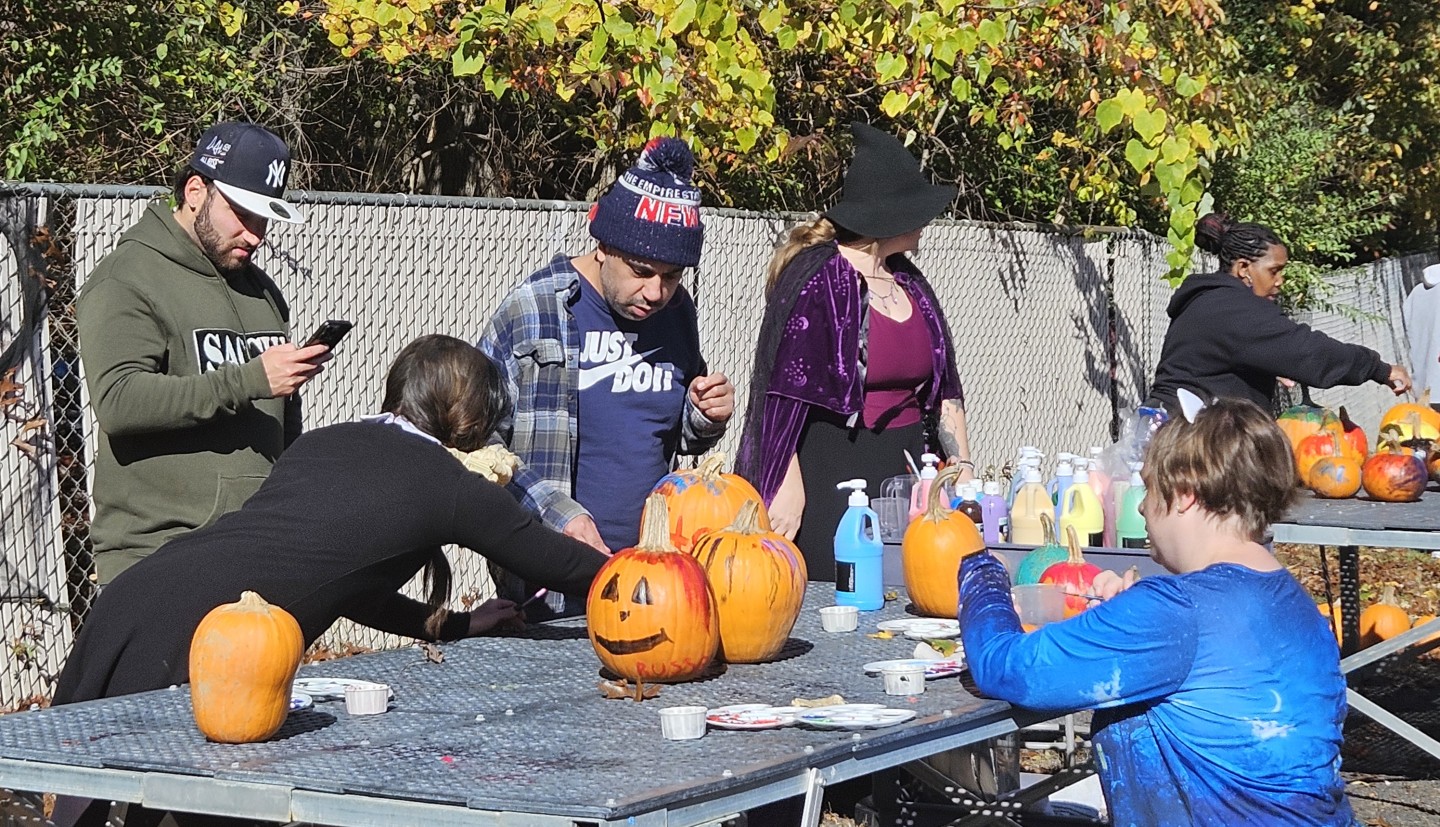
Downstate, the 68-acre Long Island Horticultural Research and Extension Center (LIHREC) grows everything from grapes and vegetables to ornamentals and floriculture. Most years, LIHREC staff members donate about 650 pounds of cucumbers to local food pantries and 300 pounds of tomatoes to Friends Kitchen in Patchogue, New York, said Daniel Heck, senior extension associate and leader of the Vegetable Health program at LIHREC. Each year roughly 200 cauliflowers and 400 pumpkins go to Brightway Living & Learning in Smithtown, New York, an institute for children and adults with autism and developmental disabilities. The cauliflower is eaten, and the pumpkins are used for food and for art (though unfortunately, this year the disease Phytophthora fruit rot took out most of LIHREC’s pumpkins and cucumbers), Heck said.

“For our team, it comes down to helping our community and the people around us,” he said. “The growers we work with, and our research plots produce good, fresh and healthy food, and knowing the food ends up in a bowl of soup on someone’s table, it is very rewarding. And a year like this one is a reminder of why our research matters: Healthier crops mean more food for growers and for the community.”

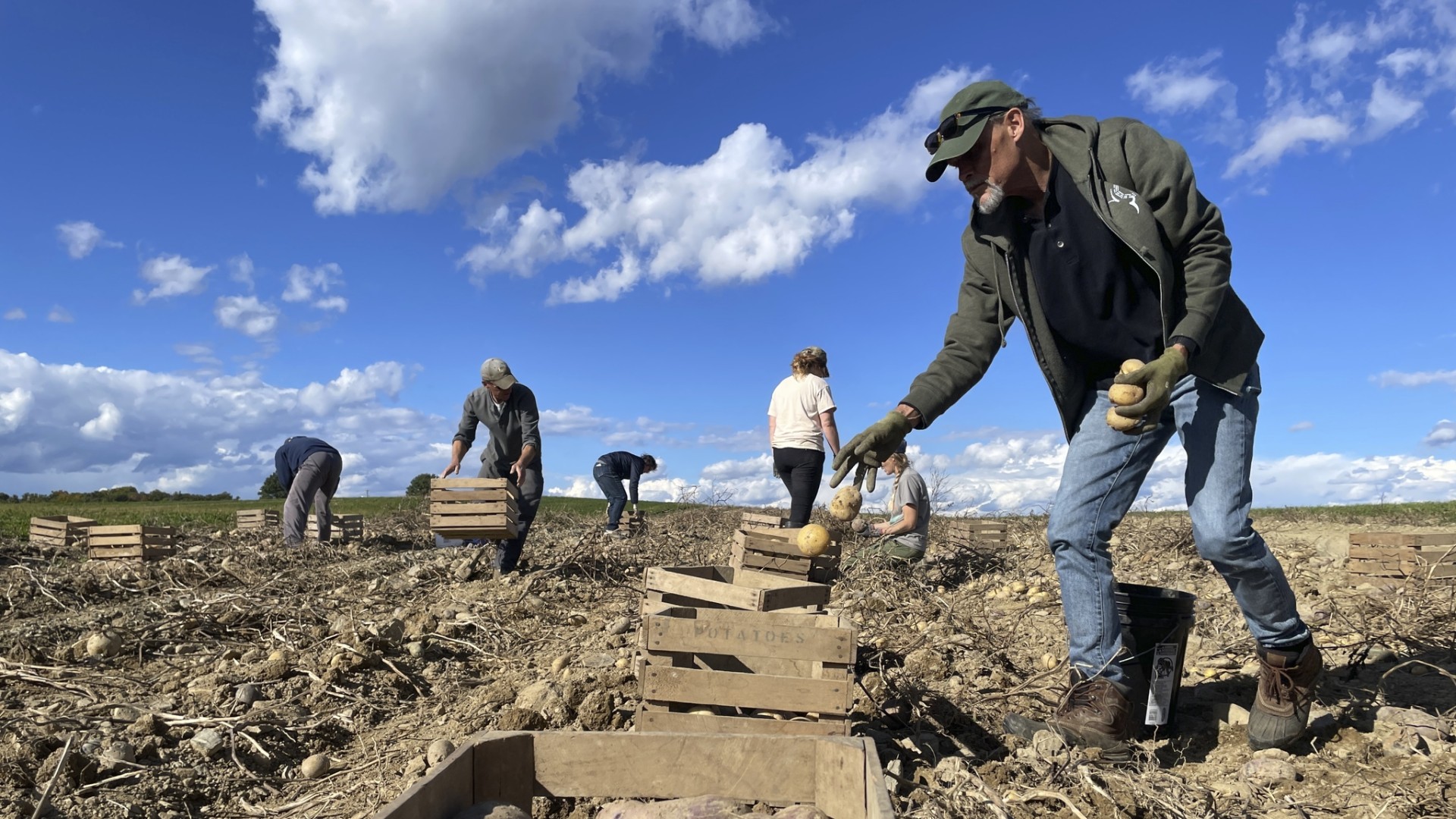
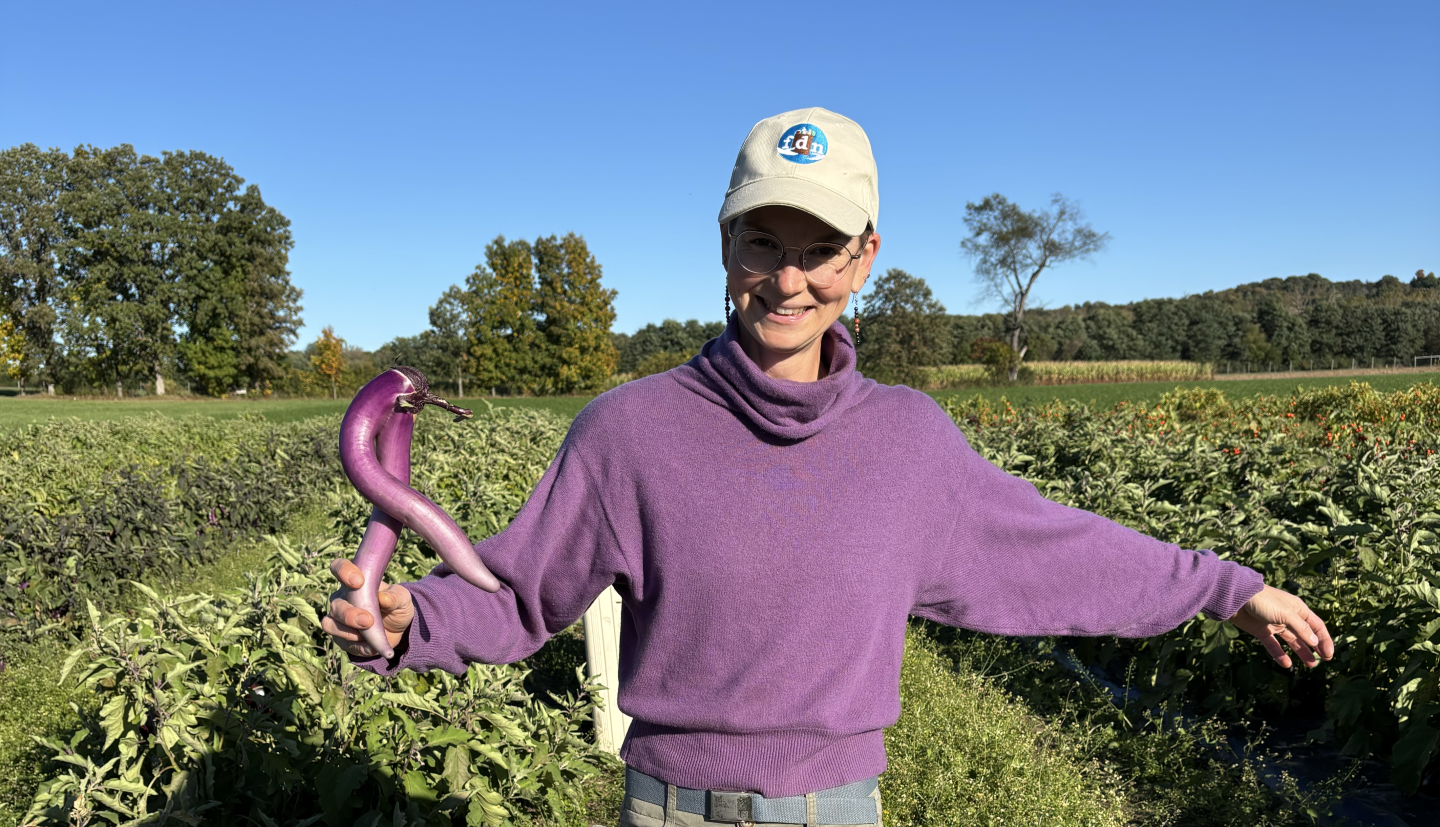
In Freeville, New York, the 260-acre Homer C. Thompson Vegetable Research Farm grows a wide array of different produce from year to year, depending on researchers’ needs. This year, the scientists needed cabbage, kale, broccoli, potatoes, tomatoes and eggplant, said Rick Randolph, who manages Thompson Farm. Throughout the season, farm staff work with a variety of organizations to provide donations where they can be best used. Sandra Wayman, research support specialist in the School of Integrative Plant Science, coordinates between farm staff and volunteers to carry out time-sensitive crop harvesting.

“In a few days’ notice she is usually able to assemble eight to 10 people that will come to the farm and harvest as much as possible within a few hours’ time,” Randolph said. “Without her, our donations in a growing season would decrease by about 25%.”

Wayman also coordinates “harvest parties” from the Campus Area Farms at Caldwell Road and from the various Cornell potato fields.

“My harvest parties first started a number of years ago, because somehow word got out that I hated food waste, and a vegetable breeder passed me in the hallway and was like, ‘Oh by the way, I have a ton of extra peppers; can you make them disappear?’ and I was all in,” Wayman said. “Now people just know to get ahold of me when there’s extra. I feel really honored that I can serve in this role.”

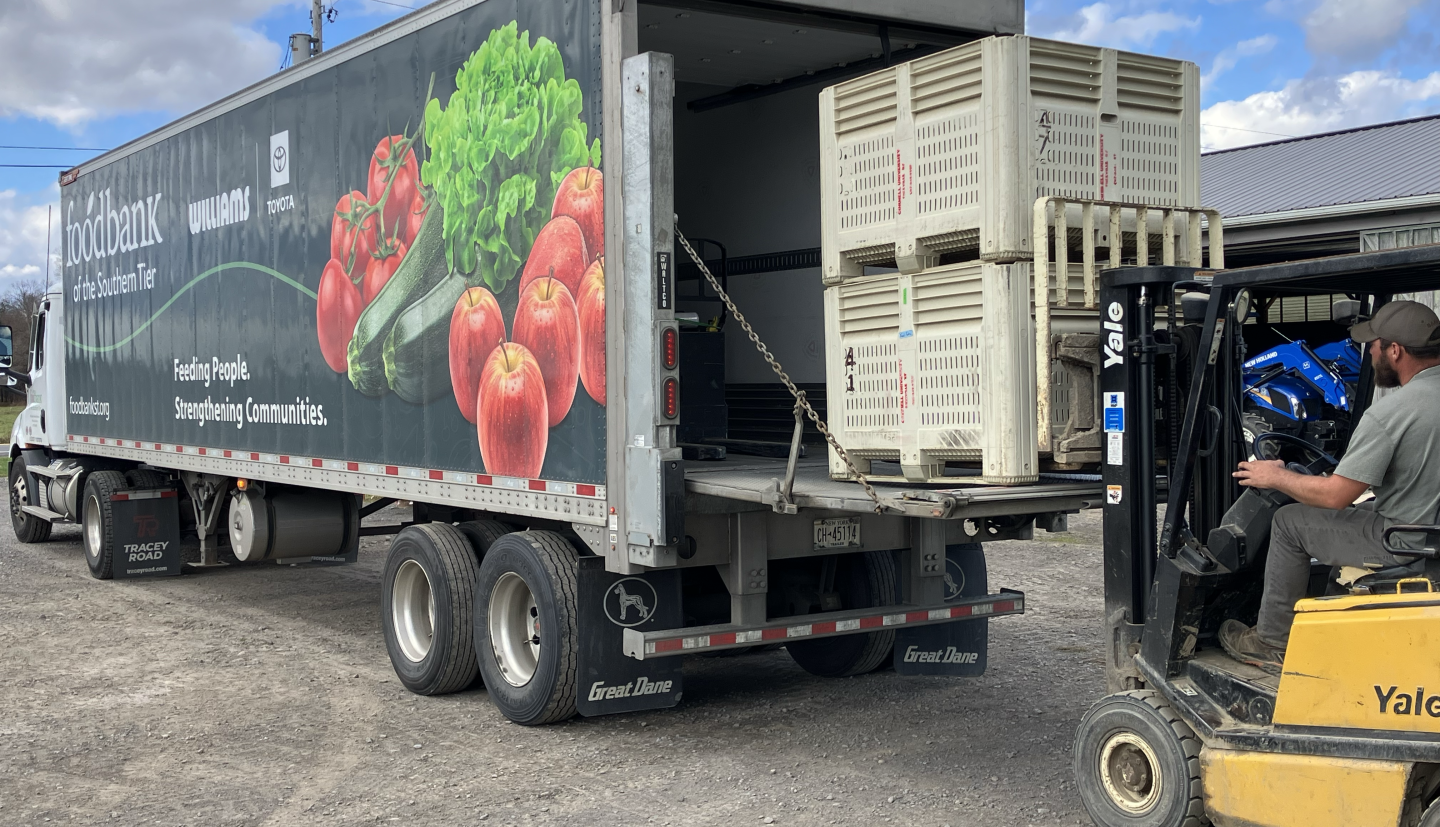
Roughly 3,200 pounds of eggplant and 18,000 pounds of potatoes this year went to the Food Bank of the Southern Tier, which distributes millions of pounds of food each year to food pantries, school food centers and meal sites throughout Broome, Chemung, Schuyler, Steuben, Tioga and Tompkins counties.

“Over several decades of donations, we are now close to 2 million pounds of food donations just to the Food Bank of the Southern Tier,” Randolph said.

Randolph credits the late Robin Bellinder, professor of plant science, for launching the food donation efforts and establishing relationships with the Food Bank of the Southern Tier: “She was the one who spearheaded all of this stuff; she used to grow stuff just for the Food Bank,” he said.

Samantha Eck, communications director for the Food Bank of the Southern Tier, said higher gas and food prices over the past couple years have led to increased needs at the 300+ organizations they support.

“Absolutely every donation makes a difference for our mission,” she said. “Thanks to donations from retailers like Wegmans, Dandy, Sam’s Club, and Dollar General, as well as in-kind food donations, like Cornell’s or other local farms, we can provide great quality produce and food products for free to our partners.”

Another 2,300 pounds of tomatoes from the Freeville farm went to Friendship Donations Network in Ithaca, and a few boxes of veggies went to Loaves and Fishes soup kitchen in Ithaca throughout the year, Randolph said.

One of Randolph’s favorite donations is to the Freeville Elementary School. Students carry out their own Thanksgiving feast each year, including helping to prepare the food. Thompson Farm donates 100 pounds of potatoes toward the annual feast, he said.

“It does feel nice when you can do those donations. I wouldn’t have it any other way,” Randolph said. “To be able to give that food back to people, it makes a difference.”

Krisy Gashler is a writer for the College of Agriculture and Life Sciences.

Keep Exploring

a woman sits at a desk, looking at data on a laptop screen

Field Note

Amelia Nelson PhD’29 is a graduate student in the College of Veterinary Medicine working in the lab of Professor Renata Ivanek . Collaborating with the Cornell Agricultural Systems Testbed and Demonstration Site (CAST) for the Farm of the Future...
  • Animal Science
  • Digital Agriculture
  • Ruminant Center
Cow standing in the field

News

The project is made possible thanks to a five-year, $7.5 million grant from the Food and Drug Administration.

  • Animals
  • Food