The safety and well-being of our community is our highest priority. We know the recent news and allegations are deeply concerning, and we are committed to a safe environment for all. Learn how Cornell is addressing sexual violence.

Alert Close
Back

Discover CALS

See how our current work and research is bringing new thinking and new solutions to some of today's biggest challenges.

Share
  • Animal Science
  • Agriculture

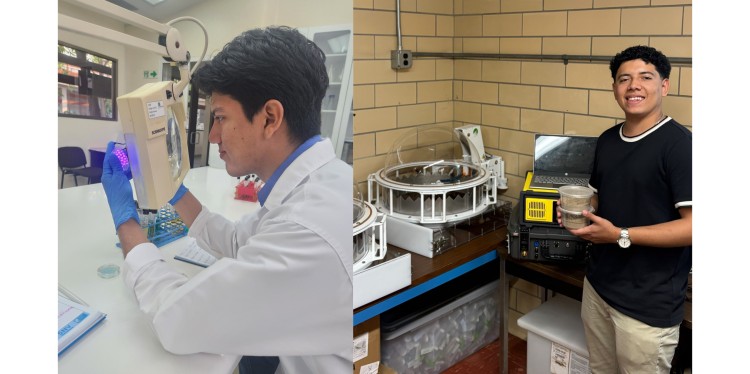
Aaron Gómez Orellan and Carlos Durán joined Cornell CALS’ Nutrient Management Spear Program (NMSP) team this semester as undergraduate interns. Aaron and Carlos hope to get the most out of this opportunity by diving deeper into sustainable agricultural development and research. Read on to learn more about their backgrounds and aspirations.

You both study environmental sciences and development at Zamorano University in Honduras. Tell us about your background. Where are you from and how did you choose your major?

Aaron: Originally, I am from La Ceiba, a city on the north coast of Honduras. 

Studying at Zamorano University introduced me to agriculture, natural resources and rural development through a very hands-on educational model. Over time, I realized that environmental sciences and development was the right fit for me because it connects agriculture to water, soils, ecosystems, communities and policy. I saw it as an interdisciplinary major where I could learn to see environmental problems from different perspectives and contribute to practical solutions.

Carlos: I am from San Salvador, the capital of El Salvador. 

Since I was young, I’ve felt that we need to understand how the environment works and how human activities influence it. I chose environmental sciences and development because I wanted to study environmental problems from different perspectives. It gave me an opportunity to gain knowledge and experience in a variety of different areas, explore different interests and better understand what I want to focus on professionally.
Tell us more about your undergraduate projects at Zamorano.

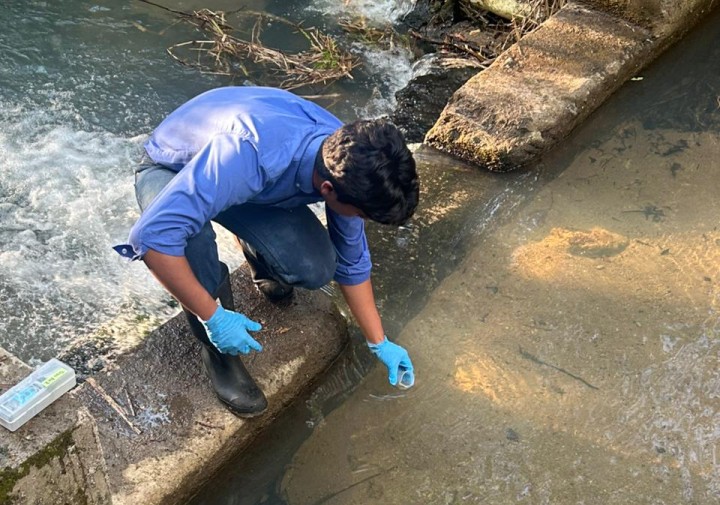
Aaron: My undergraduate research focused on water conservation areas in a small watershed near Zamorano. I developed and applied a Water Conservation Areas Priority Index (IPACA) to identify which areas had the greatest priority for conservation and management. This experience helped me understand how important it is to combine field observations, technical data, and local management conditions when making decisions about water conservation.

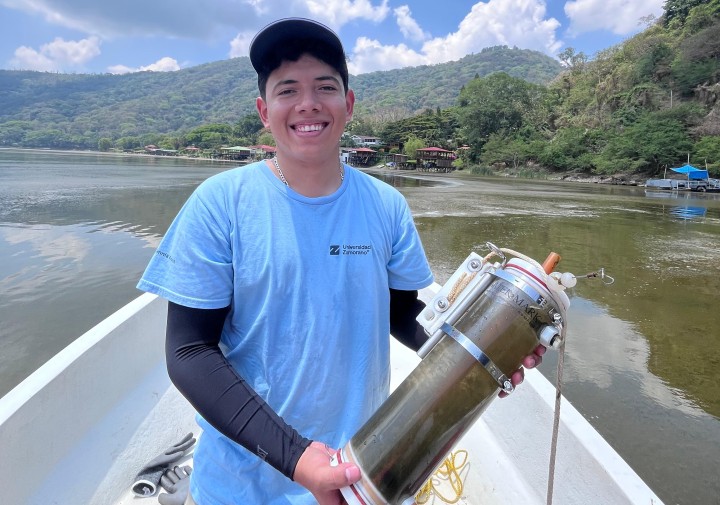
Carlos: My undergraduate thesis focused on the Lake Coatepeque watershed in El Salvador. My main focus was to understand how nutrients from the watershed traveled to the lake and how that affected water quality. We examined everything from the soil to land use and farm practices in the area. We used InVEST Nutrient Delivery Ratio modeling and QGIS to identify areas that could contribute greater nutrient loads. Then, we combined this spatial modeling with lab analyses of water (including N, P, and chlorophyll-a) to get a complete picture of nutrient movement in the watershed.

Why did you decide to join NMSP?

Aaron: I saw NMSP as a great opportunity to continue developing my skills in both field and research settings. I was especially interested in learning more about nutrient management, soil health, and how research can support farmers in making science-based decisions.

Carlos: I heard a lot of good things about NMSP from my peers, and I wanted to learn more about how nutrients work in agricultural and environmental contexts, through the whole nutrient cycle. I learned how everything in the environment is connected from my watershed research and wanted to dig deeper into that concept. Joining NMSP seemed like a good way to accomplish that.

Who are you working with and on what project?

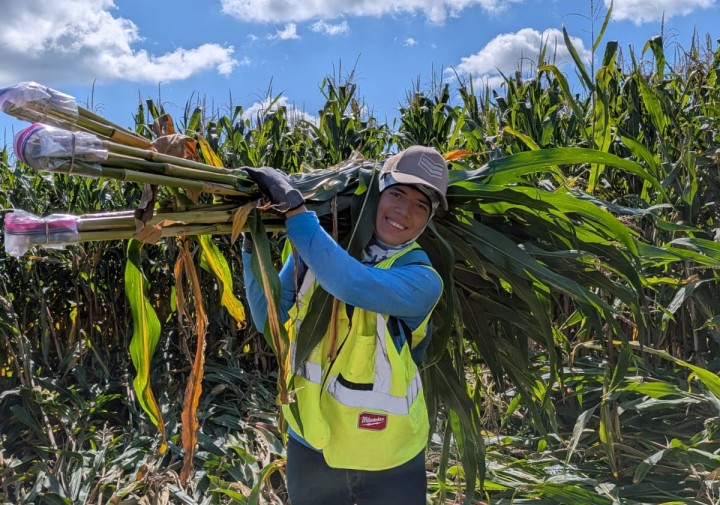
Aaron: I have been helping with harvest as well as corn stalk sampling and processing for the Value of Manure project under the leadership of Juan Carlos Ramos Tanchez (On-farm Research Coordinator). In addition, I am working with Manuel Marcaida III (Data Analyst) and his team on yield monitor data cleaning and reporting. This is a completely new skill for me, but I am excited to learn how data organization and quality control support the research process. 

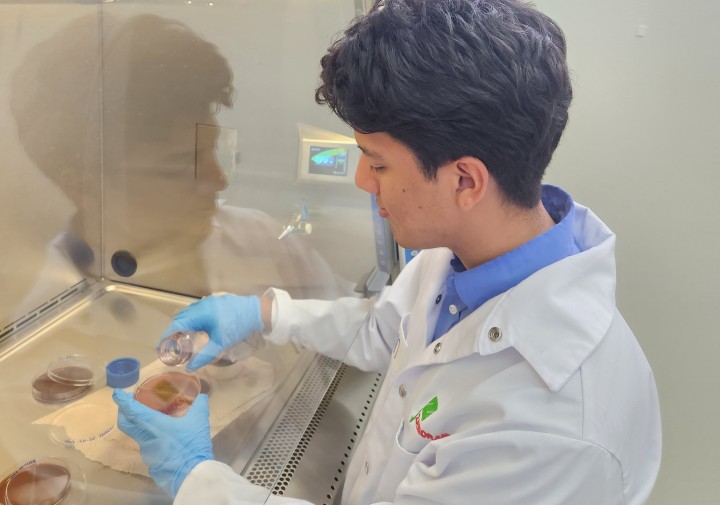
Carlos: I started by working with Juan Carlos Ramos Tanchez (On-farm Research Coordinator) on the Value of Manure project alongside Aaron. Now that harvest is done, I am also working with Sanjay Gami (NMSP Lab Manager), analyzing ammonia and greenhouse gas emissions after manure application and tracking how manure application affects soil nitrogen dynamics over time. I've valued learning more about emission measurement and analysis, and I really enjoy being able to connect what happens in the field with what is happening in the soil and in the atmosphere.

How does your experience here so far compare to your expectations?

Aaron: I have been impressed by the level of organization, the quality of the research, and the resources available here. Each person contributes something important. It is very different from my previous experiences, and that has made the opportunity even more meaningful.

Carlos: I love seeing the new technology NMSP uses and getting a full picture of how nutrients work. I think that this will be really helpful for any research that I want to pursue in the future. I am grateful that my peers directed me here, and I am sure that I will continue to grow a lot professionally and personally.

What are you hoping to get out of your time here?

Aaron: This experience is truly new and exciting for me, and I hope to take what I learn here and apply it in the future to projects related to watershed management, sustainable agriculture, and water conservation in Honduras and Latin America.

Carlos: I am really excited to help farmers improve their operations with science-backed findings. I hope in the long-term to bring everything I learn back to the farmers in my country.

Madeline Hanscom ‘22 is the science communications assistant for Cornell CALS’ Nutrient Management Spear Program (NMSP).

Keep Exploring

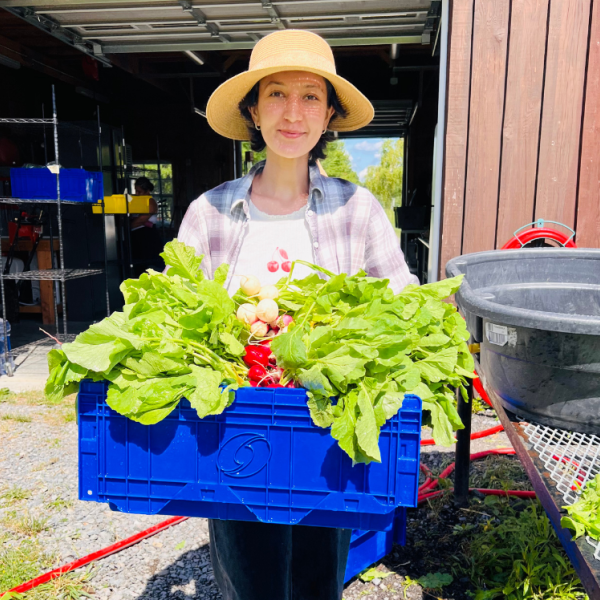
Shabana Mahdis ’29 carrying produce

Field Note

As a first-generation global development major from Badakhshan, Afghanistan, Shabana Mahdis ’29 is interested in the ways agriculture connects with communities, sustainability, resources and development. She shares her summer experience working...
  • Agriculture
  • Global Development Section
  • Dilmun Hill Student Farm
A field of soybeans planted in rows.

Field Note

Headlands are the areas bordering a field. Compared to the rest of the field, headlands are more exposed to wildlife, pests, disease, nutrient loss to weeds, and the elements. They are also at a higher risk for compaction because equipment...
  • Animal Science
  • Agriculture
  • Digital Agriculture