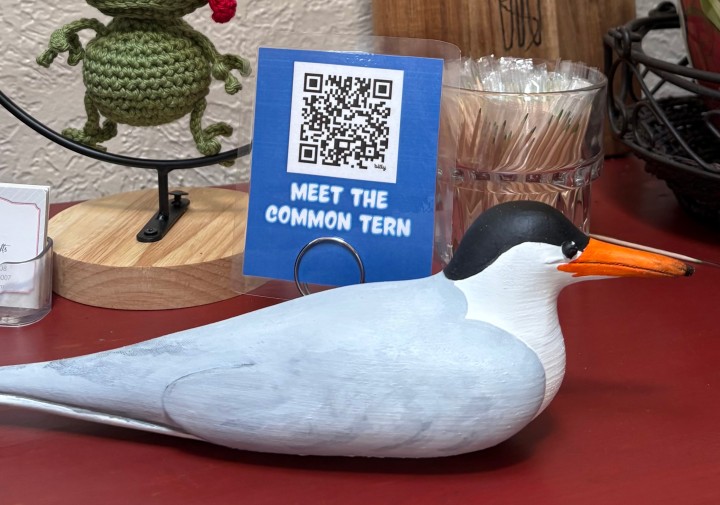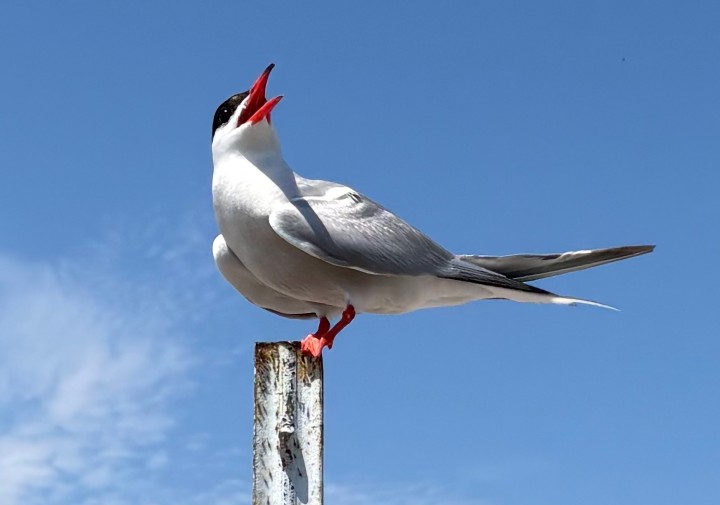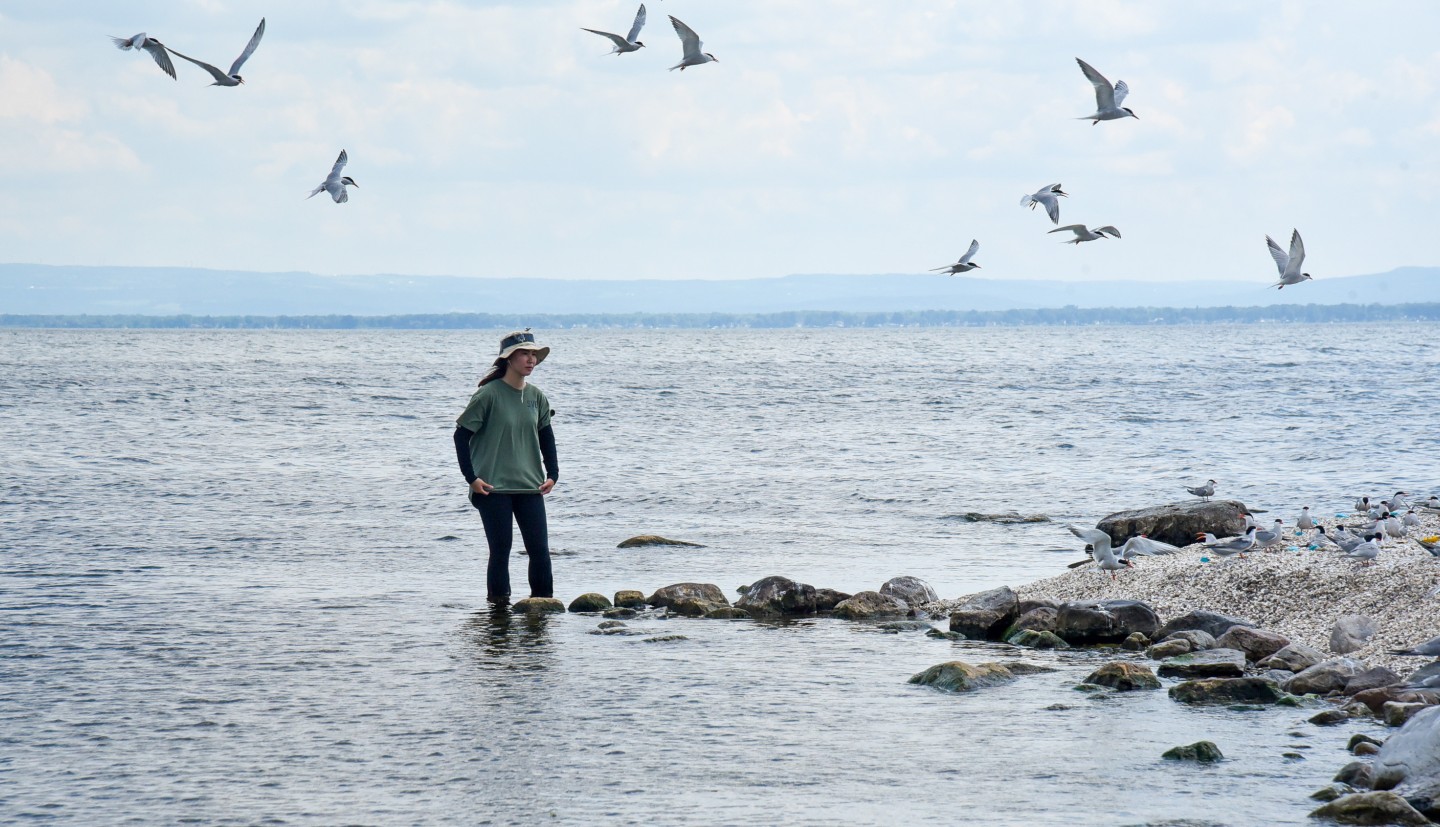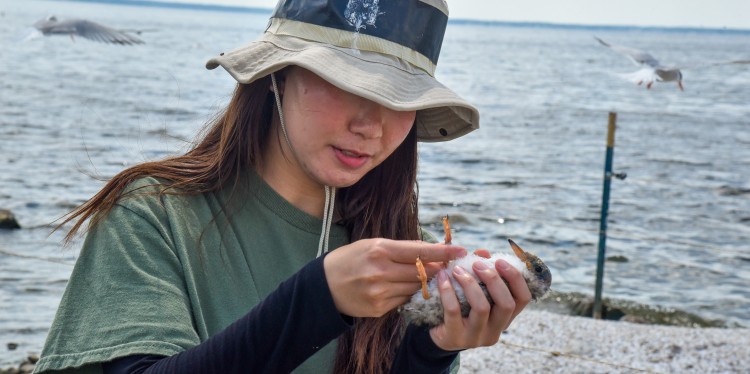
The common tern is a sweet little waterbird, with white wings like an angel’s and a distinctive kee-er cry. They are fierce protectors of their families, fearlessly chasing down eagles and tirelessly building up their ground nests, which they make on islands and shorelines, as waves threaten to wash their eggs away.
The common tern, contrary to its name, is growing uncommon across inland North America. Human disturbance, habitat degradation and increased predation of eggs and chicks have lowered nesting success, and population declines as severe as 75% have been observed at colonies over the past 25 years, putting them on pace to effectively disappear within our lifetime.
This jarring decline is why I spent my summer as a Cornell Cooperative Extension intern at the Cornell Biological Field Station (CBFS) near Syracuse, New York. My love for animals feeds into my passion for conservation, and I harness my expertise in communications for this purpose.
During my time on the shores of Oneida Lake, I crafted a comprehensive outreach program called the Inland Common Tern Conservation Initiative (ICTCI). I was guided by my mentors from the Cornell Department of Natural Resources and the Environment: Jennifer Arnold, Cornell adjunct professor and Penn State professor of biology; Stephen Oswald, Cornell researcher and Penn State researcher; and James Watkins, CBFS director.