The safety and well-being of our community is our highest priority. We know the recent news and allegations are deeply concerning, and we are committed to a safe environment for all. Learn how Cornell is addressing sexual violence.

Alert Close
Back

Discover CALS

See how our current work and research is bringing new thinking and new solutions to some of today's biggest challenges.

Share
  • Animal Science
  • Fish
  • Animals

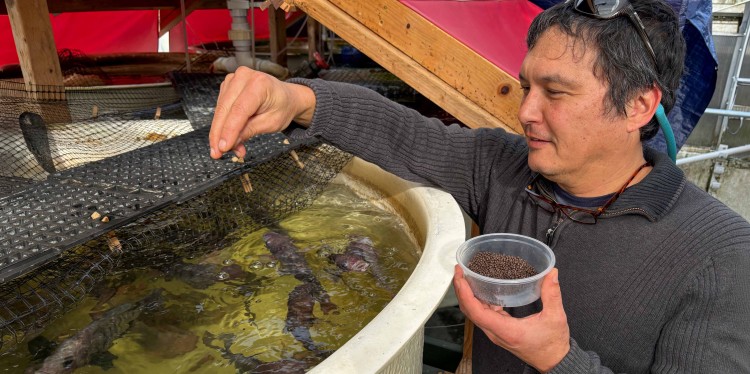
Tucked away across the street from Frank Morrison Hall, in an unassuming greenhouse, live a school of tilapia: a freshwater fish eaten around the world. Their home consists of a row of giant aquarium tanks alongside a forest of lush, crisp lettuce. As different as fish and lettuce seem, their life cycles are tightly intertwined within these glass walls, and they’re both part of the lab of Eugene Won, senior research associate in the Animal Science Department and academic coordinator for Shoals Marine Laboratory.

Won’s research focuses on fish biology and sustainable aquaculture, or fish farming. His lab specializes in small-scale testing of potential fish feed formulas, determining if they’re effective enough to be produced at a larger scale. He carries out this fish feed research to promote aquaculture, both within and outside of the University. 

“Aquaculture is a major form of agriculture globally, and we need more of it here,” he said. “I’m trying to get Cornell, New York state and the U.S. to take aquaculture seriously.”

It's not a waste product if you use it. It’s a resource.”

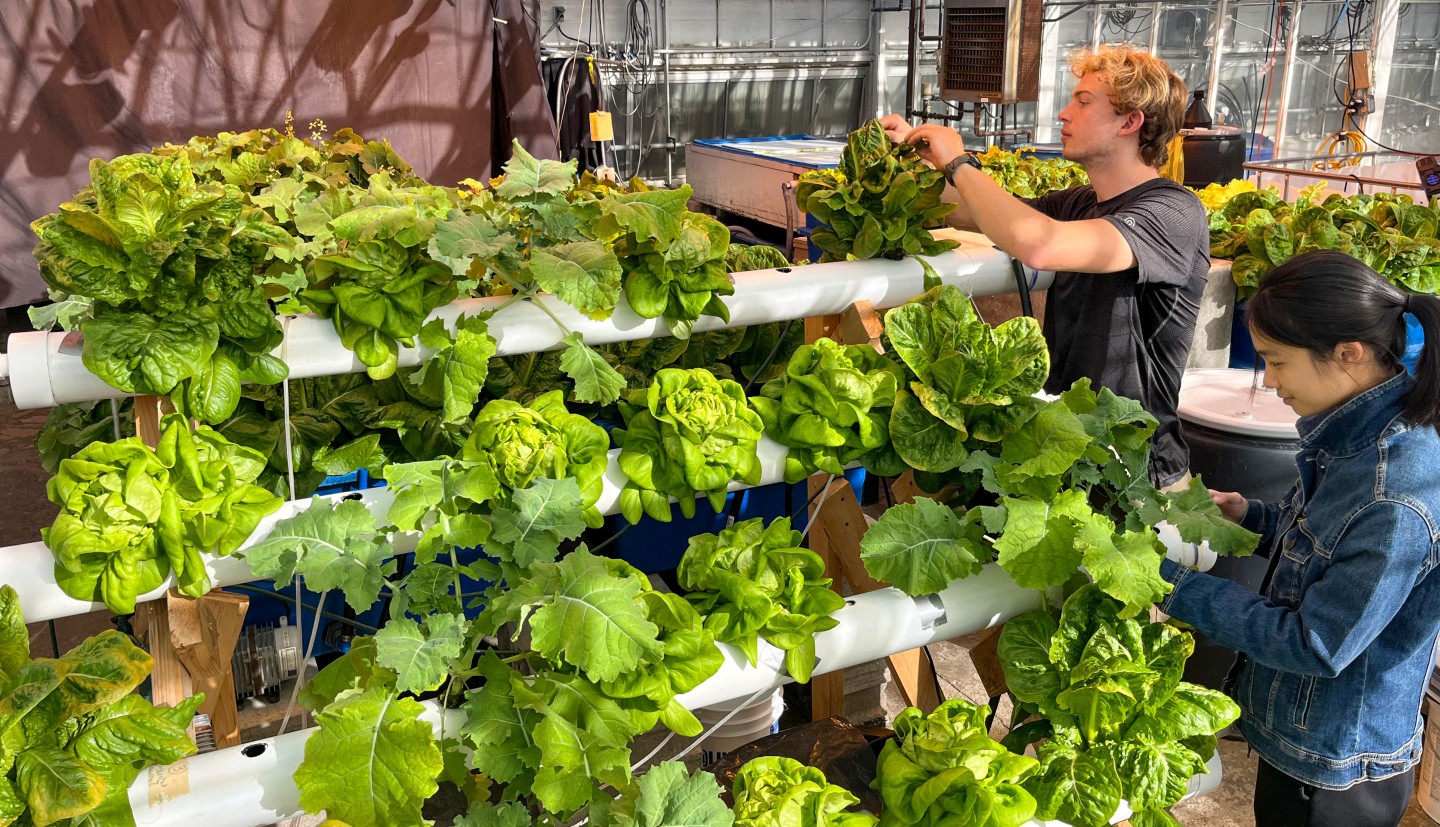
Along with raising fish, the lab recycles water containing fish waste from its tanks as fertilizer to grow lettuce in an aquaponic system — that is, without soil. The lettuce grows year-round for human consumption. Utilizing these nutrients that would otherwise be dumped reflects the zero-waste mentality at the heart of the lab.

“It's not a waste product if you use it,” Won said. “It’s a resource.”
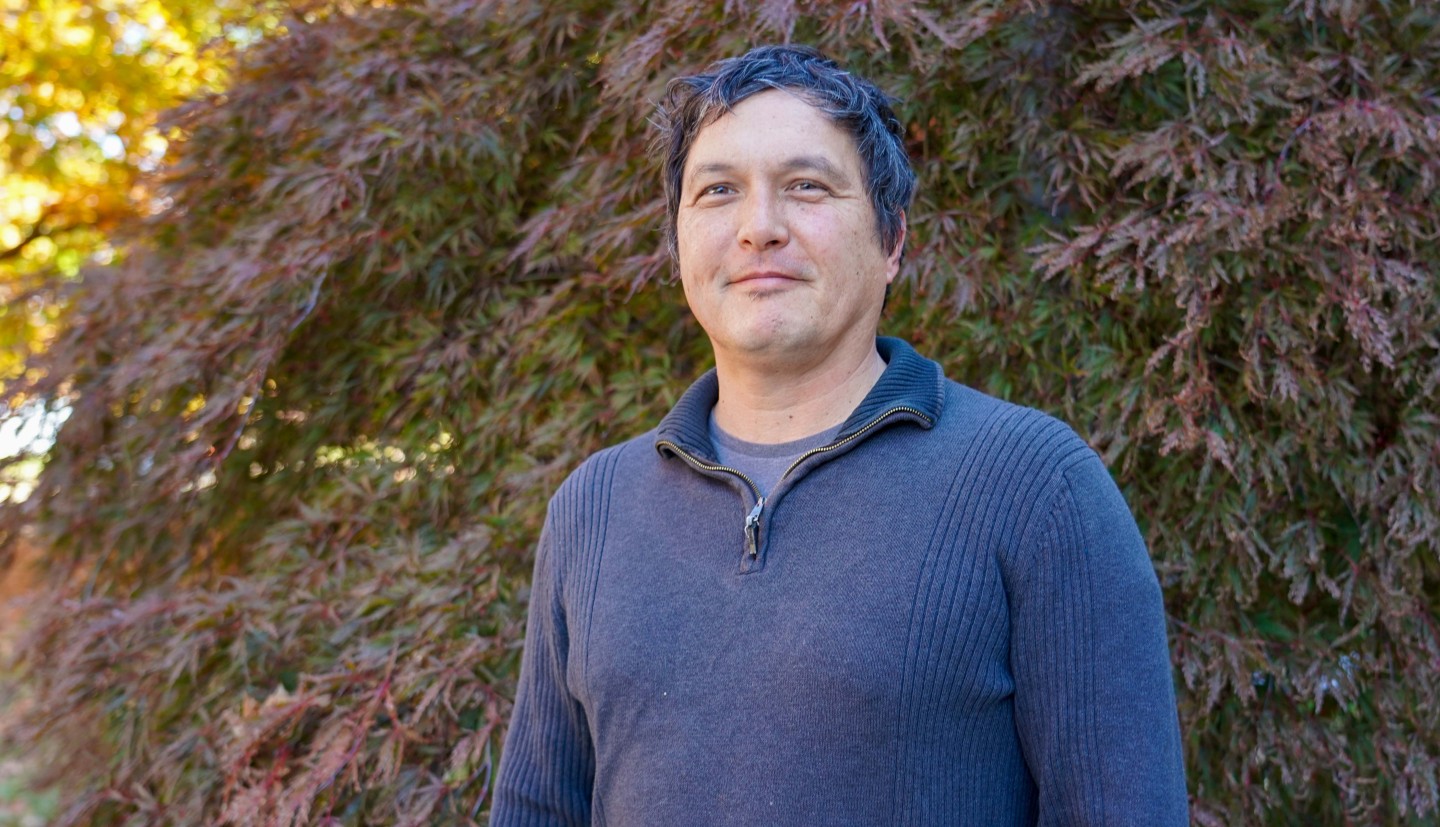
Won has been interested in fish all his life. He learned how to fish at a young age, and when he began his graduate school program, he decided to get into aquaculture instead of fisheries. “It was a burgeoning field at the time,” he said. “I thought it would continue to grow in relevance.” 

He was right. Today, the United States imports most of its seafood, resulting in a $20 billion trade deficit, according to Won. He pushes for the U.S. to produce its own “for the economy and for food security.”

Additionally, the world’s oceans have been fished to their maximum capacity since about 1990, so aquaculture provides a sustainable alternative to overfishing, he explained. However, it is expensive to develop feed that meets protein requirements for growing fish, making it the key limiting factor for researchers to address.

That’s where Won’s research comes in. His lab does initial testing of potential protein sources in feed to evaluate their effectiveness in growing fish at a small scale. Then they send it off to a larger farm for additional testing. They hope that one of these feeds will eventually move to second-stage testing and ultimately mass production for use by industrial aquaculture farms.

The Won lab has two facilities — the Kitchen Lab in Frank Morrison Hall, where new fish feeds are formulated, and Won Aquaculture Lab, the greenhouse where the fish are kept and where the researchers conduct growth trials. One challenge is balancing nutrition with necessary fish feed properties.

“The feed has to stick together and be durable in water, and hopefully, we get it to float,” Won said. “That’s really hard when you’re not using industrial equipment — all on top of meeting a nutritional standard that we’ve calculated.”

Once a feed has been mixed, it’s taken to the Aquaculture Lab, where lab members feed it to large tanks of fish over several months. The fish typically double or triple in size during feed trials. 

Won is currently starting to test feed made of fish meal from invasive carp species. This protein source is “high quality” and has the added benefit of removing invasive carp from the Mississippi River Basin. 

“We’re solving one problem, the ecological invasion of those carp, to solve our problem, which is to come up with a sustainable source of fish meal,” Won said. In the past, the lab has tested other fish carcasses and black soldier fly larvae as feed ingredients.

The Won lab’s research contributes to sustainable aquaculture, but the lab also strives to be sustainable itself in its day-to-day operations. Using the water circulated through the fish tanks for aquaponics is one example. 

“It’s water and nutrients,” Won said. “So we grow plants with it.”

Rows of lush, green and red heads of lettuce are suspended on grids in the room next to the fish tanks, with their roots submerged in the fish-fertilized water. The aquaponic lab is a collaborative effort — Neil Mattson, a professor in the School of Integrated Plant Science and leader of the Controlled Environment Agriculture program, helps fund it. 

Won lab members harvest the lettuce and Mattson and Won’s lab technician, John Osborn, donates some to a food pantry. Won has even distributed lettuce in Frank Morrison Hall in previous years. “I’d like to get both fish and veggies into the campus food system eventually,” he said.

The lab is currently working on a paper about aquaponics, hopeful that rural fish farms can utilize this framework to water crop fields and reduce water needs in the future.

“We try to live up to our own standards, even with our own waste,” Won said.

Angelina Tang ’28 is an animal science and communication double major and the communications assistant for the Cornell CALS Department of Animal Science.

Keep Exploring

a woman kneels in front of a row of cows and holds a handful of feed

Field Note

Ananda Portela Fontoura PhD’22 is a postdoctoral associate working in the lab of Michael Van Amburgh , professor of dairy nutrition. Ananda’s research focuses on maintaining or enhancing dairy cow performance through optimizing nutrient use...
  • Dairy
  • Animal Science
  • Animals
Elisha Frye with a calf

News

An insect-driven disease that causes high mortality in white-tailed deer, and mimics the symptoms of foot and mouth disease in cattle, is still rare in New York state, but the warming climate may increase its future spread. In research published...
  • Dairy
  • Cornell University Agricultural Experiment Station
  • Animals