Academic focus: Integrated pest management, insect resistance management, insect ecology and behavior
Research summary: My research program has both fundamental and applied focuses. We study insect behavior and ecology in field crops to understand how agricultural practices influence insect populations, movement and interactions with their environment. In parallel, we apply this knowledge to improve integrated pest management through a variety of approaches, including mechanical, cultural, biological and chemical control. Another major focus of my program is implementing area-wide insect resistance management strategies to delay the development of resistance to insecticides and Bt maize.
What do you like to do when you’re not working?
I enjoy spending time with my wife and son, especially traveling and exploring nature together. I also enjoy watching my favorite soccer team, Palmeiras, and playing soccer, tennis and chess.
What brought you to Cornell CALS?
Before joining Cornell as an assistant professor in Ithaca, I was a postdoctoral researcher at Cornell AgriTech in Geneva. That experience allowed me to interact with great scientists and become part of a community that made me feel like I belonged. Cornell CALS offers an environment where one can grow as a scientist while also building meaningful friendships. I met professors who had gone fishing together for years and colleagues who were genuinely invested in each other’s professional development. That combination of scientific excellence, collaboration and community made me want to come back.
What is an interesting fact about your field of study that you think everyone should know?
Some tiny insects are incredible long-distance travelers. Leafhoppers, which are only a few millimeters long, migrate northward each spring and have been collected more than 1,200 meters above the ground. Once they reach these heights, their movement is largely driven by the wind. I find it fascinating that an insect small enough to sit on your fingertip can be carried by wind for hundreds of miles. When we look at insects in a crop field, some of them may have started their journey several states away.
Why did you feel inspired to pursue a career in this field?
My interest in agriculture started when I was a child in Brazil. My father and grandparents often took me to their small farm, where I enjoyed watching plants grow and developed a passion for agriculture. During my undergraduate studies in agricultural engineering, I became particularly interested in entomology because I loved the idea of protecting crops from insects. I then realized that entomology could give me a career where I could spend time in the field, help farmers solve problems and make scientific discoveries. That combination continues to motivate me today.
What advice do you have for students interested in your field of study?
Work hard. Read as many papers as you can. Be curious and get hands-on experience. Entomology is an incredibly broad field that connects many disciplines. For those interested in field crop entomology, I advise spending time in the field and laboratory, talking to growers and other stakeholders, and exploring different areas before deciding what excites you the most. I also encourage students to develop strong statistical and communication skills. Being able to analyze complex data is important, but being able to communicate your findings to a broad audience is equally valuable.
What are your current or future outreach/extension projects?
My extension program focuses on helping New York field crop growers make informed and sustainable insect pest management decisions. We use a variety of methods to deliver research outcomes, combining traditional extension channels with modern communication tools. I work closely with growers, extension specialists and industry partners on current and emerging pest issues. I am particularly interested in understanding growers’ needs, what it takes for them to adopt science-based recommendations, and evaluating the economic, environmental and social impacts of research outcomes. Ultimately, my goal is to develop practical tools and recommendations that increase farm profitability while preserving IPM tools and protecting the environment.
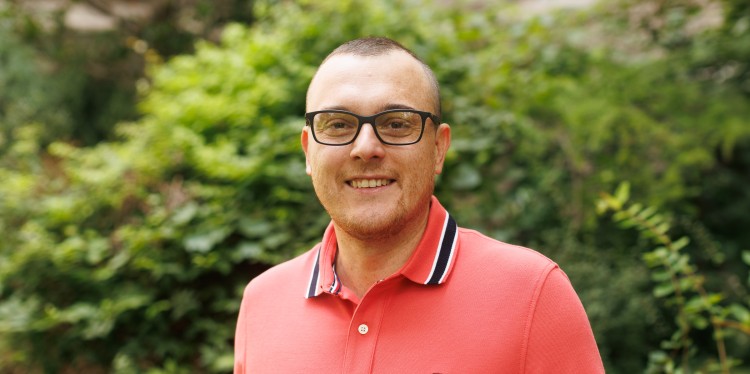
Learn more about Marcelo from his CALS profile and lab website.