Back

Discover CALS

See how our current work and research is bringing new thinking and new solutions to some of today's biggest challenges.

Mentoring youth for successful careers in the dairy industry

Share
  • Cornell Cooperative Extension
  • Cornell Dairy
  • PRO-DAIRY
  • Animal Science

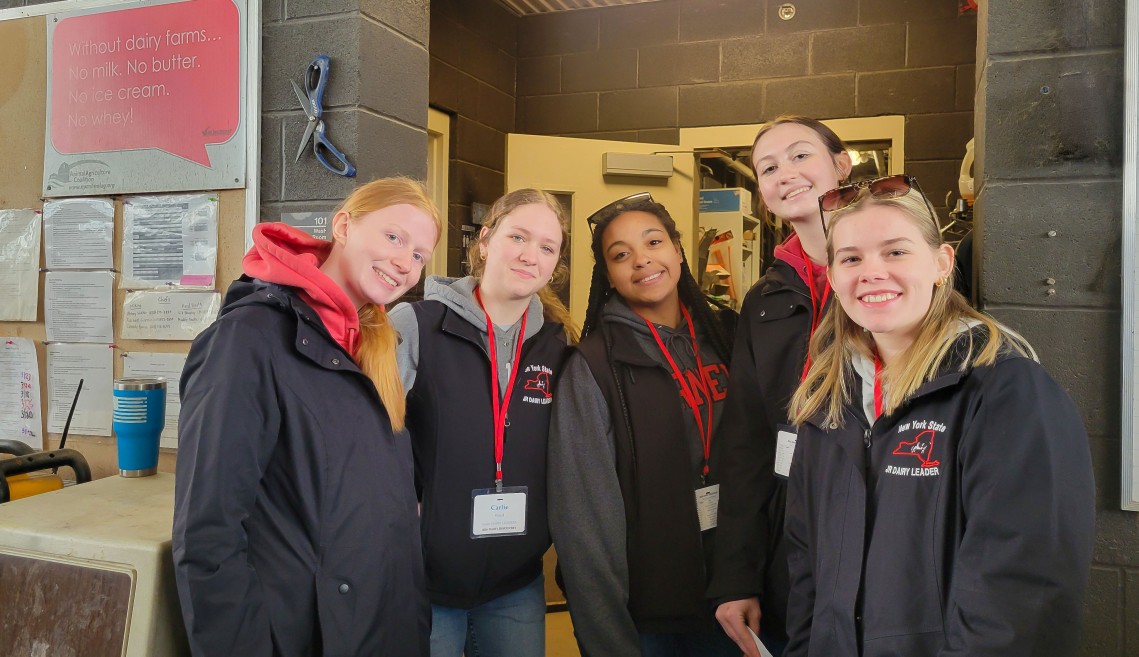
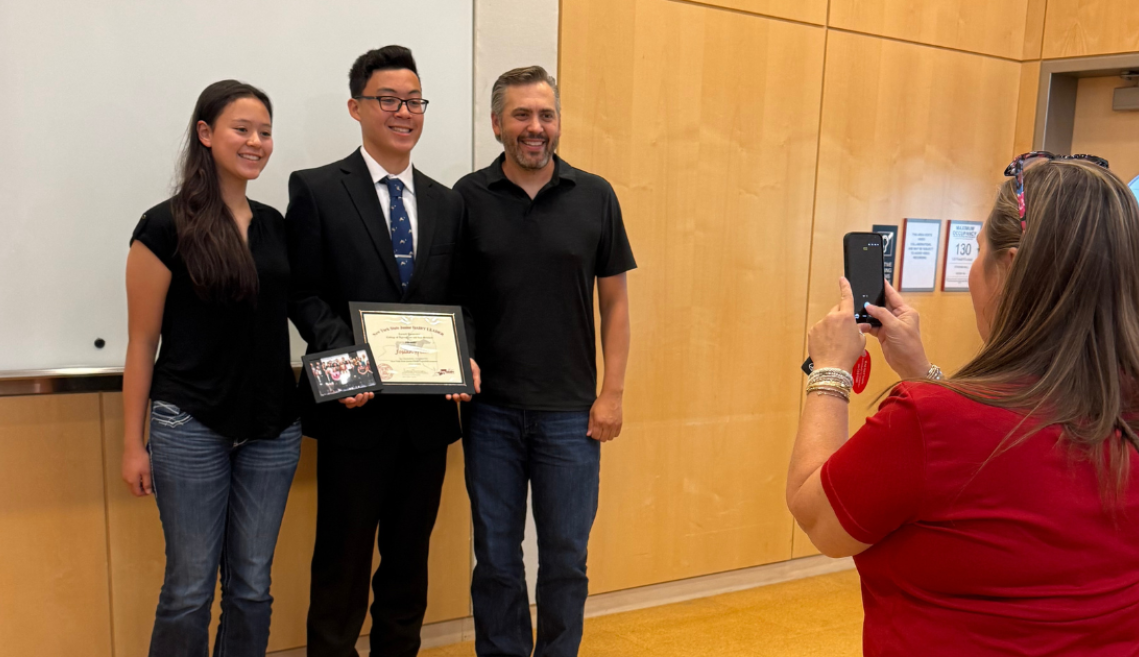
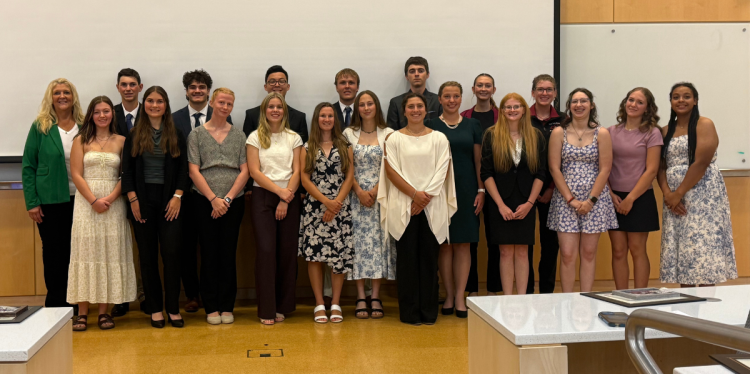
Enthusiasm is always palpable at a Junior DAIRY LEADER graduation, held in August on the Cornell campus at Stocking Hall. The day is a culmination of an intense year of hands-on learning, exposure to industry issues, networking, farm tours and travel, all designed to push comfort zones and promote leadership growth. 

Led by PRO-DAIRY senior extension associate Debbie Grusenmeyer, Junior DAIRY LEADER (JDL) inspires youth, ages 16 to 19, builds critical enthusiasm for the industry, and develops the next generation of dairy leaders.

"I'm incredibly proud of them and the people they are and the great things they're going to do." — Deborah Grusenmeyer, Junior DAIRY LEADER

For Grusenmeyer, graduation day always carries a mix of pride and loss. She has spent the year traveling and working closely with the group and letting go is never easy. “The way they start that first trip, then who they become at the end. They don't see the growth in themselves as much as those of us looking in.”

She compared the moment to any parent's role: giving kids room to grow, trusting they'll come back changed. Within a week or two, she said, it starts all over again with a new group, which is exactly what makes graduation bittersweet.

That closeness with the industry is also what keeps doors open for JDL groups on the road. Grusenmeyer said host farms in Wisconsin now ask for the group by name when planning their own schedules, offering the students priority over other visitors. 

“These kids ask questions, they're engaged, they want to learn,” Grusenmeyer said. “That is worth time from people in the industry to dedicate to them. So that says a lot.”

Entry into the program is competitive, with applications being a precursor to college applications that are the next step for many graduates. Students participate in on farm production analysis, develop resumes for internship opportunities, enhance teamwork, communication and problem-solving skills, prepare public presentations, and participate in farm tours and regional seminars. 

The program kicks off in fall with pre-conference tours of the dairy and agriculture industry in Wisconsin before attending the National 4-H Dairy Conference. Many of the participants meet for the first time in the airport as they prepare to leave for the trip. In eight more programs over the year, participants learn about and develop technical production management skills, are exposed to career opportunities, and build tools to make positive contributions to the industry, all with the goal of developing a growth mindset and positive impact on the dairy industry.

The need to attract high-caliber youth to the dairy field is frequently identified as a top priority by farm owners, and JDL engages youth with careers in the dairy industry and inspires their educational choices. Of the nearly 600 Junior DAIRY LEADER graduates over the past 25 years, 97 percent continue their education beyond high school. Notably, 84 percent of these youth choose agriculture, while prior to participation, 53 percent indicated they had not planned to pursue agricultural careers or had been undecided.

A longtime sponsor's perspective

John Clark, of FeedWorks USA, has supported the leadership program for more than a decade, and this year marked his 12th year teaching its careers and nutrition module. “It is so great to be able to interact with young people,” he said, describing how much he values seeing what students are thinking about, what they need, and how much they already know, or don't, about the industry.

Clark used part of his remarks to thank Grusenmeyer for building JDL into a program other states have modeled their programs after and to thank the program's sponsors, whose support goes beyond dollars. Sponsorship, he said, sends a signal that the industry believes in investing in its own future, something he keeps in mind when advocating for the program in front of lawmakers.

He also spoke about his own family's connection to the program: his daughter, Mary Murray, once a high school junior with little interest in agriculture, went through JDL at a pivotal, undecided moment in her life. The program, Clark said, gave her direction and drive. He and his wife, he said, are incredibly proud of what she's accomplished, both personally and professionally, and he credited much of it back to the connections and confidence she built during her JDL year.

"Passion for the dairy industry is the driving force that makes this program unmatched across the country." — John Clark, FeedWorks USA

Junior DAIRY LEADER impact

  • 96 percent say JDL influenced their decision to pursue dairy or agricultural careers
  • 98 percent increased their dairy knowledge
  • 97 percent improved communication skills
  • 87 percent improved teamwork
  • 85 percent valued networking within the industry
  • 53 percent of undecided participants chose dairy or another agricultural career path
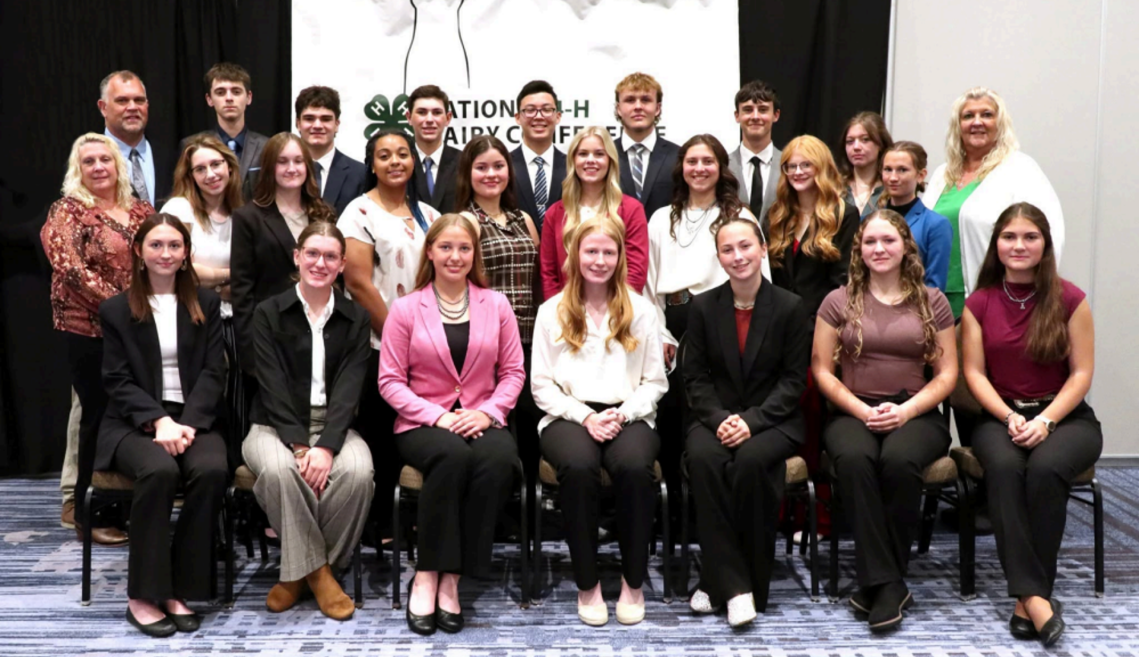
2026 graduate in their own words

  • "JDL has been a wonderful experience for me. The opportunity these sponsors have given me to meet new people, learn new things, and make great connections is enough in itself, but the experience I gain from going on farm tours is something I'll never forget. Thank you, sponsors, for everything." Carlie Ward
  • "Throughout my time in JDL, I learned to be more open-minded and take advantage of every opportunity while also expanding my knowledge and view of the dairy industry." Colette Kappauf
  • "During my year in JDL, I expanded my overall knowledge of the dairy industry, as well as learned that my interest is mainly in the nutrition side of dairy." Delaney McCann
  • "I learned how to build relationships, connect with people, and network. I will take these with me in the future. Thank you, Debbie." Grace Maslyn
  • "This was an excellent program that gave me the opportunity to learn more about the dairy industry and the many possibilities it holds." Hannah Wieboldt
  • "JDL opened a door of opportunities for all of us in the program. Not only did I learn about the dairy industry, but I also built connections that will last a lifetime. Although, I did not grow up on a dairy farm this program helped me feel connected to such an amazing industry." Isabella Perretta
  • "JDL has sharpened my communication skills and helped me make connections with leaders in the dairy industry around the world. I am so grateful for this awesome opportunity." Josiah Freier
  • "JDL gave me an introduction to the dairy industry and to many amazing people." Kaitlyn Eckles
  • "Being in JDL has  taught me that the greatest journeys are not measured by the miles we travel, but by the  people who walk beside us. We  have such a huge opportunity  being in the dairy industry, especially in NY, and how many vast options there are if we don't end up going to college" Karis Burns
  • "One of my favorite parts of JDL was touring different farms and seeing how larger dairies operate while learning what helped them grow into the successful operations they are today." Kasey Neal
  • "I learned that the dairy industry is a very diverse industry, with many dedicated individuals all with the common goal of maintaining cow comfort and good milk quality." Keyamari Keys
  • "I enjoyed  learning from Cornell Alumni. Their advice was truly insightful and inspiring." Lily Marshman
  • "I came to JDL not being a dairy kid, but from JDL I have learned so much. JDL has taught me vast amounts about the dairy industry and the career opportunities within it. Additionally, JDL has helped me create lasting friendships with others." Michaela Bugman
  • "During this past year in JDL, I have learned more about the dairy industry and the differences and similarities between big and small farms. I also learned I like nutrition." Morgan Evans
  • "Throughout the JDL program, I gathered vast amounts of diversified information from farm to farm. I plan to apply this knowledge to our family farm in an effort to increase efficiency and profitability." Owen Avedisian
  • "JDL gave me an opportunity to learn much more about the dairy industry and agriculture in general. JDL also taught me to be comfortable being uncomfortable. JDL has motivated me to stay involved in the dairy industry." Owen Koval
  • "Being part of this wonderful program was truly life­changing. It opened the door to so many incredible experiences, unforgettable adventures, and valuable learning opportunities. From farm visits and exciting trips to shared dinners and countless hours spent together, we built friendships that I hope will last a lifetime." Tara Moffatt
  • "JDL has taught me many things about the dairy industry that I have taken back to my family farm. It has given me the desire to go to college for dairy management so that I can increase the efficiency of my family's dairy farm." Titus Lawson
  • "I learned a lot about the ever changing dairy industry." Tyler March
  • "During this past year of JDL, I have expanded my knowledge of dairy management and gained a better understanding of the technology used on larger dairy farms." Wilder Gamage

Student reflections

Asked to reflect on the year, several graduates pointed to specific moments that stuck with them. “I thought it was pretty cool that the governor of Wisconsin just showed up at one of our programs,” one graduate said. Another described the fast bond formed among strangers: “Watching how close we came together as a group, like, at four in the morning at the airport, you get out there with a bunch of kids you don't really know, and by the end we're all pretty close. Just one big family.” A third graduate said meeting a fellow youth advocate from Maryland during the Wisconsin trip was a highlight, calling it “really cool how each state has their own special program” for engaging young people in agriculture.

For a graduate from Vermont, the trip offered a first look outside a familiar world. “I work on a dairy farm that's run by my father and my grandfather, but other than that I didn't really know what things went on over there in New York,” the graduate said. “It was a very cool experience seeing the rest of the world outside of Vermont and seeing some huge farms that you don't see” at home. The experience, he said, helped clarify what to study in college to eventually bring new ideas back to the family farm.

The program also nudged several graduates toward paths they hadn't considered. “My plan was to go into agricultural communications, and then once Kevin Ziemba and his coworker came and spoke to us, it really kind of sparked my interest in genetics,” one graduate said. “It actually made me want to get back into the dairy industry, and I'm incredibly grateful for it.” Another graduate, who came in confident about working with dairy animals, said hearing professionals share their career paths “made me realize there's really a lot more to the dairy industry; maybe there's some other things I'd like to do too. It's definitely opened up a lot of options.” A third graduate put it simply: “I had no clue except that I wanted to go into an agriculture job eventually. But since we've talked to a lot of nutritionists, I've realized nutrition is probably the way for me, and that's all thanks to JDL.”

The view from the county

Rachel Williams, executive director of Cornell Cooperative Extension of Seneca County, has followed the program for years, including serving as a host when graduation was held at Empire Farm Days. This year, Seneca County had a graduate to celebrate again: Josiah Frier, a 2026 graduate.

Williams said the value of JDL for students goes well beyond a single year. “The connectedness with people who have similar sparks and passions, the belonging, the career exploration and career development pieces are huge,” she said. “There's a lot of adults that don't get this experience, where they're meeting professionals in multiple careers in the field who are also very passionate.” That exposure, she said, tends to deepen students' interest rather than narrow it.

"Just about anything you want to do, you can do in the dairy industry. So, for you to realize that it's just phenomenal." — Rachel Williams, Cornell Cooperative Extension of Seneca County executive director

The networking benefits, Williams added, don't end at graduation. At a recent National 4-H Conference, she ran into several young professionals who had come up through JDL and related youth programs, whose connections from the program had opened doors to new opportunities in the industry, not just in New York, but around the country.

Her advice for prospective applicants: build a track record before you apply. “Get yourself in places where you're getting exposed to opportunities that you can then include in your application and write about in your essay and connect with people who will be references for you,” she said. That means stepping outside familiar circles, she added, not just going where everyone you already know goes. And, she was quick to note, a farm background isn't a prerequisite: the program actively welcomes students interested in communications, science, health and wellness, and other fields beyond production agriculture.

Josiah Frier, who lives on a small beef and dairy farm in Seneca Falls that is transitioning to organic production this year, said the program's biggest lesson was less about any one career path and more about how to grow. “Keep an open mind, and be willing to listen to others, and to improve upon yourself, and everyone else, to keep striving and improving the dairy industry,” Josiah said, crediting much of that growth to the program's focus on communication and asking good questions.

"Even if you don't come from a dairy background, Junior DAIRY LEADER is still a fit for you. It shows you all the opportunities in the dairy industry, and you would definitely have a place alongside us." — Josiah Frier, JDL 2026 graduate

Family perspective

Hannah Wiebold, of Orange County, New York, applied to JDL after hearing about it from friends who had already gone through the program. “I thought it would be a nice opportunity to go explore the industry some more, as well as meet some new people within the industry,” she said. Her family's dairy roots run deep even though her parents stopped milking cows when she was eight years old: she's since built her own small herd through the New York State Junior Guernsey Breeder Scholarship Cap program and serves as a New York State Dairy Ambassador.

"All the opportunities I learned about, whether that be with internships or just different jobs you can do within the dairy industry, and meeting people who are industry professionals, who know what they're talking about and have a lot to offer." — Hannah Wiebold, JDL 2026 graduate

Her parents, Megan and Richard Wiebold, watched that growth firsthand. Megan pointed to trips, including one to the World Dairy Expo, that the family wouldn't otherwise have taken. “It was a good opportunity for her to get to go places in a kind of controlled environment, but let her kind of grow,” Megan said, describing the maturity it takes to navigate an airport and connect with peers who share the same interests. Because Hannah's school isn't especially agriculture-focused, she said, JDL became her group: “These are connections she'll carry with her to college, and just has good connections that way, as well.”

Megan's advice to other families considering the program: don't wait. “Make sure they do their application and get it in on time,” she said. “The program costs $500, but it's a lifetime's worth of information within a year. That $500 really is nothing.” Richard agreed, adding that with so many sponsors backing the program, the industry clearly sees the same value the family does.

Richard also reflected on the enthusiasm he saw across the whole graduating class, not just his own daughter. “At 17, somebody's asking you what you want to do for the rest of your life. That's a lot to think about at that stage,” he said. “Things can change throughout, but at least they know there's a million different avenues they can go down in this industry. And for them to be that enthusiastic about it is important for the industry to grow.” 

That, he said, is the whole point of the program: sparking excitement about agriculture, even if a student starts out interested in just one thing and discovers there are many more paths available. 

“It's pretty cool to see that spark in the next generation, to see it in your own kids.” Robert Wiebold, JDL 2026 parent

Wiebold added that it's not as far off as it seems before today's graduates are the ones making those career decisions. The Wiebolds' 11-year-old son is already looking forward to applying himself one day.

Applications open for Animal and Agriculture Leadership Program

For students not yet old enough for Junior DAIRY LEADER, or looking for a broader introduction to animal agriculture, Cornell also offers the NYS Animal and Agriculture Leadership Program, open to high schoolers entering at least their sophomore year with an interest in animal science careers and post-secondary agricultural education. Rather than focusing solely on dairy, the program spans the dairy, livestock and equine industries, pairing participants with faculty and current students for networking, college planning and personal development across four weekend sessions held in October, February, April and June. Applicants are selected based on an essay, demonstrated interest and a personal reference. The program costs $100 for the year, an accessible entry point for younger students still exploring their options. Applications for the 2026–2027 class are open now, with registration closing September 8.

Thank you to our sponsors

Thank you to Junior DAIRY LEADER sponsors: PRO-DAIRY, Cornell University Department of Animal Science, Northeast Agricultural Education Foundation, Dehm Associates, Farm Credit Northeast AgEnhancement, Northeast Agribusiness and Feed Alliance and NYS 4-H Foundation.

Keep Exploring

Prototype robot harvesting apples

News

A Cornell-led research project is developing robots that can perform labor-intensive orchard operations; it’s supported by a four-year, $7.5 million grant from the U.S. Department of Agriculture’s Specialty Crop Research Initiative.

  • Biological and Environmental Engineering
  • Agriculture
  • Food
Microscopy image of a mutant flower bud with wrinkled and irregular sepals

News

This discovery could help engineer living materials into different forms, such as the custom of growing bridges from roots in India, and breeding kale so it’s smooth instead of crinkly.

  • School of Integrative Plant Science
  • Plant Biology Section
  • Plants