Back

Discover CALS

See how our current work and research is bringing new thinking and new solutions to some of today's biggest challenges.

Share
  • Dairy
  • Animal Science
  • Agriculture
When did you first start with the Nutrient Management Spear Program (NMSP), what was your position like?

I first started with NMSP in 2022 as a precision agriculture intern, working with data analyst Manuel Marcaida. I already had an interest in agriculture and engineering at the time, so one of my professors recommended that I apply. 

Why did you decide to continue with the team? How did your position evolve after your internship?

Every week, different NMSP research teams present their work to the rest of the members of the program, so I got a good idea of what opportunities were available. After learning more about ongoing projects, I realized that my true interests aligned more with the dairy sustainability program’s work, 

What really drew me to this program was the amount of extension involved— my passion for teaching was growing and extension was a good way for me to get more experience with that.
What did your day-to-day look like after joining the dairy sustainability team?

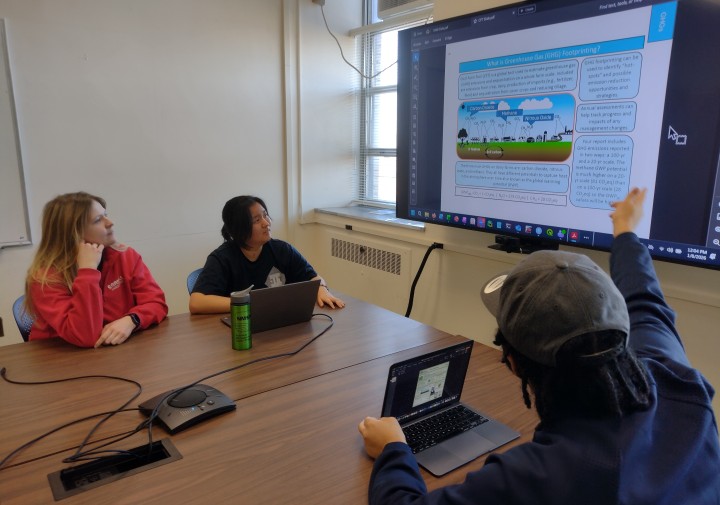
Working directly under Olivia Godber (Research Associate, head of the dairy sustainability program), I spent a lot of time analyzing data using Cool Farm Tool and developing nutrient mass balance reports. Basically, we would use information about farm operations provided to us by collaborating farmers and produce reports that could be brought back to the farmers as data-supported feedback. 

As a part of my work with the team, I also looked into New York’s nutrient balance for the whole state, contributing to a paper that is currently under review. I got to experience the research and paper writing process from start to finish.

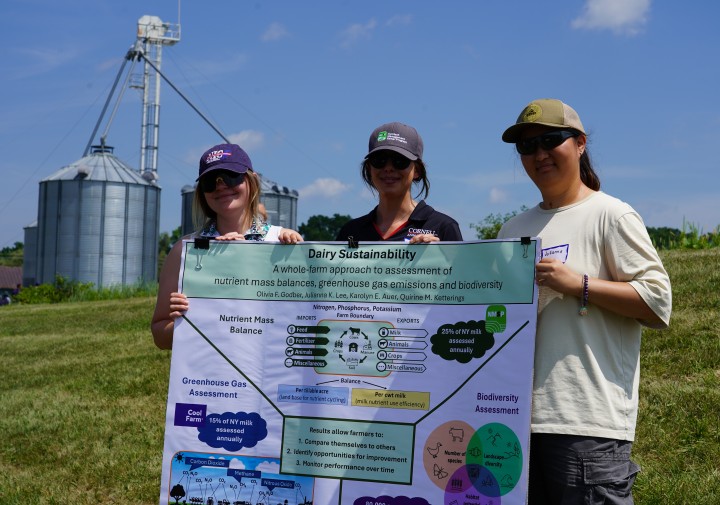
Other than that, I helped with a number of extension-related deliverables. I revamped the slides for nutrient mass balance and Cool Farm Tool reports to make them more clear and reader-friendly for our audience. I contributed to a What’s Cropping Up? Article, helped write four fact sheets, and I put a lot of effort into creating a 1-pager summarizing the dairy sustainability program. I also reworked the poster about our project, which is used to show prospective members and supporters what our work is all about and what we’ve accomplished over time.

I’m really grateful that I got to contribute to so many resources that strengthen NMSP’s connection with farmers and stakeholders.

You were really looking forward to getting more extension experience. What are some of the different hands-on extension activities that you helped with?

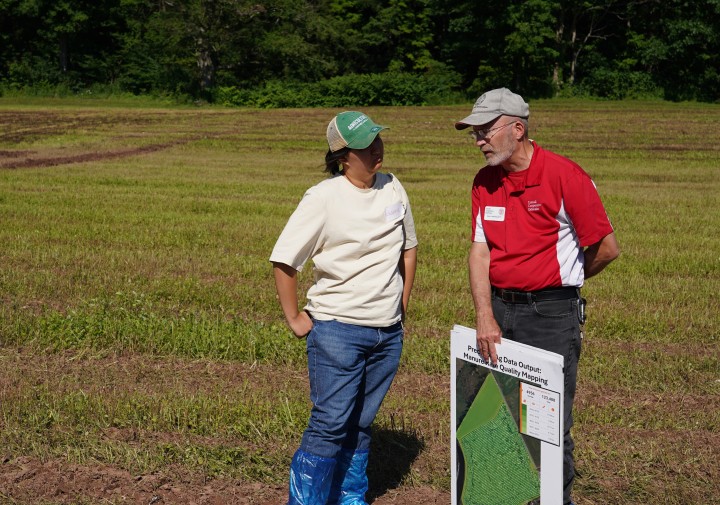
NMSP lead Quirine Ketterings, my direct supervisor Olivia, and several of us on the dairy sustainability team periodically visited with farmers and reported what we’d learned from our analyses of their operations. We had conversations with them about potential improvements, as well as what they are already doing phenomenally. Besides being enjoyable, it was always clear that this was an impactful, critical part of our extension mission.

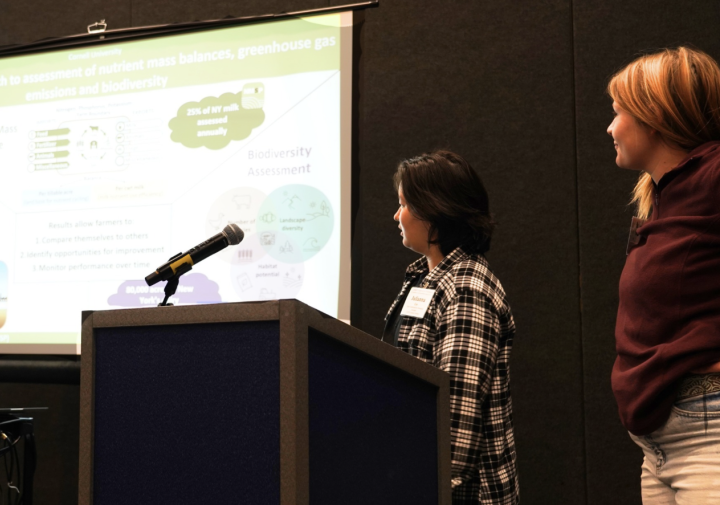
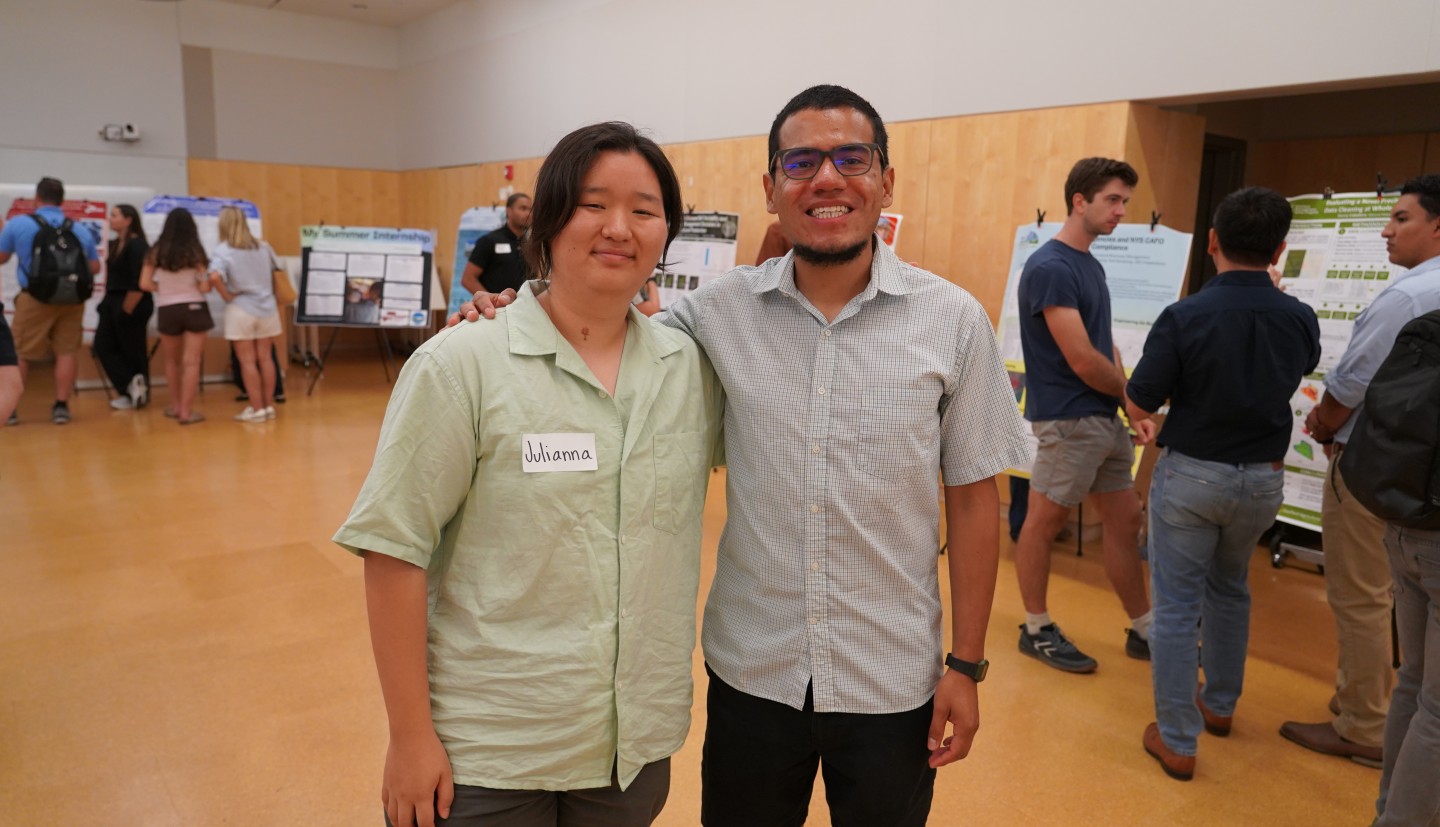
I also got to present our work to larger groups a bunch of times every year. As an intern, I presented at poster sessions to other undergraduates, professors and peers. I showcased our work at the Aurora Farm Field Day and the Cornell Cooperative Extension Agriculture In-Service Conference, and contributed to NMSP’s dairy sustainability webinar. 

After being a part of the team for a while, I was a teacher’s assistant for the Whole-Farm Nutrient Management class, ANSC4120/6120, taught by Quirine Ketterings and Mike van Amburgh. Karolyn Auer and I worked together to help students conduct whole farm mass balances and greenhouse gas footprint assessments. This brought together everything that I’d worked on up to that point and gave me even more hands-on teaching experience.

These opportunities really solidified my passion for teaching, extension and supporting New York farmers.

Can you share more about some highlights of your time with the team?

Lunch was always a great time to connect with people, I feel like I learned so much about other team members— and about life— during our lunch discussions. I really enjoyed the long talks during drives to the field and all of the inside jokes we’ve had through the years. It was great to consistently push myself out of my comfort zone and find my passion in the professional world while also feeling more confident in myself as I connected with others.

As someone that is not from an agricultural background, this experience was a great way to learn about what a dairy farm is, the collaboration between farmers and various stakeholders and the importance of extension. It really made me appreciate the work that farmers do.

Where are you going next? What will you take with you from your time with the team?

This fall, I’m attending Columbia Teachers College to pursue my master’s degree in sociology and education. 

I think that working for NMSP showed me how important it is to be professional in the workplace, the true meaning of collaborating with a bunch of different stakeholders and how to adjust my communication methods based on my audience. I also learned how great it is to chat with people from diverse backgrounds, whether they were from different countries or educational contexts. I know that I will take many personal and professional lessons, as well as many friends, with me moving forward and I’m very grateful for that.

Madeline Hanscom ‘22 is the communications assistant for Cornell CALS’ Nutrient Management Spear Program (NMSP).

Keep Exploring

Llama

News

Cornell Cooperative Extension has boosted its support for New York state agritourism as the industry has grown, with the number of participating farms nearly doubling and revenue tripling since 2007.

  • Cornell Cooperative Extension
  • Agriculture
Student attend the third annual Innovation Day

News

The third annual CALS Innovation Day, hosted by the college’s Research and Innovation Office (RIO), brought together more than 100 faculty, students, staff and industry partners Sept. 16 in Stocking Hall to celebrate the extraordinary science...
  • Cornell AgriTech
  • Biological and Environmental Engineering
  • Microbiology