Back

Discover CALS

See how our current work and research is bringing new thinking and new solutions to some of today's biggest challenges.

|
By Krisy Gashler
Share
  • Cornell AgriTech
  • Cornell Integrated Pest Management
  • Agriculture
  • Biodiversity
  • Crops
Cornell scientists and almost 80 farmers across the state are collaborating to understand the best strategies to control seedcorn maggots ahead of the upcoming New York state law restricting use of neonicotinoid seed treatment pesticides in field crops.

Preliminary Cornell research on managing the dreaded seedcorn maggot is giving hope to growers across the state ahead of New York’s 2029 ban on neonicotinoid pesticides in field crops: Side-by-side farm trials of neonic-treated vs. untreated corn showed no difference in yield.

“When we started this project, our initial goal was to determine which regions of the state are at highest risk for seedcorn maggot damage so those areas could apply for waivers from the ban,” said Katja Poveda, professor of entomology and lead principal investigator for the research. “But the data from last year showed that the risk of seedcorn maggot damage is extremely low across the board.”

"On average we find five seedcorn maggots per 100 seeds and one seed damaged by seedcorn maggots out of 100 seeds, with no consequences for yield," said Poveda.

The biggest risk factor for seedcorn maggot damage seems to be very early planting when fields are still wet and cold, regardless of neonic-treatment, according to grower reports last year outside of the experiment, Poveda said.

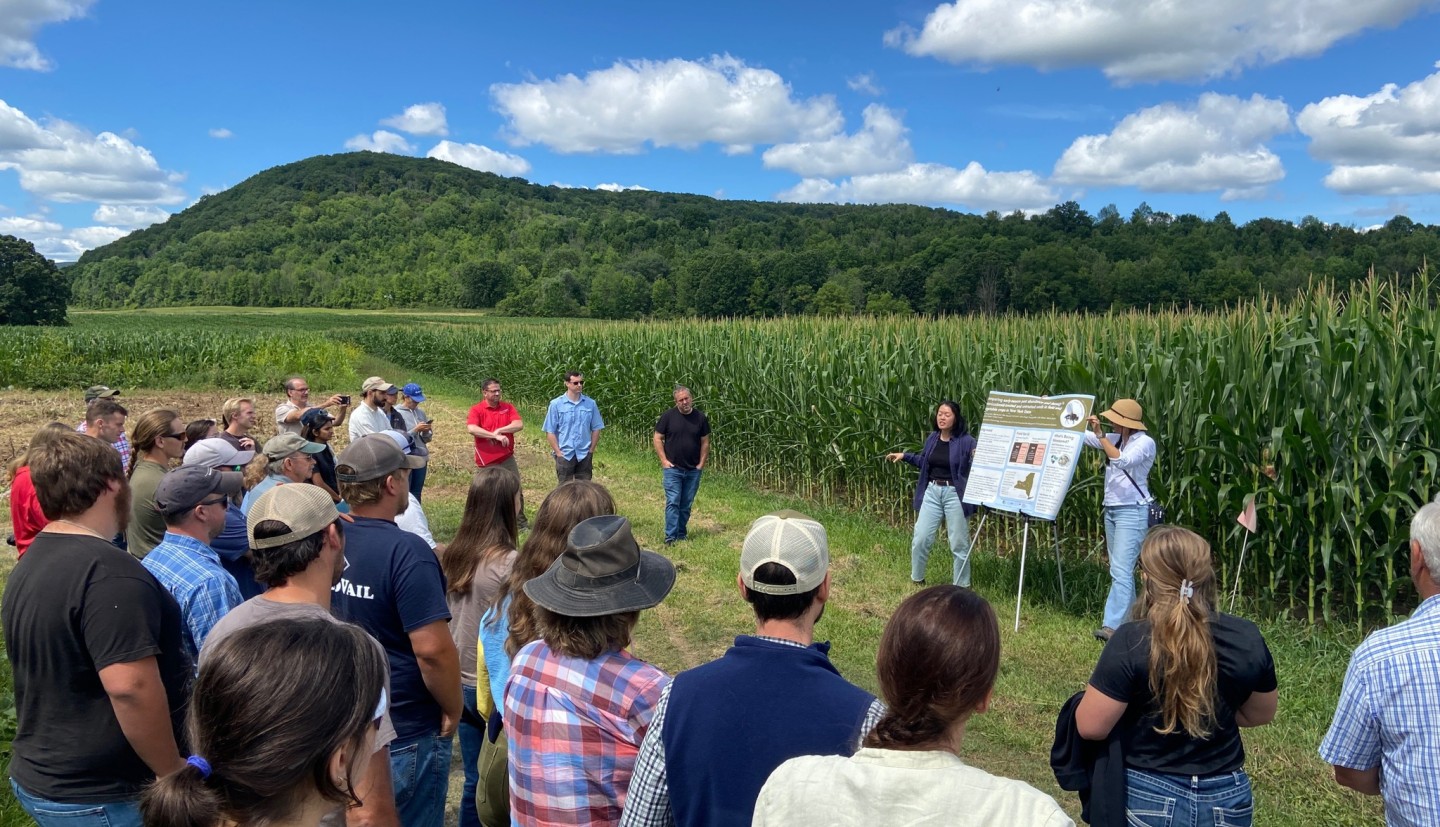
In 2023 the New York State Legislature passed the Birds and Bees Protection Act, which requires growers to stop using neonicotinoids on ornamental plants and turf by the end of this year, and to phase out neonic treatment on corn, soybean and wheat seeds by 2029. Now, Cornell Integrated Pest Management (Cornell IPM) is leading a statewide collaboration with Poveda and other researchers, Cornell Cooperative Extension specialists, the New York State Corn and Soybean Growers Association, and almost 80 farmers across the state to understand how best to manage seedcorn maggot before growers are required to stop using neonics.

“This is the largest on-farm research and extension project Cornell IPM has ever done before,” said Alejandro Calixto, director of Cornell IPM. “It’s a true collaboration, set up very intentionally with growers so they can see the results for themselves.”
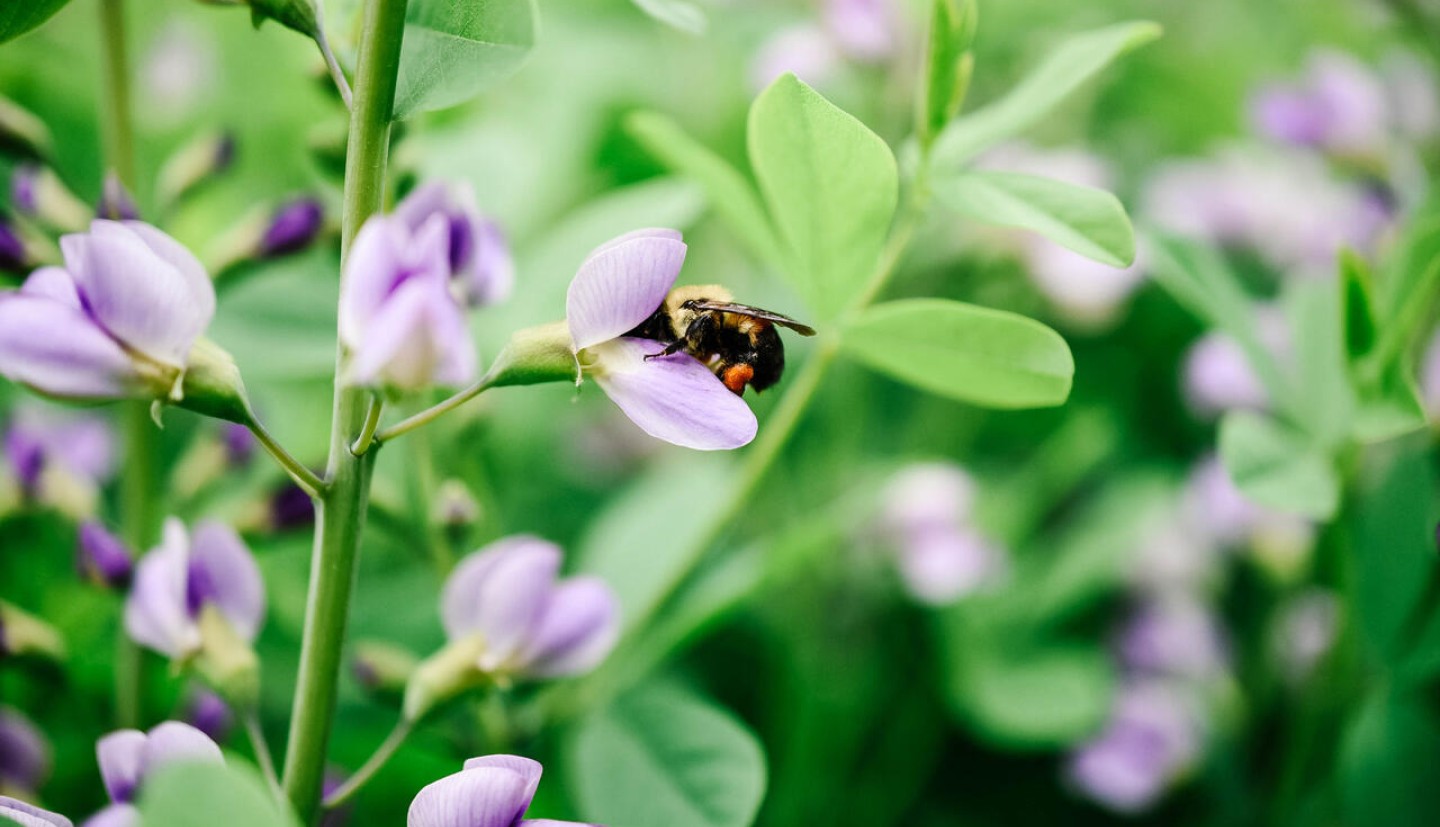
The most widely used insecticides in the world, neonicotinoids effectively control agricultural pests, but they also kill unintended creatures including pollinators, birds, spiders and soil microorganisms, significantly harming biodiversity.

Scott McArt, associate professor of entomology, led the research that informed the Birds and Bees Act. He and his collaborators spent two years compiling all known scientific research on neonicotinoids, including their economic and environmental impacts.

“The research is incredibly solid on both the economic benefits side and the pollinator risk side,” McArt said. “Study after study shows there are absolutely economic benefits of using neonicotinoid insecticides, particularly in fruit and vegetable production. But on seed treatments for field crops, there is poor evidence that they are needed. And yet field crops account for the vast majority of neonic use in the U.S., probably 90% or more according to current estimates.”

Although they’re called seedcorn maggots, the pests attack a wide variety of crops, including cucumbers, squash, peas and beans – and actually prefer those seeds to corn, Poveda said. (The Birds and Bees Protection Act does not prohibit use of neonics on vegetable crops other than corn.)

“In the lab, we raise seedcorn maggots on lima beans, because those seem to be their favorite,” she said. “We’ve tried to rear seedcorn maggots on just corn, but they will die before they eat fresh corn seed. You have to soak the seed until it starts germinating , and then – sometimes – they will eat corn seeds.”

Based on similar research findings, the European Union banned neonicotinoids on field crops more than a decade ago, and several other states and Canadian provinces have implemented restrictions on their use. The evidence of pollinator harm caused by neonics, meanwhile, continues to grow.

Managing risk

Bees play a crucial role in the success of New York’s agriculture industry but have a tough row to hoe: They have to contend with increasingly unpredictable weather, predatory mites and neonics. Last year in particular was a rough one for New York bees. The hot, dry fall meant less nectar for them to stock up before their dormancy in winter, which turned out to be brutally cold. Simon Purdy, co-owner of Cold Spring Apiary in Delhi, New York, lost all of his bees.

“You’ve already got all these things that are stacked up against the bees, and then on top of that, you have the added pesticides,” Purdy said. “We’ll still have to deal with the other things – the mites, the changing climate – but if we can get rid of the neonics, that will only help the bees.”

When discussions around the Birds and Bees Act began, growers who have relied on neonicotinoids for decades were very concerned about how losing that class of pesticides would affect their operations, said Colleen Klein, executive director of the New York State Corn and Soybean Growers Association.

“Growers are always dealing with uncertainty in the markets, in the weather, so to add another level of uncertainty was concerning to them. And still is,” she said.

Brian Reeves, a partner in Reeves Farms LLC, a vegetable and berry farm in Baldwinsville, New York that has been growing for five generations, said that when neonics came on the market in the 1990s, farmers celebrated them as a huge step forward.

“Any farmer my age remembers back in the ’70s and ’80s when we would open up a bag of seed and there were no neonics, no GMOs. It had a fungicide, but you also had to dump a can of pesticide on it and mix it in, and you had another treatment you had to spray on top of the fields. So then you’re breathing all that in,” said Reeves, who is also president of the New York State Vegetable Grower’s Association. “Nowadays, I just open a bag of corn seed with the neonic treatment on it, and that’s it. So there’s probably a lot of farmers who use this stuff who think, ‘My God, don’t do away with this.’”

“At the same time, growers know that we have to have a healthy bee population in order to have healthy agriculture,” Klein said. “Being good stewards of the land is a core value for our growers, too.”

Collaborative research

When the Legislature was debating the Birds and Bees Act, growers petitioned for state funds through the Department of Agriculture and Markets to study alternative pest management, Klein said. That funding was included in the bill, and it is supporting the current research, which includes the side-by-side trials, but also supplied participating growers with weather stations that record farm-specific data about rainfall, air temperature, soil temperature, soil moisture and other information that helps farmers make decisions.

Growers will be able to keep the weather stations after the research project concludes, said Dan Olmstead, digital outreach and development coordinator for Cornell Integrated Pest Management at Cornell AgriTech. The data is informing Poveda’s research and eventual seedcorn maggot management recommendations, but it is also freely available for growers to access via a phone app and is already proving useful for them, he said.

“Growers are always on the lookout for a warm spell in the spring when they can get crops in. Let’s say there’s a week coming up when it’s going to be 75 so they might want to jump on planting,” Olmstead said. “Now, if they have a weather station right next to the field, they can see that the soil moisture is 35% and it’s only 46 degrees in the soil, even though it’s 75 degrees in the air. That will immediately tell them not to burn that fuel, fertilizer and seed because there’s a high risk there.”

The direct participation of New York growers in the research is critical to its success, Calixto said. In 2025, 56 farmers participated in the trials. This year, almost 80 growers have asked to be involved, he said.

The side-by-side research trials will continue for another two years, until the neonic ban goes into effect in 2029. Then, the researchers hope to continue collecting data for another three years post-ban to measure any changes in crop yields and pollinator populations, McArt said.

“I think it’s absolutely critical what we’re doing here,” he said. “It’s not just scientists coming in saying, ‘Oh, you have to do this, and then good luck.’ By doing this research in growers’ own fields, they can see for themselves how the corn does without the neonics. We’re building trust with each other, which is pivotal.”

The first year of data showing that untreated corn did just as well as treated is encouraging, but it’s still just one year so far, Reeves said. Having multiple years of trials, over so many farms across the state, will help everyone feel more confident with the results, he said.

“A lot of farmers feel like the neonics are cheap insurance,” Reeves said. “But maybe some good research will show that you could save some money and save the environment a little bit without them.”

Krisy Gashler is a writer for the College of Agriculture and Life Sciences. 

Keep Exploring

A group of people stand in two lines, each individual posing for the group photo.

News

Each year, undergraduates from a wide variety of academic and professional backgrounds come together to share their research and summer internship experiences with colleagues, peers, farmers and more. Read on to learn about their summer...
  • PRO-DAIRY
  • Animal Science
  • Agriculture
Macaw flying in an open landscape

News

A doctoral candidate and Semlitz Sustainability Fellow and his Colombian partners seek to protect birds and biodiversity in the Amazon via sustainable rubber tree agroforestry.

  • Cornell Atkinson
  • Ashley School of Global Development and the Environment
  • Natural Resources and the Environment Section