Back

Discover CALS

See how our current work and research is bringing new thinking and new solutions to some of today's biggest challenges.

Share
  • PRO-DAIRY
  • Animal Science
  • Genomics
  • Climate Change
  • Dairy
When cows are hot, they produce less milk, but what are the cellular mechanisms behind this?

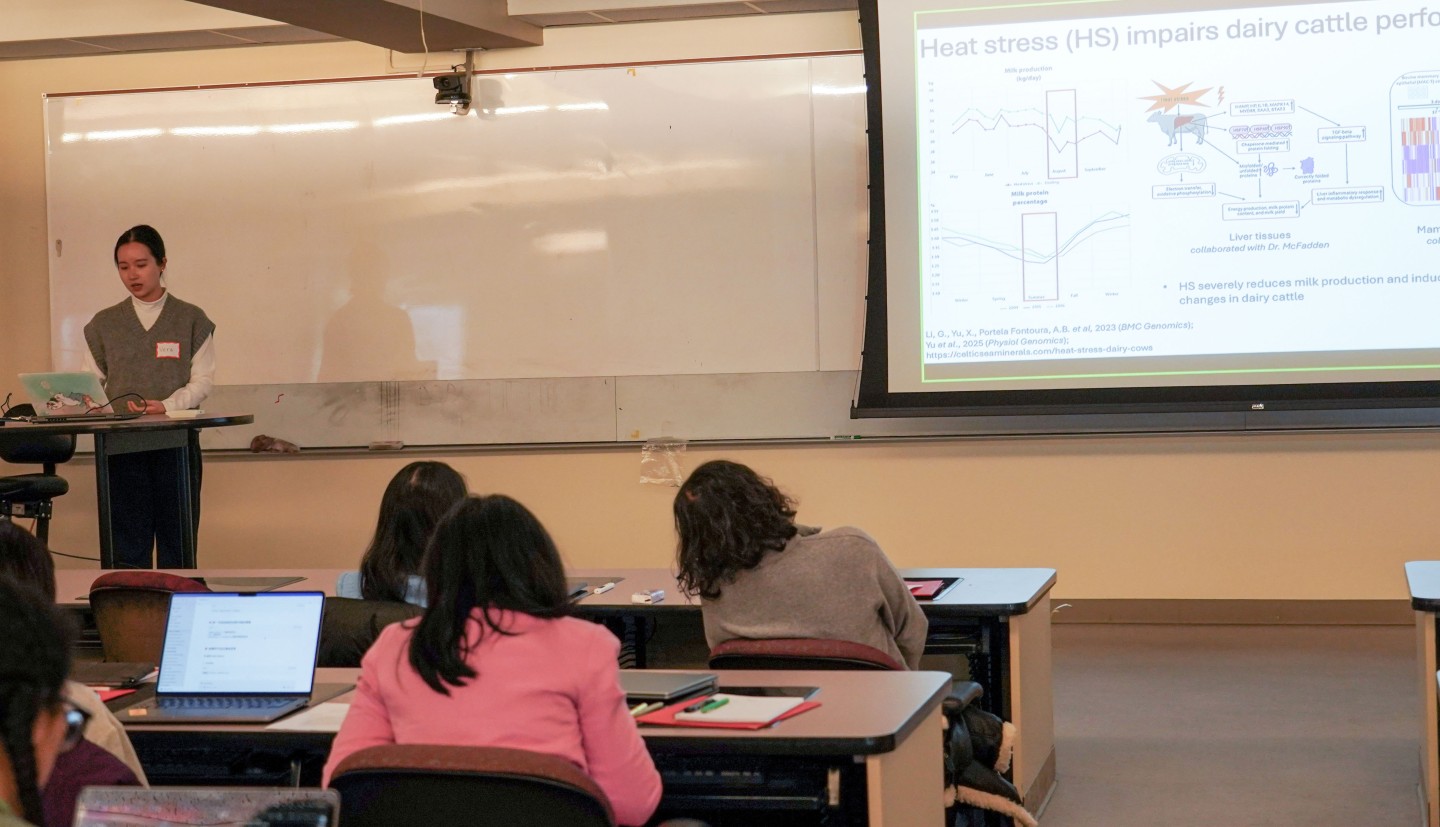
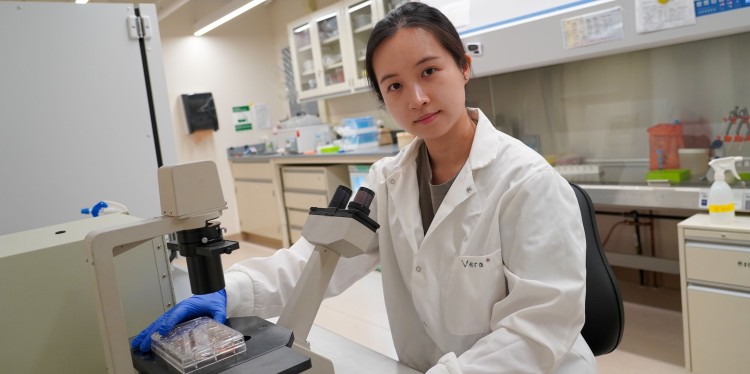
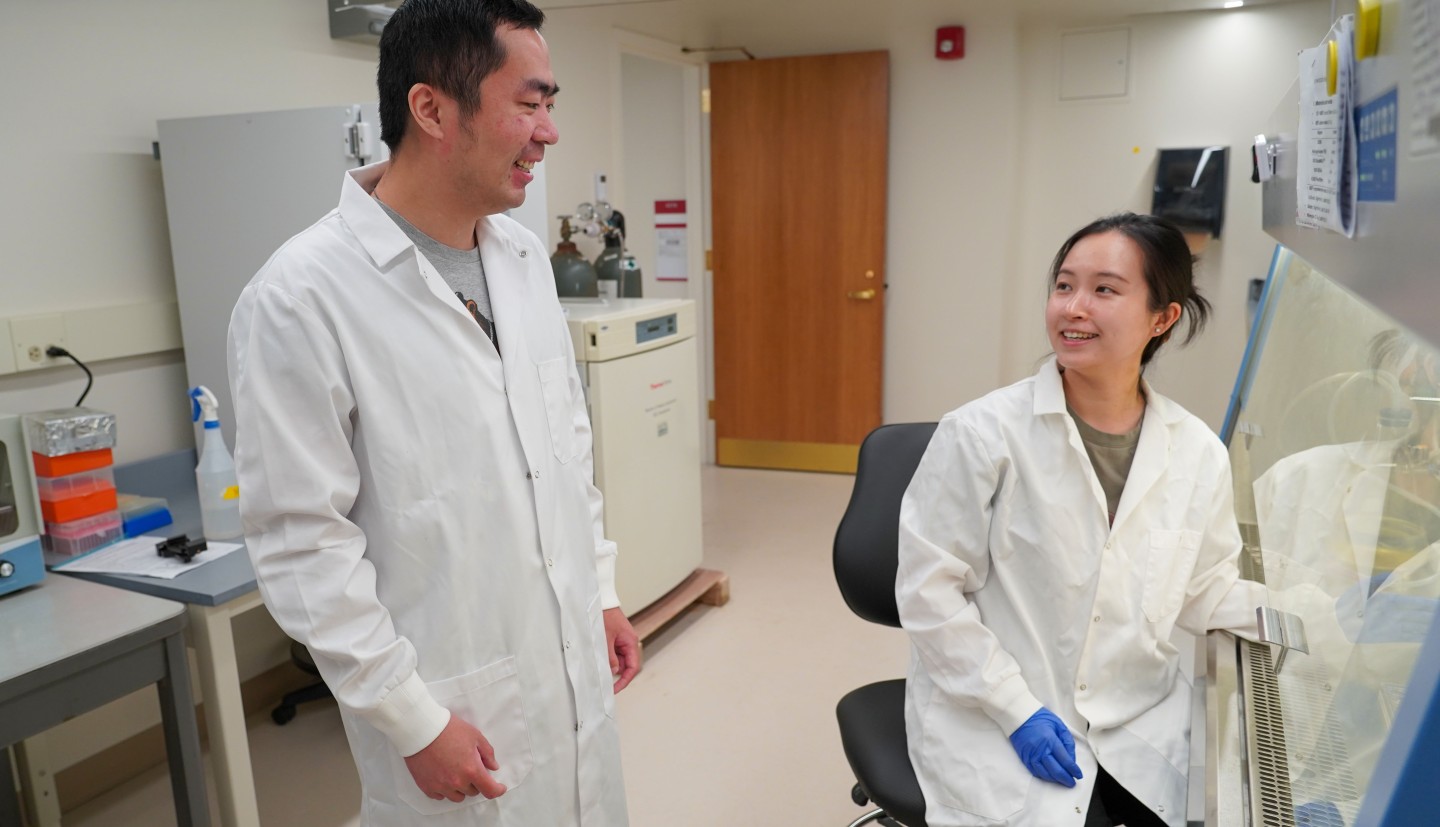
Xingtan (Vera) Yu PhD’27 is a doctoral student working in the lab of Jingyue (Ellie) Duan, assistant professor of functional genomics. Vera’s research focuses on the effects of heat stress on the mammary gland of the dairy cow.

We spoke to her about her work.

Why should we worry about the impact of warmer weather on dairy cows?

Heat stress is becoming an increasingly serious challenge for the dairy industry because of global warming. Hot periods are becoming more intense and lasting longer. Warmer nights also give cows less time to cool down and recover.

Our goal is to better understand why milk production declines during heat stress and to identify biological processes that could be targeted through nutrition, management or genetic selection. This knowledge could help researchers and farmers develop more effective and precise strategies to protect dairy cows and maintain milk production during hot weather.

What happens when cows get too hot?

They eat less, breathe faster, stand more and redirect energy toward maintaining a safe body temperature. These responses help them cope with the heat, but they also leave less energy available for milk production, reproduction and immune function.

Heat stress affects the whole body. It can alter metabolism, hormone levels, blood flow, immune function and the way nutrients are used. High-producing dairy cows are especially vulnerable because milk production itself generates a large amount of body heat.
Your research focuses on how heat stress affects the mammary gland specifically. Tell us more about that.

We know that milk production decreases during hot weather, but we still don’t fully understand what happens inside the mammary gland or which cell types are most affected.

The mammary gland contains many different types of cells. Luminal alveolar cells produce milk, while myoepithelial cells provide structural support and help move milk through the gland during milk let-down. The tissue also contains immune cells, blood vessel cells and other supporting cells. These cells have different roles, so they may also respond to heat in different ways.

How are you carrying out your study?

We compared cows kept under comfortable temperatures, cows exposed to heat stress, and cows that were pair-fed to heat-stressed cows, which means they were kept under comfortable temperatures but given the same reduced amount of feed. This pair-fed group allows us to separate the direct effects of heat from the effects of reduced feed intake.

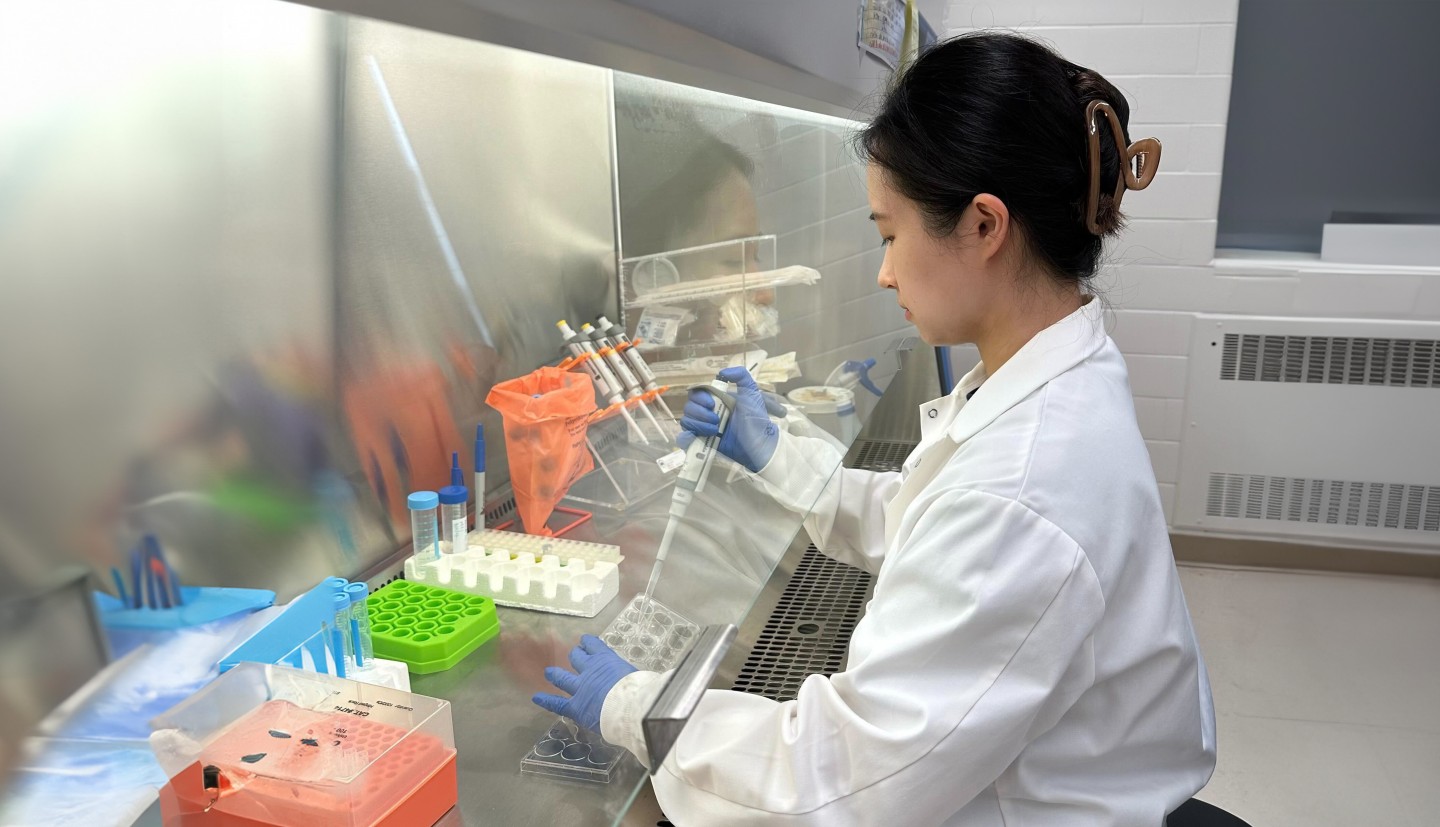
We collected mammary gland biopsies from cows in each group and used single-nucleus RNA sequencing (snRNA-seq) to examine gene activity in thousands of individual cells. 

What’s the difference between snRNA-seq and traditional RNA sequencing?

Traditional RNA sequencing measures the average response of the whole tissue, which can hide important differences between cell types. Our approach allows us to look at individual cells and identify which cells activate stress-protection pathways, which cells reduce milk-related functions and how communication among cells changes during heat stress.

Your study found that heat stress mainly activated cellular stress responses in milk-producing cells. What does this signify?

It suggests that these cells are especially sensitive to heat. This helps explain why milk production declines even after only a short period of heat exposure. We also found that heat changed how strongly myoepithelial cells communicate with other epithelial cells. Myoepithelial cells support milk-producing cells and help with milk let-down, so these changes suggest that the interaction between cell types is an important part of the mammary gland’s response to heat.

Our three-day heat treatment also shifted the developmental pattern of luminal cells away from milk secretion and toward maintaining basic cell function and survival. This suggests that changes in the mammary gland can begin quickly, even before long-term damage occurs. So early intervention may be especially important in heat-stress management.

Can your findings be applied to other organs and other animal species?

Possibly. Heat stress affects the entire body, and organs such as the liver, intestine, reproductive system and brain also contain many different cell types that may respond to heat in different ways. Similar experimental methods and analytical approaches can be used to study heat tolerance, fertility, growth and health in other livestock species.

Looking forward, what are the next steps?

To our knowledge, this is the first study to use snRNA-seq to examine the bovine mammary gland under heat stress, and we’re excited to share our findings. In the short term, a paper from this project has been published in the Journal of Animal Science and Biotechnology. I’ve also presented this work through an oral presentation and posters at the Plant and Animal Genome Conference and the Women in Bioinformatics Conference.

This study completes our planned work on the mammary gland, but related research is continuing. Our collaborators, the Leal Yepes group at the College of Veterinary Medicine, are using snRNA-seq to study liver samples from the same cows. Together, these studies may provide a broader picture of how different organs respond to heat stress.

Jackie Swift is the communications specialist for the Cornell CALS Department of Animal Science.

Keep Exploring

permaculture classroom

News

Cornell Garden-based Learning is offering a new online training course designed for K-12 educators looking for practical tools to teach about: Food systems Traditional indigenous ecological knowledge Waste-to-resource solutions The six-week...
  • School of Integrative Plant Science
  • Horticulture Section
  • Climate Change
Teaching assistants scoop out the ice cream flavors and hand them to students

News

A quiet revolution has been happening in the New York dairy industry over the last quarter century. Since a low production per cow ranking of 27 in 2004, New York dairy farmers have turned the tables and delivered many annual improvements in...
  • Cornell Cooperative Extension
  • PRO-DAIRY
  • Animal Science