Back

Discover CALS

See how our current work and research is bringing new thinking and new solutions to some of today's biggest challenges.

Share
  • Plant Breeding and Genetics Section
  • Viticulture and Enology
  • Crops
Locally adapted, disease resistant grape varieties are needed now more than ever as the Northeastern wine industry faces a changing climate, increasingly variable weather patterns, emerging pests and pathogens, and reduced fungicide efficacy and availability. The Cornell Grape Breeding Program aims to address these viticultural challenges through the development of new varieties specifically bred for consistent yields, high wine quality, reduced fungicide requirements, and resilience to cold winter temperatures.
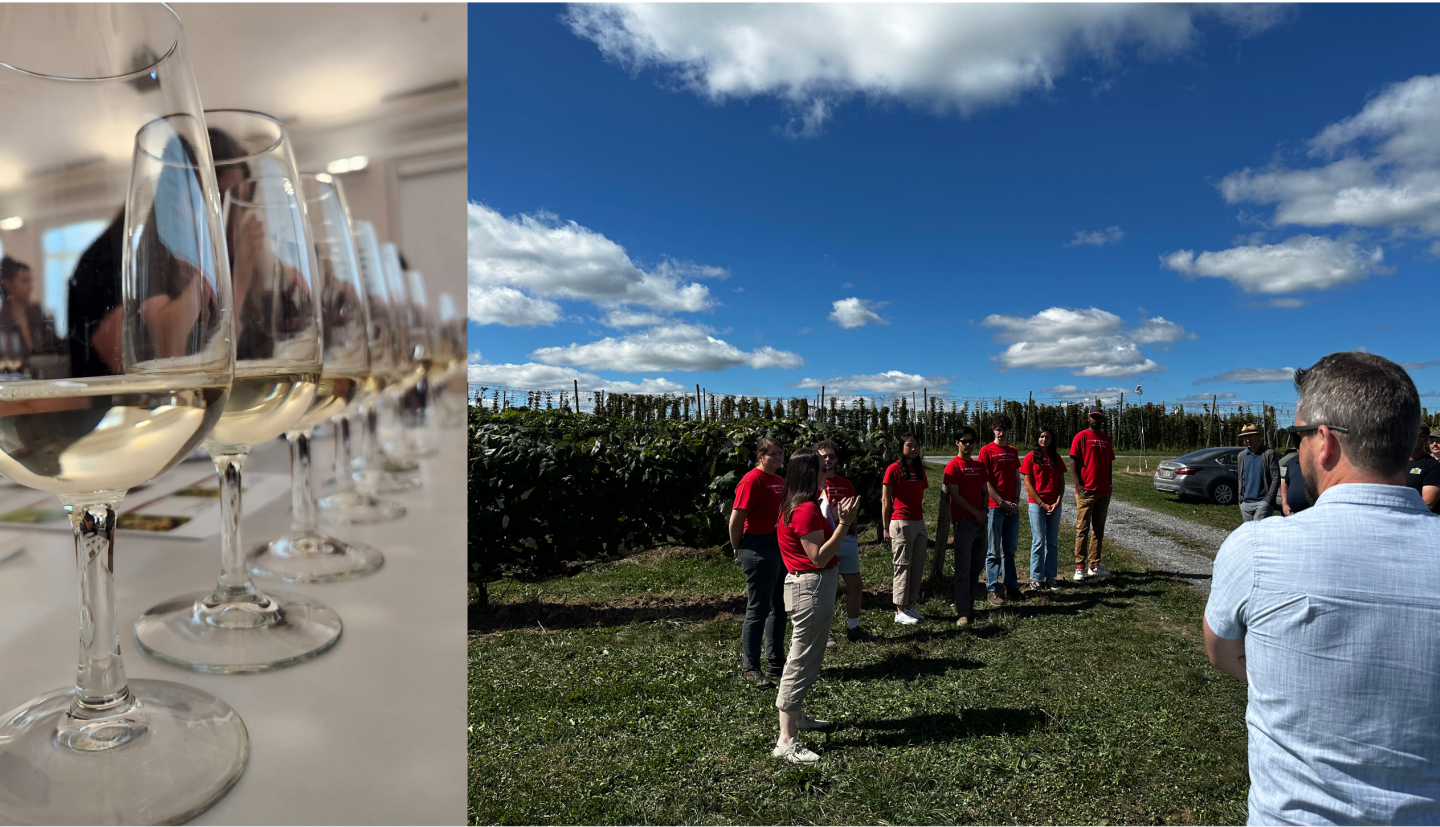
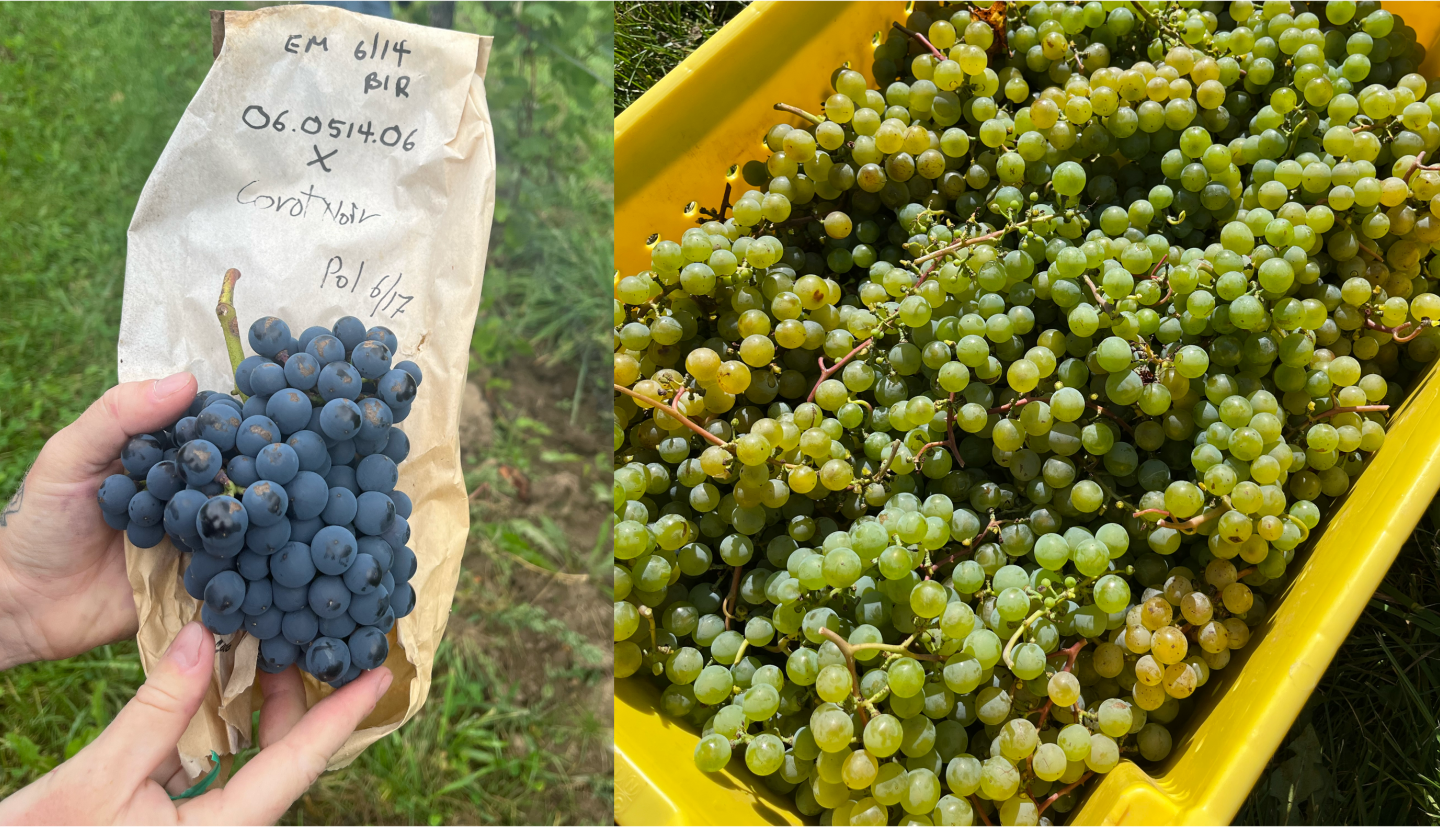
Stakeholder participation and input is necessary to establish breeding priorities, understand industry direction, and for grapevine selection trialing. Dr. Maddy Oravec, Assistant Professor of Grape Breeding, Genetics, and Genomics, leads the Cornell Grape Breeding Program at Cornell AgriTech. The program hosts members of the industry for summer wine evaluations, annual field days, and discussion-based focus groups, in order to foster stakeholder relationships meant to support the breeding program’s progress in creating new grape varieties. The Cornell Grape Breeding Program has an extension mission to provide industry stakeholders with educational resources regarding disease resistance and new variety performance in grapevine.

        Aliyah Brewer, a PhD candidate in plant breeding and genetics studying under Dr. Oravec, identified a critical gap in the availability of current and accessible online extension resources. Through an Extension and Outreach Assistantship at Cornell AgriTech, she developed the Disease Resistant Grape Breeding website to help address this need. Extension and Outreach Assistantships for graduate students are unique to the Cornell AgriTech campus, where students propose project ideas and can receive funding to fulfill their objectives. This allows graduate students to build their extension and outreach skills, project management skills, and support the Cornell AgriTech extension mission through experiential learning. 

        Aliyah was inspired by the unique stakeholder groups in the northeastern wine industry, and quickly realized that historic extension materials were usually generalist, and lacked specificity for each group. The Cornell Grape Breeding Program directly serves wine consumers, viticulturists, and winemakers within the industry, and supports research for other grape breeding programs. All of these stakeholder groups are equally important to sustain the wine industry, but each have distinct duties and roles within wine production, and interact with new varieties in different capacities. 

        Through a Spring 2026 Extension and Outreach Assistantship, Aliyah translated ongoing work within the Cornell Grape Breeding Program with specificity and meaning for each stakeholder group. Now, the program has current, accessible resources for wine consumersviticulturistswinemakers, and grape breeders. Aliyah noticed that each stakeholder group had specific needs and questions for the breeding program, so on the new Disease Resistant Grape Breeding website

Consumers can explore how to make sustainable choices when supporting the industry, find out why certain grape varieties are more sustainable than others, and how the Cornell Grape Breeding Program is innovating sustainability for the wine industry. 

Viticulturists can learn what ‘disease resistant’ means for their production practices, expand their knowledge on the resistance genes in the market, and learn about how the Cornell Grape Breeding program evaluates the viticultural potential of selections. 

Winemakers can learn how the Cornell Grape Breeding Program evaluates their research wines, how new varieties can compare to historic varieties, and get inspired from different winemaking techniques. 

Grape breeders can learn about the breeding priorities for the Cornell Grape Breeding Program, how the Cornell Grape Breeding Program integrates resistance genes into the program, and how the Cornell Grape Breeding Program incorporates participatory methods to engage with stakeholders. 

Through Aliyah’s Spring 2026 Extension and Outreach Assistantship, she developed novel education resources to aid in the establishment of extension resources for the Cornell Grape Breeding Program. By developing the Disease Resistant Grape Breeding website, she expanded her extension and outreach skills while producing tangible and meaningful resources that advance Cornell AgriTech’s mission to serve agricultural stakeholders through means of extension and outreach. 

Keep Exploring

Two people work with scientific equipment on a desk.

News

On-farm research is a valuable tool for New York farmers. It happens in real-time on farm fields that are actively being cropped, producing practical results that can be applied in future growing seasons. It fosters two-way learning among...
  • Animal Science
  • Agriculture
  • Crops
A woman stands in a field.

Field Note

Gabby Garcia joined Cornell CALS’ Nutrient Management Spear Program (NMSP) as an intern from Zamorano University hoping to expand upon her knowledge of agriculture. During her time at Cornell, she worked on the rainfall simulation project...
  • Agriculture
  • Field Crops
  • Crops