Back

Discover CALS

See how our current work and research is bringing new thinking and new solutions to some of today's biggest challenges.

Share
  • Animal Science
  • Agriculture
  • Crops
Incubation studies support on-farm research to inform manure crediting guidelines in New York.

On-farm research is a valuable tool for New York farmers. It happens in real-time on farm fields that are actively being cropped, producing practical results that can be applied in future growing seasons. It fosters two-way learning among farmers, farm advisors and researchers, showing the potential for different management factors to impact crop yield, environmental stewardship and economic efficiency. 

Altogether, the results of these research trials can inform important policies and enable farms to make data-driven decisions.

Cornell CALS’ Nutrient Management Spear Program (NMSP) partners with farmers and farm advisors to conduct on-farm research within the New York On-Farm Research Partnership. Ongoing on-farm trials are investigating the value of manure as a nutrient source. While these trials are extremely useful, the scale of this research can become a limiting factor. To be able to evaluate a greater number of manure sources– beyond what can feasibly be done in field trials– the NMSP team also started to conduct manure incubation studies in the laboratory.
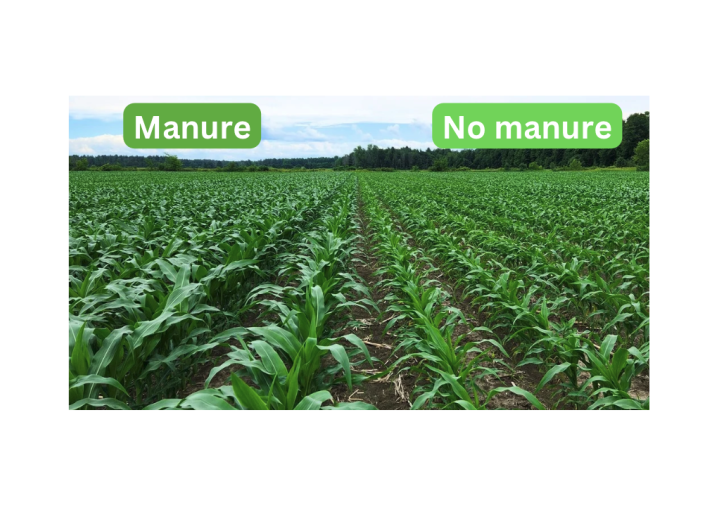
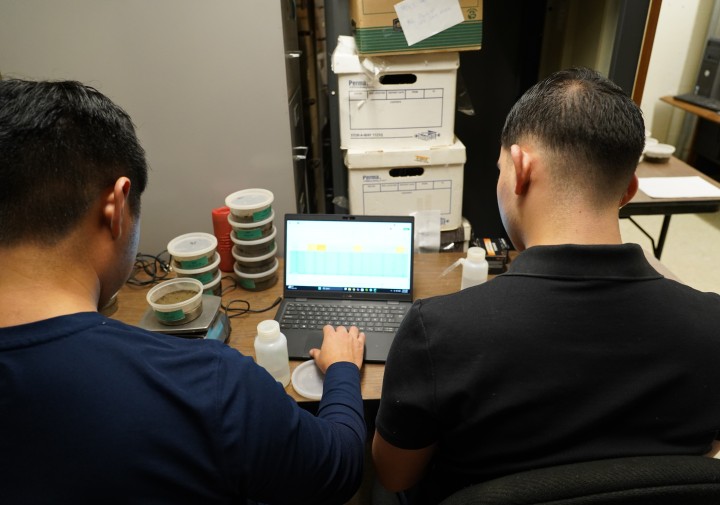
The incubation studies effectively scale down on-farm research while keeping crucial variables (the soils and manure sources) the same.

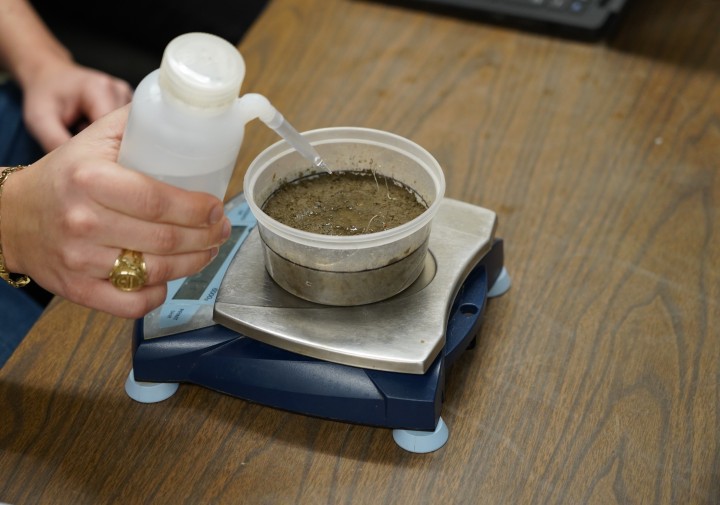
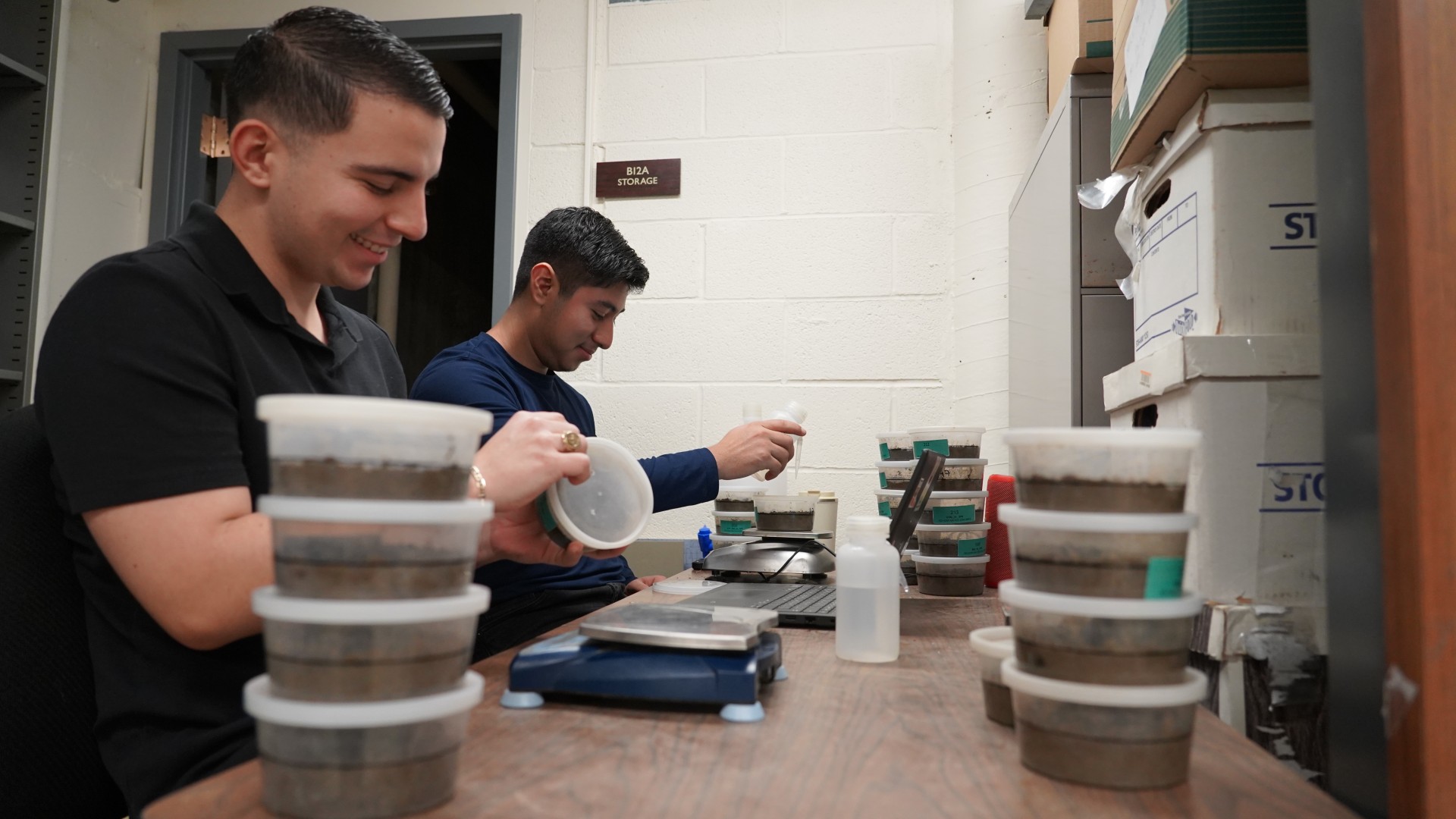
In these incubation studies, a small amount of soil from a New York crop field is collected and deposited in a container. Researchers then add different types of manure at a fixed nitrogen application rate. For 72 days, these samples are incubated in controlled conditions at a consistent moisture level (maintained on a weekly basis). Periodically, NMSP’s researchers assess nutrient release for each of these samples. 

"Our soil incubation studies examine nitrogen dynamics across a diverse range of manure types found in New York,” said NMSP’s New York On-Farm Research Coordinator Juan Carlos Ramos Tanchez. “We are specifically looking at the release of nitrate from these manure sources– how much nitrate is released, and when.” 

With this research, it becomes possible to incorporate more detailed information about how and when modern manure sources break down and mend the soil. The information gained from this research will be used to refine manure crediting guidelines.

Manure crediting guidelines estimate the nitrogen (N) available from manure to crops. These systems are essential when it comes to nutrient management planning, supporting environmental stewardship and economic efficiency. 

Currently, NMSP’s researchers are investigating manure sources including, but not limited to, untreated, solid-liquid separated, anaerobically digested, flocculated and evaporated dairy manures, as well as various poultry manure sources. This sample set represents a wide variety of modern manure sources, highlighting the importance of a detailed manure crediting system that accounts for advances in manure-related technology.

“With incubation studies, we can try multiple manure sources compared to field research trials,” said Greivin Fernandez Benavides, NMSP research technician. “These studies can show how sources differ in their nitrogen release in a more time and cost effective way.”

"These studies can show how sources differ in their nitrogen release in a more time and cost effective way."

“By identifying the factors that drive mineralization, we can more accurately predict how much and how quick nitrogen becomes available to crops based on specific manure characteristics,” said Ramos. “This research, paired with our on-farm field trials, helps refine our nitrogen crediting systems and support better farm nutrient management decisions."

“We are learning a lot about the impact of manure composition on N availability for crops,” said Jamael Josiah Chan, NMSP research technician. “Refining our manure nitrogen crediting guidelines using this dataset will improve the profitability and sustainability of New York farms”.

Madeline Hanscom '22 is the science communications assistant for Cornell CALS’ Nutrient Management Spear Program (NMSP).

Keep Exploring

The tops of corn in a field.

Field Note

In fall 2025, Matthew Haycook joined Cornell University’s Master of Professional Studies Program, with Quirine Ketterings of the Nutrient Management Spear Program (NMSP) as his main academic advisor. Growing up, Haycook was deeply integrated...
  • Animal Science
  • Agriculture
  • Field Crops
Cheryl on a farm tour with schoolkids. A farmer holds a miling machine in his hand, showing it to the kids.

News

Cheryl Bilinski didn’t just change careers; she swapped a corporate paycheck for a mission to overhaul what lands on a child's lunch tray. As an agricultural economic development specialist with Cornell Cooperative Extension’s (CCE) Harvest New...
  • Cornell Cooperative Extension
  • Agriculture
  • Health + Nutrition