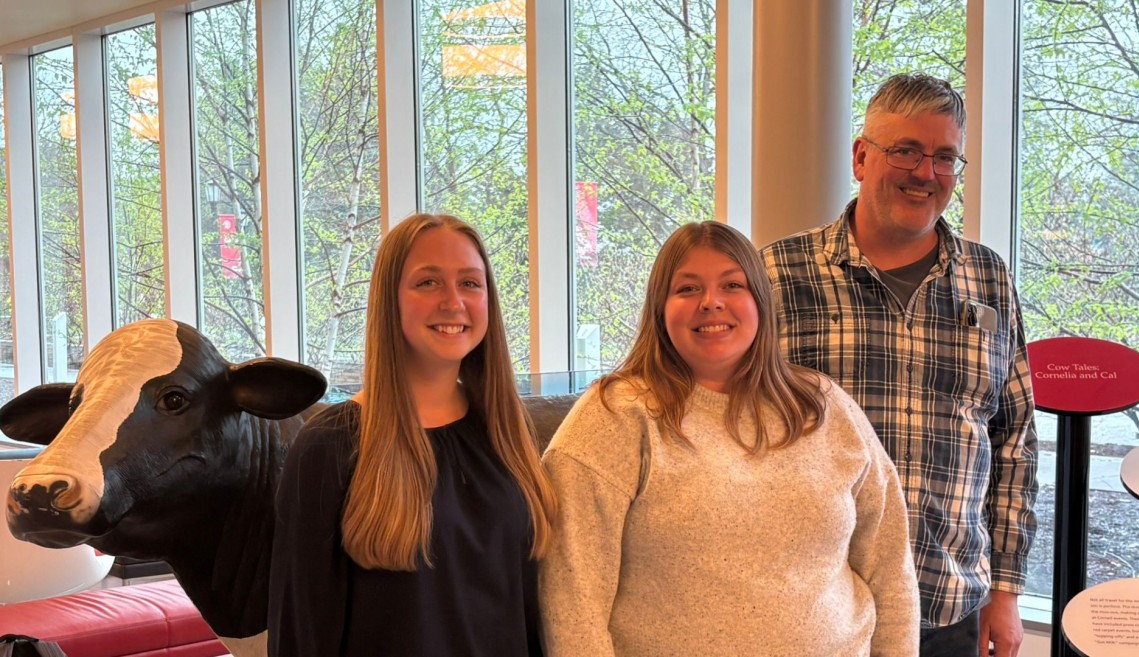
During her 2025 PRO-DAIRY internship Kelly Bliss worked with McCall and Weiss before interning in the fall with Jason Oliver, PRO-DAIRY Dairy Environmental Systems (DES) engineer.
For her DES internship, Bliss documented New York's first large-scale roller compacted concrete (RCC) feed storage pad installation on a dairy farm, a project designed by Weiss and McCall. The installation showcased an innovative construction method that has been widely adopted in western states but is still relatively new to the Northeast. Bliss collaborated on the project with fellow PRO-DAIRY intern Taylynn Tryon, a Construction and Environmental Technology student at Tompkins Cortland Community College (TC3), who also worked alongside Weiss and McCall.
Working in partnership with engineers, contractors, consultants and dairy producers, Bliss and Tryon gained hands-on experience that extended far beyond the classroom. They participated in construction inspections, documented each stage of the installation, collected technical data and helped evaluate the feed storage pad's performance following its completion.
"It was exciting to be involved from the planning stages through construction and then return to see how the project performed," Bliss said. "The internship gave me experience that you simply can't get in a classroom. I was able to work with industry professionals, understand how engineering decisions are made and see how collaboration helps solve challenges on dairy farms."
The project required months of planning before construction began. Material samples were collected and shipped to engineers developing a custom concrete mix design, while equipment, trucking, aggregate, cement and site preparation were carefully coordinated before the portable mixing plant arrived on the farm.
Following construction, Bliss and Tryon continued their work by developing presentations, analyzing installation costs, documenting construction methods and evaluating the pad's performance through on-farm follow-up visits. Their work became the foundation for a PRO-DAIRY case study that will help inform future agricultural infrastructure projects throughout the region.
The internship also introduced the two to the contractor who installed the RCC pad. Throughout the project, they worked closely with the company's engineers and construction team, building professional relationships while growing and demonstrating technical knowledge and enthusiasm for their work.
These collective experiences led directly to Bliss securing a full-time summer position with another agricultural engineering firm, which she said “helped her developed a strong foundation to feel prepared and comfortable working with a different team of engineers."
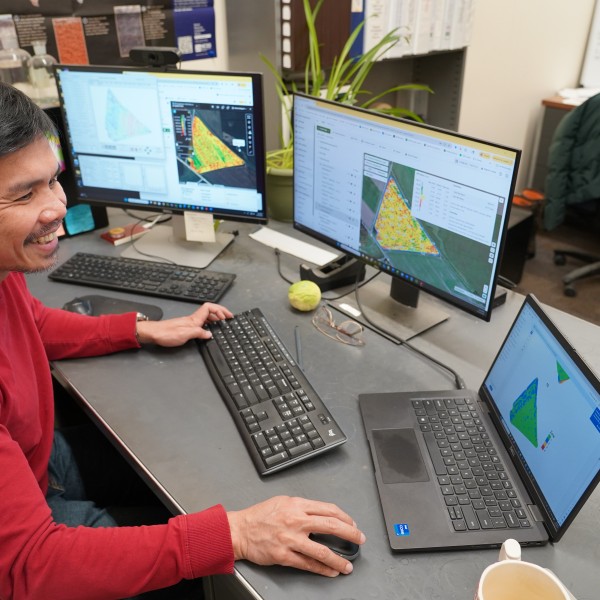
Tryon is spending her summer continuing to work with Weiss and implementing the use of drones for surveying.
For Weiss, his interns’ success reflects the value of giving students opportunities to contribute to meaningful projects with industry partners.
"Our interns aren't observing from the sidelines," Weiss said. "They're collecting data, solving problems, communicating with professionals and contributing to projects that have a lasting impact on New York agriculture. Those experiences build confidence, develop technical skills and often create career opportunities."
McCall’s journey demonstrates the full-circle impact of the program, from student intern to industry professional, and now mentor to current and future interns. A path that now Bliss and Tryon can now see the value of in their own academic and professional careers.